Established in 1980 by visionary founders Mr. P. M. Vadalia and the Late R. A. Patel, Canary Electricals Pvt. Ltd. has evolved from a specialized electrical engineering workshop in Morbi, Gujarat, India, into an international powerhouse in industrial power conversion and plasma thermal cutting equipment. Today, under the leadership of Mr. Deepak P Vadalia (Managing Director), Canary Electricals manufactures over 100 industrial product variants, exporting heavy-duty machinery to more than 30 countries across Africa, the Middle East, South Asia, and Latin America under the registered trademark brand Vulcan.
Operating from our state-of-the-art manufacturing facility in Morbi, Gujarat, our ISO 9001:2015 certified production methodology integrates high-grade raw material selection, rigorous thermal simulation, heavy copper transformer winding, and automated load testing. Unlike commercial-grade cutters engineered solely for light fabrication workshops, Vulcan Air Plasma Cutting Machines are specifically designed to withstand grid voltage drops (±15% tolerance), high ambient dust, and extreme relative humidity commonly found in mining, shipbuilding, heavy structural steel works, cement mills, and petrochemical facilities.
Audited quality control system guaranteeing strict batch consistency and zero-defect export packaging.
Deep domain expertise established in 1980, providing decades of field-tested engineering reliability.
Global supply chain infrastructure delivering customized voltage configurations for international buyers.
Comprehensive ecosystem spanning plasma cutters, TIG/MIG welders, step-up transformers, and screw compressors.
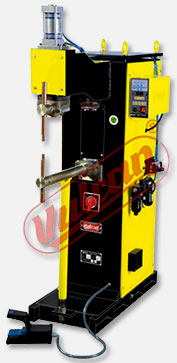
Every Vulcan Air Plasma Cutting Machine undergo multi-point quality validation: dielectric breakdown testing, 100% full-load continuous arc duration testing, thermal camera heat dissipation analysis, and high-frequency pilot arc reliability checks. Our engineering department works in tandem with global B2B procurement managers to provide custom input voltage options (380V/400V/415V/440V 3-Phase, 50/60Hz), tailored plasma torch lead lengths, and custom-branded OEM distribution configurations.


Engineered for precision sheet metal cutting, medium plate profiling, and thick structural steel gouging and severance.
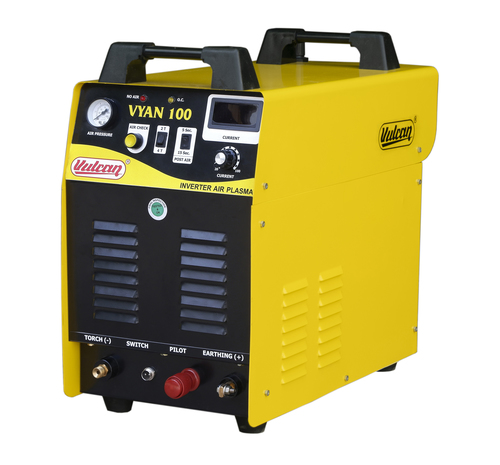
Designed for heavy metal fabrication yards and structural steel plants. Features high-frequency non-touch arc initiation, digital current regulation, and dual air pressure sensing to protect torch consumables during continuous 100% duty cycle operation.
Inquire Now
Compact, energy-efficient inverter architecture optimized for stainless steel, carbon steel, and aluminum sheet metal cutting. Offers high energy conversion efficiency (>85%), smooth cut edges, minimal dross formation, and lower compressed air consumption.
Inquire Now
Engineered specifically for automated gantry CNC plasma tables and robotic cutting cells. Equipped with standard arc voltage height control (AVHC) signal outputs, EMI-shielded cabinet design, and heavy plate severance capability up to 50mm.
Inquire NowGlobal procurement teams must evaluate key technical metrics—such as recommended quality cut thickness vs. maximum severance, duty cycle rating at elevated temperatures, and compressed air pressure flow rates—when selecting air plasma cutting systems. The table below outlines the performance benchmarks of Vulcan Air Plasma Cutters:
| Model Designation | Input Power Supply | Rated Output Current | Quality Cut (Carbon Steel) | Severance Cut (Max) | Duty Cycle (40°C Ambient) | Air Compressor Requirement | Arc Ignition Type |
|---|---|---|---|---|---|---|---|
| Vulcan CUT-60 Inverter | 415V ± 15%, 3-Phase, 50/60Hz | 20 - 60 Amperes | 12 mm | 20 mm | 60% @ 60A / 100% @ 46A | 0.4 MPa (4 Bar), 150 L/min | High Frequency (HF) Pilot Arc |
| Vulcan CUT-80 Inverter | 415V ± 15%, 3-Phase, 50/60Hz | 20 - 80 Amperes | 18 mm | 28 mm | 60% @ 80A / 100% @ 62A | 0.5 MPa (5 Bar), 200 L/min | HF Non-Touch Pilot Arc |
| Vulcan CUT-100 Heavy Duty | 415V ± 15%, 3-Phase, 50/60Hz | 30 - 100 Amperes | 25 mm | 38 mm | 100% @ 100A Continuous | 0.6 MPa (6 Bar), 250 L/min | HF Pilot Arc with Safety Lockout |
| Vulcan CUT-160 Industrial | 415V ± 15%, 3-Phase, 50/60Hz | 30 - 160 Amperes | 35 mm | 45 mm | 100% @ 160A Continuous | 0.7 MPa (7 Bar), 300 L/min | Piloted HF / Automation Signal Port |
| Vulcan CUT-200 CNC Grade | 415V ± 15%, 3-Phase, 50/60Hz | 40 - 200 Amperes | 42 mm | 55 mm | 100% @ 200A Continuous | 0.7 - 0.8 MPa (7-8 Bar), 350 L/min | CNC Interface / Arc Voltage Feedback |
To optimize operational efficiency and consumable longevity, procurement engineers and plant supervisors must understand the core physics of thermal plasma cutting. An Air Plasma Cutting Machine operates by passing a compressed gas—most commonly clean, dry ambient air—through a constricted orifice containing an electrical electrode (typically hafnium- or zirconium-tipped copper) and a surrounding nozzle orifice.
When an electrical arc is struck (either via high-frequency spark gap or pneumatic touch-start mechanics), the high-voltage DC current ionizes the air gas molecules, transforming the gas stream into a high-temperature plasma state. Plasma temperatures within the constricted arc reach between 15,000°C to 25,000°C (27,000°F to 45,000°F). This hyper-thermal stream instantly melts the conductive metal substrate, while the high-velocity kinetic force of the compressed air expels the molten metal cleanly from the kerf line.
Field data from structural steel fabricators demonstrates that 68% of premature plasma torch consumable failures are caused by moisture contamination in compressed air lines or improper torch-to-workpiece standoff distance. By pairing Vulcan Air Plasma Cutters with clean, dry air (dew point below +3°C) and maintaining automated Arc Voltage Height Control (AVHC) on CNC cutting systems, buyers can lower their consumable consumption costs per meter cut by up to 40% annually.
The global metal cutting and fabrication machinery market is experiencing a structural migration toward higher automation, lower total cost of ownership (TCO), and reduced energy consumption per cut meter. As global procurement directors revise their equipment sourcing strategies, five key technological and market trends are shaping the future of air plasma cutting machinery:
Legacy heavy-transformer plasma cutters, while robust, suffer from low power factors (~0.65), massive physical weight, and high idle power consumption. Modern B2B buyers are exclusively specifying IGBT (Insulated Gate Bipolar Transistor) Inverter technology operating at switching frequencies between 20kHz to 50kHz. Inverter-based air plasma cutters deliver a near-unity power factor (>0.92), reduce power consumption by up to 30%, and offer microsecond response times for arc current stabilization during high-speed sheet metal profiling.
With global structural steel manufacturers adopting Industry 4.0 standards, standalone manual cutting operations are increasingly giving way to CNC Gantry Systems and Robotic Cutting Cells. Next-generation Air Plasma Cutting Machines are pre-configured with digital I/O interfaces, isolated 50:1 or 20:1 voltage divider cards for automatic height controllers (AHC), and digital bus communication protocols (RS485 / CANopen) that enable real-time feed rate and arc current adjustment directly from the central CNC controller.
While air-cooled torches remain standard for manual cutting up to 100A, heavy industrial cutting applications requiring continuous duty cycle operation at 160A to 300A are migrating to closed-loop liquid-cooled plasma torches. Water cooling dramatically reduces thermal expansion in the nozzle orifice, preserving cut edge squareness and allowing continuous piercing of thick plates (above 25mm carbon steel) without thermal arc deviation.
Although compressed air remains the most economical cutting gas (zero secondary gas canister costs), high-precision stainless steel and aluminum cutting requires specialized gas mixtures (such as Nitrogen-Hydrogen or Argon-Hydrogen) to prevent edge oxidation and discoloration. Trend-setting plasma cutting power sources now offer dual gas inlets, allowing operators to switch seamlessly between compressed air for carbon steel structural work and specialized gas mixtures for marine-grade aluminum and sanitary stainless steel processing.
Escalating industrial electricity tariffs and stringent carbon audit requirements in North America, Europe, and Asia-Pacific are making energy efficiency a core procurement metric. Modern air plasma machines with intelligent standby power-saving modes, high electrical efficiency ratings (>88%), and extended consumable life directly support corporate Scope 2 carbon reduction goals while shortening equipment payback periods to under 14 months.
When procuring industrial capital equipment across international borders, B2B purchasing managers must look beyond unit price alone. Selecting an equipment manufacturer requires evaluating total lifecycle expense, regional voltage compatibility, emergency spare parts logistics, and manufacturer engineering support. Here is the recommended procurement framework when sourcing Air Plasma Cutting Machines:
Commercial equipment rated at "60% Duty Cycle" is typically tested at a standard 25°C ambient temperature. However, in tropical or industrial factory environments across the Middle East, South Asia, or Africa, ambient temperatures routinely exceed 40°C. Buyers should demand duty cycle ratings certified under IEC 60974-1 / EN 60974-1 standards at 40°C ambient temperature to prevent thermal overload shutdowns during peak production shifts.
An Air Plasma Cutting Machine cannot operate independently; it requires a matching industrial air compressor system. Buyers must calculate combined electrical load requirements: for instance, operating a 100A plasma cutter requires an air compressor delivering at least 250 L/min at 6 Bar pressure. Canary Electricals offers integrated procurement bundles, allowing buyers to source both Vulcan Air Plasma Cutters and matched Vulcan Screw Air Compressors directly from a single ISO-certified manufacturer, simplifying shipment logistics and ensuring system component compatibility.
Unplanned downtime caused by a lack of replacement electrodes, nozzles, swirl rings, or shield caps can cost fabrication facilities thousands of dollars per day. Prior to issuing a purchase order, confirm that the supplier maintains ready-to-ship inventory of genuine torch consumables, heavy-duty earth clamps, and main PCB inverter modules. Canary Electricals packages international orders with comprehensive wear-parts spare kits designed to support 1,000+ hours of continuous cutting operation.
Addressing technical, operational, and financial queries regarding Air Plasma Cutting Machine procurement.
