1. Technical Sourcing Overview: Industrial Spot Welding Machine Fundamentals
Resistance Spot Welding (RSW) remains a cornerstone technology in global metal fabrication, automotive body manufacturing, aerospace assembly, and sheet metal enclosure production. A modern Spot Welding Machine joins overlapping metal sheets by applying pressure and passing an electrical current through the localized weld area. The electrical resistance of the metal generates localized heat according to Joule's First Law ($Q = I^2 \cdot R \cdot t$), melting the base metals at the interface to form a structural weld nugget without requiring shielding gases or filler metals.
When procurement managers, industrial engineers, and factory directors evaluate a Spot Welding Machine, key selection parameters extend far beyond basic nominal kVA ratings. Comprehensive evaluation requires analyzing thermal duty cycles, secondary short-circuit current capability, throat depth flexibility, pneumatic squeeze force, dynamic electrode wear compensation, and mains transformer power factor efficiency. At Canary Electricals Pvt. Ltd., manufacturing under our established Vulcan brand, we engineer industrial resistance spot welders designed specifically to thrive under harsh industrial grid environments, high ambient temperatures, and continuous multi-shift production lines.
Information Gain Insights for Global Procurement Teams
Primary Selection Metric: Never select a spot welder based on nominal kVA alone. Calculate required secondary amperage based on your thickest material stack-up. For instance, welding 2.0 mm + 2.0 mm low carbon steel requires approximately 10,500 Amps of secondary welding current at 4 to 5 kN of electrode pressure. Ensure your transformer thermal rating matches your hourly duty cycle requirements to prevent premature coil degradation.
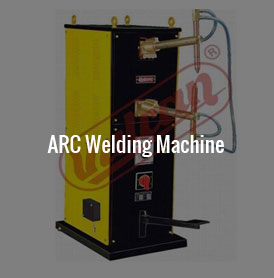
Figure 1: Heavy-Duty Industrial Spot Welding Machine Assembly Line at Canary Electricals, Morbi, Gujarat.
2. Top Industrial Spot Welding Machine Recommendations & Specifications
To assist global procurement officers in selecting the optimal machinery, Canary Electricals offers a wide array of Vulcan brand Spot Welding Machines ranging from 5 kVA utility bench units up to 100+ kVA heavy-duty pneumatic press-type spot welders. Below are our recommended product series tailored to distinct industrial applications.
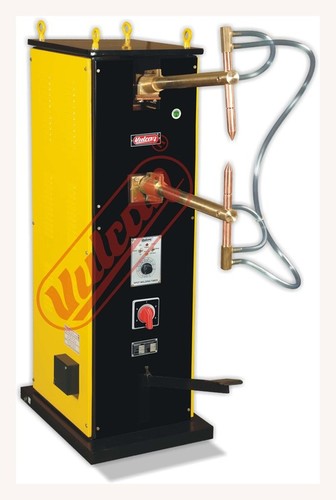
Vulcan Heavy-Duty Pneumatic Spot Welding Machine
Engineered for high-volume automated sheet metal shop production. Features dual-stage pneumatic cylinder actuation, digital micro-processor weld controller, and water-cooled copper alloy electrode arms.
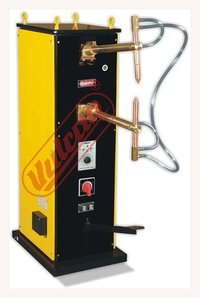
Vulcan Rocker Arm Foot-Operated Spot Welder
Ideal for job shops, HVAC ductwork, wire mesh fabrication, and maintenance workshops. Features adjustable mechanical leverage, robust class-H transformer insulation, and tap-change current control.
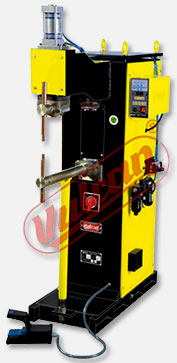
Vulcan Precision Electronic Benchtop Spot Welder
Designed for delicate electrical contacts, battery pack tab joining, instrument manufacturing, and thin gauge sheet assemblies requiring repeatable millisecond current pulsing.
Technical Specification Matrix Across Vulcan Spot Welder Range
The following engineering matrix outlines the technical parameters across our primary product models. Custom throat depths, specialized electrode holders, and multi-spot configurations are available upon request.
| Model Series | kVA Rating @ 50% | Max Welding Thickness (Mild Steel) | Secondary Voltage (Open Circuit) | Max Squeeze Force (daN) | Cooling Water Flow Rate |
|---|---|---|---|---|---|
| Vulcan VSW-05 | 5 kVA | 0.8 mm + 0.8 mm | 1.8 V – 3.2 V | 120 daN (Mechanical Foot) | 2 Liters / min |
| Vulcan VSW-15 | 15 kVA | 2.0 mm + 2.0 mm | 2.5 V – 4.5 V | 250 daN (Pneumatic / Foot) | 4 Liters / min |
| Vulcan VSW-25P | 25 kVA | 3.0 mm + 3.0 mm | 3.2 V – 5.8 V | 450 daN (Pneumatic Cylinder) | 6 Liters / min |
| Vulcan VSW-50P | 50 kVA | 4.5 mm + 4.5 mm | 4.0 V – 7.5 V | 750 daN (Heavy Pneumatic) | 10 Liters / min |
| Vulcan VSW-100P | 100 kVA | 6.0 mm + 6.0 mm (Structural) | 5.0 V – 9.5 V | 1200 daN (High Pressure Press) | 15 Liters / min |
3. Global Procurement Trends & Market Analysis (2025–2030)
The global demand for industrial spot welding machines is undergoing a significant transformation driven by material innovation, energy efficiency mandates, and smart factory integration. As automotive manufacturers transition toward Electric Vehicles (EVs) and structural lightweighting, B2B procurement patterns are shifting rapidly.
Key Sourcing Trends Shaping the Industry:
- Transition from AC to MFDC Inverter Technology: Traditional 50/60 Hz Single-Phase Alternating Current (AC) spot welders are increasingly being augmented or replaced by Medium Frequency Direct Current (MFDC) 1000 Hz inverter systems. MFDC technology reduces primary power consumption by up to 30-40%, eliminates phase imbalance on three-phase factory grids, and provides faster energy delivery ideal for joining high-thermal-conductivity materials such as aluminum alloys and galvanized sheet metal.
- Advanced High-Strength Steel (AHSS) & Mixed-Material Joining: Modern vehicle structures utilize Dual-Phase (DP) and Martensitic steels that require precise multi-pulse thermal profiles (Pre-heat, Weld, Post-heat temper) to prevent interface fracture and microstructural embrittlement. Modern spot welding procurement mandates digital controllers capable of storing multi-stage current waveforms.
- Energy Efficiency and Carbon Footprint Reduction: Energy costs represent a major share of total cost of ownership (TCO) in high-volume assembly lines. Buyers across Western Europe, North America, and East Asia prioritize transformers with high electrical efficiency, low open-circuit losses, and water cooling circuits integrated with smart flow monitoring.
- Industry 4.0 Integration & Quality Assurance: Modern procurement guidelines frequently specify dynamic resistance monitoring and adaptive control algorithms. Instead of relying solely on destructive teardown tests or manual ultrasonic inspection, automated spot welders continuously measure dynamic tip resistance during weld formation, automatically extending weld time or boosting current if contamination or fit-up gaps are detected.
4. Future Technological Developments in Resistance Spot Welding
The resistance welding industry continues to innovate to address emerging material challenges and automation goals. Looking toward the next decade, several key technological breakthroughs are establishing new benchmarks:
1. Servo-Electric Gun Actuation: Replacing traditional pneumatic cylinders with closed-loop servo-motor drives enables infinitely variable tip positioning, precise programmable squeeze forces, and reduced cycle times. Servo-actuated spot welding guns eliminate mechanical impact shock, significantly prolonging electrode tip life and eliminating floor vibration in precision cleanroom environments.
2. Artificial Intelligence & Closed-Loop Weld Quality Algorithms: AI-driven edge controllers analyze millisecond data points of current, voltage, tip displacement, and force. By leveraging neural networks trained on millions of weld cycles, future spot welders will instantly adjust energy delivery in real-time to guarantee 100% nugget integrity regardless of surface oil, mill scale, or zinc coating variations.
3. Advanced Electrode Material Formulations: Traditional RWMA Class 2 (Copper-Chromium) and Class 3 (Copper-Beryllium) electrodes are evolving. Advanced Dispersion-Strengthened Copper (Al2O3 alumina-dispersion strengthened copper) electrodes offer superior resistance to tip mushrooming and pickup when welding hot-dip galvanized steel sheets, extending dress intervals from 500 welds up to over 3,000 welds.
5. Comprehensive FAQ for Global Spot Welding Machine Buyers
Below are detailed answers to the most frequent technical, operational, and commercial questions asked by international buyers and engineering teams when sourcing Spot Welding Machines.
Calculating the required kVA rating depends on material type, sheet thickness stack-up, throat depth, and required production speed. A standard rule of thumb for clean low-carbon mild steel is to calculate the combined thickness of the joint. For example, joining two sheets of 1.5 mm steel (total 3.0 mm stack-up) requires approximately 9,000 to 10,000 Amperes of secondary current. With a secondary open-circuit voltage of 4 Volts, the instantaneous kVA required during the weld pulse is $P = V \times I = 4\text{ V} \times 10,000\text{ A} = 40\text{ kVA}$.
However, spot welding transformers are rated at a 50% duty cycle. To determine the continuous thermal kVA rating needed for your machine, multiply the peak kVA by the square root of the actual operational duty cycle: $\text{Continuous kVA} = \text{Peak kVA} \times \sqrt{\text{Duty Cycle}}$. Contact Canary Electricals' engineering team to run custom thermal simulations for your exact production line speed.
Rocker Arm Spot Welders: Utilize a pivoting upper arm actuated mechanically by a foot pedal or pneumatically by a rear-mounted cylinder. They are ideal for general sheet metal shop work, HVAC ducting, and lighter gauge materials (up to 2.5 mm + 2.5 mm). They offer high versatility and lower capital cost, but as the upper arm swings in an arc, electrode alignment can shift slightly under heavy forces.
Pneumatic Press-Type Spot Welders: Move the upper electrode in a direct, rigid vertical line via a top-mounted pneumatic ram. This linear motion ensures perfect perpendicular electrode contact, preventing electrode skidding and enabling much higher squeeze pressures (up to 1,200+ daN). Press-type welders are mandatory for structural automotive parts, projection welding (nuts and studs), high kVA applications (>35 kVA), and precision aerospace alloys.
Throat depth is the horizontal distance from the center of the electrode tips to the inner front face of the machine frame. Throat gap is the vertical clearance between the upper and lower horn arms. Larger throat depths allow operators to insert wider sheet metal panels or deep boxes into the machine. However, increasing throat depth increases the secondary loop area, which drastically elevates inductive reactance ($X_L = 2\pi f L$). This induction loss decreases the available secondary welding current at the tips unless primary transformer power is increased. When specifying a custom machine with Canary Electricals, balance your maximum component size with energy efficiency.
Resistance spot welding generates localized thermal energy exceeding 1,500°C at the metal interface. Without adequate water cooling directly internal to the copper electrode tips, copper softening occurs rapidly above 400°C. Uncooled tips suffer from rapid "mushrooming" (flattening and expansion of the tip contact area). As the tip area increases, current density ($\text{Amps/mm}^2$) drops proportionally, resulting in cold welds, undersized nuggets, and eventual weld failure. Vulcan Spot Welders feature internal tube-in-tube water circulation right to the tip face, maintaining optimal tip geometry and maximizing electrode lifespan.
Yes, but with strict technical considerations. Galvanized steel possesses a surface zinc layer that melts at a much lower temperature (419°C) than steel. Zinc alloys with the copper electrode tip, forming brass and causing rapid electrode deterioration. Welding galvanized steel requires approximately 20-30% higher welding current, higher force, and frequent automated tip dressing. Aluminum has extremely high thermal and electrical conductivity, requiring 3 to 4 times more welding current than mild steel within a very short burst (10–50 milliseconds). For high-volume aluminum welding, Canary Electricals recommends our Medium Frequency DC (MFDC) Inverter series or specialized capacitive discharge spot welders.
Industrial spot welders draw high instantaneous primary current during the weld cycle (typically lasting 0.05 to 0.5 seconds). Buyers must ensure their main supply transformer and circuit breakers can handle high single-phase or two-phase peak kVA spikes without causing excessive line voltage drops (flicker) across neighboring facility equipment. Canary Electricals supplies detailed primary electrical requirement charts, power factor correction capacitor recommendations, and step-up/step-down line transformers (such as our heavy-duty Vulcan Step-Up Transformers) to integrate seamlessly with various global supply voltages (208V, 220V, 380V, 415V, 480V at 50Hz or 60Hz).
6. Enterprise Strengths & Manufacturing Excellence: Canary Electricals
Choosing the right equipment partner requires evaluating manufacturing pedigree, engineering capability, quality systems, and long-term aftermarket support. Canary Electricals Pvt. Ltd. stands as a premier Indian manufacturer and exporter of heavy industrial welding equipment and air compressors, serving industrial clients globally since 1980.
Forty-Four Years of Engineering Expertise under the Vulcan Brand
Founded in 1980 by visionary engineers Mr. P. M. Vadalia and Late R. A. Patel, Canary Electricals Pvt. Ltd. has grown from a regional electrical transformer workshop into an international manufacturing force based in the industrial hub of Morbi, Gujarat, India. Today, under the leadership of Managing Director Mr. Deepak P. Vadalia, our company designs and manufactures over 100 distinct product models under the globally recognized Vulcan brand name.
Our manufacturing plant encompasses complete end-to-end production capabilities, including precision sheet metal fabrication, automatic transformer coil winding, vacuum pressure impregnation (VPI), CNC machining of copper conductor arms, and rigorous high-voltage electrical insulation testing laboratories.
Core Enterprise Advantages for International Buyers:
- ISO 9001:2015 Certified Quality Management System: Every Vulcan spot welder is constructed under strict ISO quality workflows. We utilize premium electrolytic grade copper (99.9% purity) for transformer windings and secondary busbars, guaranteeing maximum electrical efficiency and resistance to thermal breakdown.
- Tropicalized Design for Extreme Environmental Durability: Designed and built in India, Vulcan equipment is specifically engineered to endure severe voltage fluctuations ($\pm 15\%$), high humidity, ambient operating temperatures exceeding 45°C, and heavy dust environments commonly encountered in cement plants, steel mills, mining operations, and heavy fabricators.
- Comprehensive Global Export Infrastructure: Canary Electricals actively exports industrial machinery to over 30 countries across Africa, the Middle East, South Asia, and Latin America. We provide seaworthy export packaging (fumigated wooden crates, VCI corrosion inhibition wrapping), complete customs documentation, and full technical compliance support.
- Direct OEM Customization & Engineering Flexibility: Unlike off-the-shelf trading companies, we are a direct manufacturer. Our in-house design team can customize transformer kVA ratings, throat dimensions, stroke lengths, pneumatic circuit configurations, and multi-spot modular tooling to fit your exact production line geometry.

Ready to Upgrade Your Spot Welding Capabilities?
Contact our technical sales team today for customized quotations, engineering drawings, or factory lead-time confirmation. Our team responds within 24 business hours.
Inquire Now