Knowledge Base & Technical Insights

Industrial Welding &
Compressor Articles

Discover expert tutorials, buying guides, operational tips, and industry trends on MIG/MAG, Spot welding equipment and air compressors.

Blog

China Top 10 Inverter MAG Welding Machine Manufacturers?

China Top 10 Inverter MAG Welding Machine Manufacturers?

China’s inverter MAG welding machine sector deserves a closer look as manufacturers seek stable arc performance, lower energy use, and consistent weld quality. The World Steel Association reported 1.88 billion tonnes of global crude steel production in 2024. That scale matters: fabrication shops need equipment that can handle repeatable joints, varied materials, and demanding production schedules. Steel output alone, however, does not measure welding-machine demand. For buyers, an Inverter MAG Welding Machine is more than a power source. Wire-feed stability, control response, duty cycle, service access, and spare-parts availability all shape its value on the shop floor. A clean bead is reassuring. It is not the whole story. As welding-process expert John Norrish’s published work suggests, process choice should suit the application; put as a paraphrase, “Match the process to the job, not just the machine’s headline rating.” That is an editorial rendering, not a verbatim quotation. This “China Top 10” overview compares manufacturers through practical criteria: product range, technical documentation, quality systems, export experience, and after-sales support. Company claims still need checking. Specifications can look impressive on paper, while real performance depends on setup, consumables, and operator skill. Readers should verify certifications and test sample welds before purchase. The ranking is a starting point, not a substitute for due diligence.
Read more »
Ethan By:Ethan - October 30, 2026
Why Choose an Air Plasma Cutting Machine?

Why Choose an Air Plasma Cutting Machine?

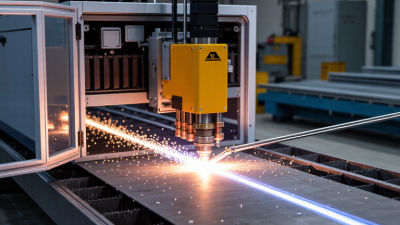
Choosing the right cutting equipment affects productivity, accuracy, operating costs, and workplace safety. An Air Plasma Cutting Machine offers a practical solution for workshops handling conductive metals. It uses a focused plasma arc to melt metal, while compressed air removes the molten material. This process can cut steel, stainless steel, and aluminum with impressive speed. It also supports detailed work, from straight plate cuts to small brackets and repair components. Experienced fabricators often value its quick setup. An operator can mark a cutting line, connect the air supply, and begin work within minutes. Compared with many mechanical methods, plasma cutting creates less physical contact with the workpiece. This reduces tool wear and makes irregular shapes easier to produce. A suitable machine can also complement CNC tables, improving repeatability across multiple parts. However, performance depends on amperage, air quality, consumables, and operator technique. Cheap compressed air can cause rough edges and shorten nozzle life. That limitation matters. This guide examines why businesses and independent makers choose an Air Plasma Cutting Machine. It considers cutting performance, material thickness, energy use, maintenance, and safety practices. It also explains where plasma technology may not be the best option. Very thin sheet can warp from excessive heat, while nonconductive materials require another method. These details deserve attention before purchase. A reliable decision should come from real workload demands, not attractive specifications alone. Even skilled users can overlook maintenance costs or underestimate ventilation needs. That honest assessment leads to safer operation and more consistent results.
Read more »
Charlotte By:Charlotte - October 25, 2026
What Is a Thyristorised Welding Rectifier?

What Is a Thyristorised Welding Rectifier?

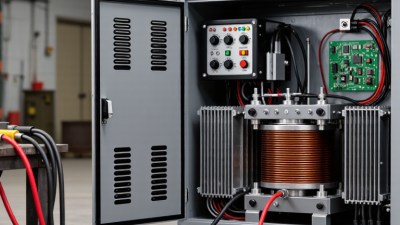
A Thyristorised Welding Rectifier converts incoming AC power into controlled DC welding current. It uses thyristors, also called silicon-controlled rectifiers, to regulate when electrical current enters the rectifier circuit. This timing changes the output available to the welding arc. In practical terms, the operator can adjust welding current through a control panel rather than relying on a fixed transformer output. The machine usually contains a transformer, thyristor bridge, cooling components, control circuitry, and protection devices. Inside the cabinet, heat sinks help manage the temperature created during continuous welding. The output should remain stable while the electrode touches the workpiece, even when arc length changes slightly. That stability matters during structural fabrication, repair work, and heavy plate welding. Less spatter can also mean less cleaning after the weld. It is a robust design. Compared with older magnetic-control rectifiers, thyristor control offers faster and more precise adjustment. However, it is not automatically better for every workshop. Its electronics require suitable cooling, careful inspection, and qualified servicing. Dust, loose connections, and excessive heat can reduce performance over time. A damaged control board may stop the machine completely, although the transformer remains intact. This detail is sometimes overlooked. Understanding how a Thyristorised Welding Rectifier works helps users select suitable current ranges, duty cycles, and maintenance practices. Manufacturer data remains essential, because designs differ in control response and protection features. The technology is dependable when correctly specified and maintained. Still, real welding results depend on more than the rectifier alone. Electrode choice, grounding, operator technique, and material condition all influence the final bead.
Read more »
Ethan By:Ethan - October 15, 2026
7 Tips for Choosing a Wire Butt Welding Machine

7 Tips for Choosing a Wire Butt Welding Machine

Choosing a Wire Butt Welding Machine is a production decision, not simply a purchasing task. The right model affects joint strength, wire waste, cycle time, and operator safety. A machine that looks efficient in a brochure may struggle with copper, stainless steel, or changing wire diameters. Industry data supports careful evaluation. MarketsandMarkets identifies automation, energy efficiency, and advanced resistance welding as major trends in the global welding equipment market. Grand View Research also reports steady market growth, driven by manufacturing upgrades and demand for repeatable weld quality. These trends matter on the factory floor. A stable weld can reduce rework, while poor alignment may leave twisted ends, burn marks, or hidden weak points. John C. Lippold, a recognized welding metallurgy expert, states, “Weldability is not an inherent property of a material; it depends on the process and conditions.” His warning is highly relevant here. Wire composition, diameter, surface condition, and tensile requirements must guide machine selection. Do not choose by power rating alone. This guide introduces seven practical tips for comparing control systems, clamping accuracy, welding speed, maintenance access, and after-sales support. It also examines sample testing and total operating cost. Those details are easy to overlook. They should not be. A small limitation remains. Published market reports often group butt welders with broader welding equipment categories. Therefore, supplier claims need independent verification through test welds, inspection records, and realistic production trials. The strongest choice is not always the most expensive machine. It is the one that delivers consistent joints under your actual working conditions.
Read more »
Charlotte By:Charlotte - October 10, 2026
Why Choose an Aluminum Welding Machine for Your Business?

Why Choose an Aluminum Welding Machine for Your Business?

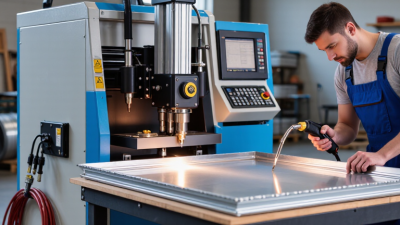
Choosing the right welding technology can shape production speed, product quality, and long-term operating costs. An Aluminum Welding Machine deserves attention because aluminum combines low weight, corrosion resistance, and strong recycling value. In a busy workshop, this may mean cleaner frames, lighter assemblies, and fewer handling problems. It can also mean a demanding learning curve. The International Aluminium Institute reports that recycled aluminum requires only about 5% of the energy used for primary aluminum production. That figure strengthens the business case for controlled fabrication and efficient material use. Less scrap matters. Every rejected panel, rail, or enclosure represents wasted metal, labor, shielding gas, and machine time. Modern welding systems can support repeatable parameters, stable arc performance, and better heat control. These features help reduce distortion, especially on thin sheets and complex joints. The American Welding Society’s AWS D1.2/D1.2M standard also highlights the need for qualified procedures when welding aluminum structures. However, equipment alone does not guarantee reliable results. Aluminum quickly forms an oxide layer, and its high thermal conductivity can pull heat away from the weld zone. Operators still need proper cleaning, torch technique, wire selection, and parameter testing. Small mistakes show clearly: a porous bead, a warped corner, or a weak start point. The answer is not automatic. A practical investment should consider duty cycle, pulse capability, service support, operator training, and expected production volume. This article examines why an Aluminum Welding Machine may fit a growing business, while also questioning when its cost and complexity may outweigh the benefits.
Read more »
Ethan By:Ethan - October 5, 2026
10 Best Pneumatic Welding Machines for Global Buyers

10 Best Pneumatic Welding Machines for Global Buyers

Global buyers are reassessing welding equipment as manufacturers demand faster cycles, stable quality, and lower energy waste. Reports from Grand View Research and Fortune Business Insights indicate steady growth in the global welding equipment market. Their findings also highlight automation, production efficiency, and advanced joining systems as major purchasing drivers. A Pneumatic Welding Machine converts compressed air into repeatable clamping or forming force. That detail matters on a busy factory floor. Operators need consistent pressure, clean electrode contact, and predictable maintenance intervals. Dr. John C. Lippold, a widely cited welding metallurgy specialist, has emphasized, “Weld quality is built into the process, not inspected into it.” The point is practical, although supplier claims still require careful verification. This guide examines ten machines for international buyers. It considers welding performance, air consumption, duty cycle, electrode access, control systems, safety features, and after-sales support. Certification deserves attention. So does local service. A low purchase price can become expensive when seals, valves, or transformers are difficult to replace. Machine specifications may also vary between regions, sometimes more than expected. Buyers should confirm voltage, pneumatic requirements, spare-part availability, and applicable standards before ordering. The strongest choice is not always the fastest machine. It is the one that fits the material, production volume, workshop air supply, and operator skill. Small details matter. This comparison aims to make those details visible.
Read more »
Ethan By:Ethan - September 30, 2026
How to Choose an Oil Cooled Welding Machine for Your Needs

How to Choose an Oil Cooled Welding Machine for Your Needs

Choosing an Oil Cooled Welding Machine is not just a matter of picking the highest amperage. The right unit should match your welding process, materials, workload, and available power supply. A machine used for occasional repairs in a small workshop may have very different needs from one running repeated production cycles. Cooling design matters, too. Check the manufacturer’s stated duty cycle, output range, and operating limits rather than assuming that an oil-cooled model can run continuously. Details count. Start with the work itself. Note the material thickness, joint type, and expected weld frequency. Then compare those needs with the machine’s specifications. A clear, accessible control panel can help operators set repeatable parameters, while suitable cables and connectors make daily handling easier. Ask about oil inspection, replacement intervals, and service access before buying. These practical questions are easy to overlook. They shouldn’t be. Also consider the work area. Measure the machine’s footprint, confirm that the power supply is suitable, and account for ventilation and safe clearance around the unit. If possible, speak with a qualified supplier or technician who understands your application. Their advice should be checked against the product documentation, not accepted blindly. No single model fits every shop, and a specification sheet cannot reveal every inconvenience. Think about noise, maintenance time, and how often settings may change. A careful comparison helps you choose a reliable machine without paying for capacity your work rarely needs.
Read more »
Amelia By:Amelia - September 25, 2026
What Are the Top 10 Types of Argon Welding Machines?

What Are the Top 10 Types of Argon Welding Machines?

Argon welding machines support clean, controlled welding across aerospace, automotive, fabrication, and maintenance work. In practice, the phrase usually refers to TIG or GTAW equipment using argon shielding gas. The technology looks simple. Its results are not. Grand View Research valued the global welding equipment market at approximately USD 16.31 billion in 2023. Its report also projects continued growth through 2030, driven by industrial production and automation. MarketsandMarkets presents a different market boundary and forecasts the sector rising from about USD 20.5 billion in 2023 to USD 25.6 billion by 2028. These figures are not identical, and that difference matters. Report definitions, product categories, and regional coverage can change the result. Still, both reports indicate sustained demand for reliable welding systems. This guide examines the top 10 types of Argon Welding Machine, including transformer models, inverter units, AC/DC TIG machines, pulse systems, orbital equipment, and robotic platforms. Each type has a distinct operating purpose. A fabricator may need stable amperage for a thin stainless-steel tube. An aluminum workshop may require balanced AC cleaning and penetration control. A pipeline contractor may value portability, duty cycle, and field serviceability. The ranking is not universal. Application changes everything. Machine quality matters, but operator training, torch setup, gas purity, tungsten preparation, and joint design also affect the weld. A costly machine cannot correct poor preparation. That point is easy to overlook. The following comparison therefore considers performance, control, portability, maintenance, safety features, and suitability for real working conditions, while recognizing that no single model fits every workshop.
Read more »
Amelia By:Amelia - September 20, 2026
China Top 10 MIG Welding Machine Manufacturers?

China Top 10 MIG Welding Machine Manufacturers?

China has become a major source of welding equipment for workshops, factories, construction projects, and metal fabrication businesses. This guide examines China’s top 10 MIG Welding Machine manufacturers through practical and verifiable criteria. Production capability, product consistency, certifications, technical support, and export experience all matter. The details matter. A reliable manufacturer should provide stable arc performance, controlled wire feeding, and clear operating instructions. These factors affect weld appearance, penetration, spatter, and operator efficiency. We also consider machine power ranges, duty cycles, inverter technology, cooling systems, and compatibility with common welding wires. Real workshop conditions can reveal more than polished brochures. A machine may perform well during a short demonstration but struggle under continuous production loads. Supplier evaluation also includes factory quality control, inspection procedures, spare-parts availability, warranty terms, and communication responsiveness. Buyers should request test welds, certification documents, and detailed technical specifications before placing an order. Customer feedback can be useful, although it should be checked against independent evidence. No ranking is perfect. Manufacturing quality may vary between product series, and published data is not always equally detailed. That limitation deserves attention. This overview is designed for importers, distributors, fabricators, and professional users comparing Chinese welding equipment. It does not treat price as the only measure of value. Instead, it explains which manufacturers appear dependable, what their strengths may be, and where buyers should ask harder questions. Careful selection can reduce downtime, improve weld consistency, and support safer daily operations.
Read more »
Charlotte By:Charlotte - September 16, 2026
How to Choose the Best CO2 MIG Welding Machine

How to Choose the Best CO2 MIG Welding Machine

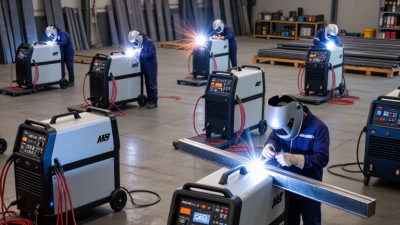
Choosing the right CO2 MIG Welding Machine is not simply a matter of comparing amperage, price, and appearance. In a busy fabrication shop, the decision affects arc stability, gas consumption, weld penetration, operator fatigue, and long-term maintenance. A machine that looks powerful on a specification sheet may struggle with thin automotive panels or inconsistent workshop power. Real conditions matter. The American Welding Society’s Welding Workforce Data report has highlighted a serious shortage of skilled welding professionals in the United States. That pressure makes productivity and ease of operation increasingly important. Meanwhile, ISO 14175 classifies shielding gases by composition and performance, reminding buyers that pure carbon dioxide behaves differently from mixed gases. It can create deeper penetration and more spatter, but it may also demand better parameter control. Small adjustments matter. The U.S. Bureau of Labor Statistics continues to identify welding as an important manufacturing occupation, supporting the need for dependable equipment and practical training. However, industry data cannot choose a machine for every workshop. Material thickness, duty cycle, wire size, input voltage, and service support must be examined together. A 250-amp unit may be sufficient for light structural work, yet unsuitable for repeated heavy fabrication. That assumption deserves testing. This guide explains how to compare machines using measurable criteria and workshop experience. It considers arc performance, control functions, safety features, operating costs, and repair access. The best choice is rarely the most expensive model. It is the machine that delivers stable welds, predictable results, and manageable costs during real production. работоспособность matters more than marketing language.
Read more »
Ethan By:Ethan - September 16, 2026
Top Spot Welding Machine Manufacturers for Global Buyers

Top Spot Welding Machine Manufacturers for Global Buyers

For global buyers, choosing a Spot Welding Machine is not simply a price comparison. It is a decision about joint strength, production stability, service access, and long-term operating cost. A reliable machine should deliver consistent current, controlled electrode pressure, accurate welding time, and repeatable results across thousands of cycles. These details matter on a busy factory floor, where loose connections, overheated tips, or uneven weld nuggets can quickly create waste. The best manufacturers usually provide more than attractive specifications. They offer documented testing, practical technical support, spare electrodes, controller training, and clear maintenance guidance. Buyers should inspect transformer quality, pneumatic or servo systems, cooling design, safety features, and compatibility with the intended metal thickness. Ask for sample welds. Check the nugget diameter. Review production references when possible. John C. Lippold, a respected welding engineer and educator, has described welding as “both an art and a science.” That observation remains relevant here. A machine may look impressive in a catalog, yet perform poorly when settings, materials, and operator skill do not align. This is an uncomfortable point, but it deserves attention. Some rankings oversimplify quality. Manufacturers also differ in customization, delivery reliability, documentation, and after-sales response. Global buyers should compare verified capabilities rather than accept broad marketing claims. The following overview examines leading Spot Welding Machine manufacturers through these practical measures, while recognizing that no supplier is perfect for every factory, material, or production volume.
Read more »
Amelia By:Amelia - September 16, 2026