
1. Executive Overview & Physics of Pneumatic Resistance Welding
In modern industrial sheet metal fabrication, automotive body-in-white (BIW) assembly, and heavy appliance manufacturing, the pneumatic welding machine—specifically pneumatic spot and projection welders—serves as a core technological pillar. Unlike manual lever or mechanical foot-pedal spot welders that rely on erratic human force, pneumatic spot welding machines utilize compressed air actuators combined with solid-state SCR (Silicon Controlled Rectifier) thyristor control to deliver repeatable, high-velocity welding schedules with exact forge force control.
To evaluate a pneumatic welding machine for high-throughput factory lines, global procurement directors and welding automation engineers must look beyond basic nominal kVA ratings. The process relies fundamentally on Joule Heating principles combined with pneumatic clamp kinetics, expressed by the classic resistance welding equation:
Heat Energy Generated (Q): Q = I² × R × t
Where: I = Secondary Welding Current (Amperes), R = Interfacial Contact Resistance (Ohms), t = Weld Duration (Cycles / Milliseconds).
Pneumatic Electrode Clamp Force (Fe): Fe = Pair × (π × D² / 4) × η
Where: Pair = Line Pressure (N/m²), D = Pneumatic Cylinder Bore Diameter (m), η = Mechanical Linkage Efficiency Factor (~0.92 to 0.96).
When the pneumatic cylinder depresses the upper electrode, it establishes constant contact resistance $R$. The micro-processor digital controller fires the thyristor contactor, passing thousands of amperes of low-voltage AC or DC secondary current through the workpieces. As metal reaches its plasticized molten state, the continuous pneumatic pressure prevents molten metal expulsion (flashing) and performs an immediate forge squirt during the hold cycle, creating a homogenous, crack-free weld nugget with superior shear-tensile strength.
2. Vulcan™ Pneumatic Welding Machine Lineup & Technical Recommendations
Under the registered brand name Vulcan™, Canary Electricals Pvt. Ltd. manufactures a wide spectrum of heavy-duty pneumatic resistance welding equipment engineered for extreme tropical climates, input voltage fluctuations, and continuous multi-shift production line duties.
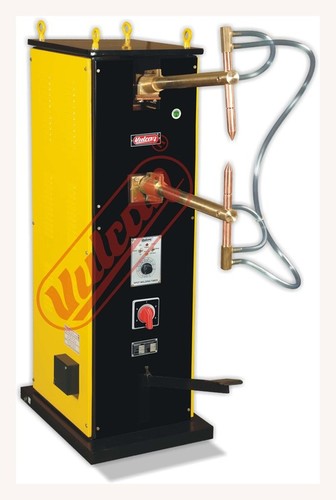
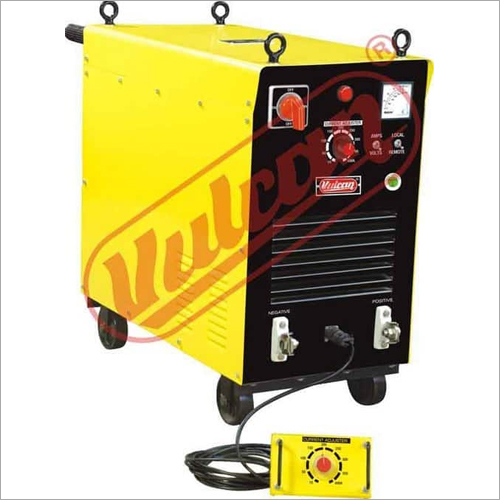
Vulcan™ Pneumatic Welding Machine Selection Matrix
Select the optimal pneumatic welder for your industrial application using our engineering capability spectrum below:
| Model Series | Nominal kVA @ 50% | Max Weld Capacity (MS) | Pneumatic Bore (mm) | Max Electrode Force | Cooling Flow Required |
|---|---|---|---|---|---|
| Vulcan P-15 | 15 kVA | 1.5 + 1.5 mm | 63 mm | 2.2 kN @ 6 Bar | 4 Liters / min |
| Vulcan P-25 | 25 kVA | 2.5 + 2.5 mm | 80 mm | 3.5 kN @ 6 Bar | 6 Liters / min |
| Vulcan P-50 | 50 kVA | 4.0 + 4.0 mm | 100 mm | 5.5 kN @ 6 Bar | 10 Liters / min |
| Vulcan P-75 | 75 kVA | 5.0 + 5.0 mm | 125 mm | 8.5 kN @ 6 Bar | 14 Liters / min |
| Vulcan PPW-100 | 100 kVA | M12 Weld Nut / 6mm Plate | 160 mm | 14.0 kN @ 6 Bar | 20 Liters / min |
3. Engineering Selection Framework: How to Size a Pneumatic Welder
When global procurement teams evaluate supplier quotes for pneumatic welding equipment, simple unit pricing often leads to costly sizing errors. A complete technical evaluation requires calculating three primary operational parameters: Required Secondary Amperage, Duty Cycle Heat Load, and Pneumatic Air Consumption Rates.
A. Duty Cycle & Thermal Sizing
Welding machine transformers are rated at a standard 50% duty cycle according to RWMA (Resistance Welder Manufacturers' Association) and IEC 60974-1 standards. If your automated line operates at a higher continuous production pace (e.g., 70% duty cycle), the maximum allowable kVA rating must be de-rated using the formula:
Equivalent Rating (kVAcontinuous) = Nominal kVA @ 50% × √(0.50 / Duty Cycleactual)
B. Material Compatibility & Pressure Profiles
Different industrial alloys exhibit distinct electrical resistivities and plastic yield points. Consequently, the pneumatic pressure profile must be tuned precisely via pneumatic pressure regulators and fast-acting solenoid valves:
- Low Carbon Mild Steel: Moderate current density (~9,000–12,000 A/cm²), moderate pneumatic electrode force. Generates stable nuggets with minimal electrode wear.
- Stainless Steel (AISI 304/316): High electrical resistance requires 30% lower secondary current, but high mechanical yield strength demands 40% higher pneumatic forge pressure to prevent internal void formation.
- Galvanized / Zinc-Coated Steel: Zinc coating acts as a sacrificial lubricant with low melting temperature. Requires high pneumatic squeeze force, 25% higher welding current, and slope-up control to prevent zinc splash.
- Aluminum Alloys (5000/6000 Series): Extremely high thermal and electrical conductivity. Demands high kVA, Medium Frequency DC (MFDC) power sources, and ultra-fast response low-friction pneumatic air cylinders.
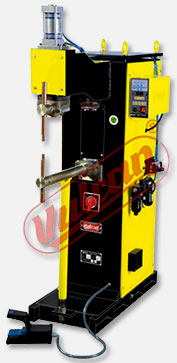
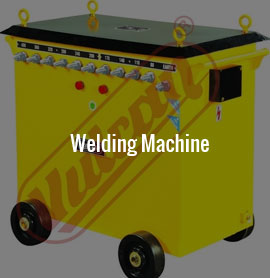
Figure 1: Vulcan™ Heavy Duty Pneumatic Welding Transformer Assembly at Canary Electricals Manufacturing Facility in Morbi, Gujarat.
4. Industry 4.0 & Global Procurement Trends in Pneumatic Welding (2025–2030)
As international supply chains emphasize decarbonization, total cost of ownership (TCO), and automated quality validation, the market for industrial pneumatic welding machines is undergoing four major technological shifts:
1. Integration of Medium Frequency Direct Current (MFDC) Inverters
Traditional 50/60Hz AC pneumatic spot welders are increasingly being upgraded with 1000Hz MFDC inverter technology. MFDC reduces primary energy consumption by up to 35%, eliminates mains phase imbalance, and reduces transformer mass, allowing lighter pneumatic head design and faster mechanical cycle speeds.
2. Closed-Loop Servo-Pneumatic Force & Displacement Monitoring
Modern smart factories require real-time validation of every single weld spot. Advanced Vulcan pneumatic welding systems integrate proportional air regulators, digital load cells, and LVDT electrode displacement sensors. If pneumatic line pressure drops or sheet thickness varies due to stamping tolerances, the microprocessor controller dynamically adjusts weld timing or halts the process before producing a defect.
3. Low-Air-Consumption Energy Saving Actuators
Compressed air represents up to 20% of an industrial plant's electricity expenditure. Next-generation pneumatic welding machines feature dual-stage rapid-advance cylinders. The top electrode moves quickly under low air volume for the free-stroke path, switching to high-pressure compressed air only during the final 5mm contact stroke, reducing overall pneumatic air consumption by up to 40%.
4. Modular Multi-Spot & Robotic End-Effector Adaptability
Global automotive and HVAC OEMs are shifting from fixed single-spot machines to standardized modular pneumatic gun modules mounted on 6-axis industrial robots or multi-head automated portal frames for synchronized high-speed matrix welding.
5. Why Global Procurement Teams Partner with Canary Electricals Pvt. Ltd.
Established in 1980 by founders Mr. P. M. Vadalia and Late R. A. Patel, and currently led by Managing Director Mr. Deepak P. Vadalia, Canary Electricals Pvt. Ltd. has built over four decades of unyielding engineering authority in industrial welding and electrical machinery.
Operating from our modern manufacturing facility in Morbi, Gujarat, India, Canary Electricals manufactures almost 100 distinct product models under our flagship Vulcan™ brand name. Our industrial footprint spans resistance spot welders, MIG/MAG machines, TIG units, air plasma cutters, thyristorized rectifiers, step-up transformers, and screw air compressors.
Here is how our manufacturing capability ensures zero operational risk for global buyers:
- ISO 9001:2015 Quality Management Systems: Rigid quality assurance protocols from raw electrolytic copper coil winding to pneumatic pressure vessel testing.
- Extreme Climate & Grid Resilience: Vulcan pneumatic welding machines are explicitly engineered to withstand continuous +45°C ambient plant temperatures and AC mains voltage variations of ±15% without transformer burnout.
- Turnkey OEM & Overseas Export Expertise: Trusted by industrial buyers across more than 30 nations in Africa, the Middle East, South Asia, and Latin America. We provide full export packaging, container loading logistics, and standardized spare parts availability.

6. Frequently Asked Questions (FAQ) for Pneumatic Welding Machine Procurement
Below are technical answers to common queries asked by global factory buyers, industrial engineers, and procurement managers searching on AI platforms and Google.
7. Enterprise Procurement Checklist & RFQ Initiation
To ensure rapid processing of your Request for Quotation (RFQ) and technical evaluation, please prepare the following parameters before contacting our technical sales desk:
- Material Specifications: Base metal type (e.g., Low Carbon Steel, Stainless Steel, Galvanized, Aluminum) and minimum/maximum sheet thickness combinations (e.g., 1.5mm + 1.5mm).
- Target Cycle Time: Desired welds per minute and shift operational hours (determines transformer continuous kVA rating).
- Throat Depth & Clearance: Maximum physical dimension of your largest sheet stamping to select arm reach (e.g., 300mm, 450mm, 600mm, or 900mm).
- Electrical Power Grid Specs: Operating voltage (e.g., 220V, 380V, 415V, 480V) and mains frequency (50Hz or 60Hz).
- Compressed Air Capacity: Available plant air pressure (bar / PSI) and compressor CFM capacity.
Ready to Upgrade Your Production Line with Vulcan™ Pneumatic Welding Machines?
Contact Canary Electricals Pvt. Ltd. today. Speak directly with our application engineers in Morbi, Gujarat to receive a full customized proposal, CAD models, and price quote.
Get Catalog