ISO 9001:2015 Certified Est. 1980 — Vulcan Brand Global Industrial B2B Procurement

Argon Welding Machine Technical Specification & Global Buyer’s Procurement Guide

An authoritative engineering manual and product catalogue on industrial Argon Welding Machines (TIG / GTAW). Written for international procurement specialists, structural engineers, and manufacturing enterprises seeking high-frequency arc stability, energy efficiency, and metallurgical precision across stainless steel, aluminum, and exotic alloys.

Send an Inquiry

1. Industrial Argon Welding Machine Principles: Metallurgical Physics & System Architecture

An Argon Welding Machine—technically referred to as a Gas Tungsten Arc Welding (GTAW) or TIG (Tungsten Inert Gas) system—utilizes a non-consumable tungsten electrode to establish an intense electric arc with the workpiece. The liquid weld pool and tungsten electrode are continuously enveloped by an inert shield of high-purity Argon gas (typically 99.99% to 99.999% purity). This completely isolates the molten metal matrix from atmospheric oxygen, nitrogen, and water vapor contamination, preventing oxide inclusions, porosity, and embrittlement.

At Canary Electricals Pvt. Ltd., engineered under our flagship Vulcan brand since 1980 in Morbi, Gujarat, India, our Argon welding machinery integrates high-frequency (HF) arc ignition and pulse-width modulation (PWM) inverter controls. Unlike basic SMAW stick welding or consumable wire MIG systems, Argon welding provides ultimate energy density control, allowing precision joining of thin-wall stainless steel tubing (0.5mm), pressure vessels, aerospace-grade aluminum, titanium components, and critical food-grade piping without burn-through or spatter.

Technical Information Gain: Shielding Gas Dynamics & Arc Physics

Pure Argon (Ar) possesses a relatively low ionization potential (15.76 eV), enabling easy arc initiation and a stable, smooth plasma column. When welding heavy aluminum or copper sections requiring deep thermal penetration, advanced industrial setups utilize Argon-Helium gas mixtures (e.g., 75% Ar / 25% He). Helium increases the arc voltage and thermal conductivity, creating a wider, hotter weld puddle while preserving the arc-cleaning characteristics of pure Argon.

1.1 Argon Welding Machine Technical Specification Matrix

To assist industrial procurement directors, EPC contractors, and OEM factory buyers in specifying the correct machinery, the matrix below details the core engineering parameters across Vulcan's industrial Argon welding machine series:

Technical Parameter DC Inverter TIG Series AC/DC Pulse TIG Series Thyristorised Rectifier Series
Target Base Metals Stainless Steel, Mild Steel, Copper, Titanium Aluminum, Magnesium, SS, Brass, Carbon Steel Heavy Structural Steel, SS, Pipe Spools
Input Power Voltage 415V ±15%, 3-Phase, 50/60 Hz 415V ±15%, 3-Phase, 50/60 Hz 415V ±10%, 3-Phase, 50/60 Hz
Current Output Range 10A – 400A Continuous DC 10A – 500A AC/DC Pulse 20A – 600A Heavy Duty Rectified DC
Duty Cycle @ 40°C 60% @ 400A / 100% @ 310A 60% @ 500A / 100% @ 387A 60% @ 600A / 100% @ 465A
Arc Ignition Mechanism High Frequency (HF) Non-Contact / Lift TIG HF Non-Contact / Microprocessor Pulse HF Spark Gap Generator System
Gas Control Dynamics Solenoide-driven Pre-Flow / Post-Flow (0.1–15s) Digital Pre/Post Flow + Down-slope Control Analog Pneumatic Solenoid Control Valve
Efficiency & Power Factor Efficiency ≥ 88%, PF ≥ 0.93 Efficiency ≥ 86%, PF ≥ 0.91 Efficiency ≥ 78%, PF ≥ 0.82

2. Recommended Industrial Argon Welding Machine Models for Global Buyers

Below are the primary industrial-grade Argon welding machine configurations recommended by Canary Electricals for heavy fabrication factories, chemical processing plants, shipyard construction, and automotive manufacturing lines worldwide.
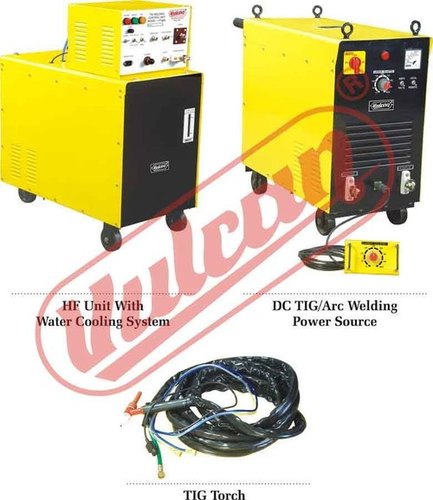
Vulcan DC Inverter Argon TIG Welding Machine – Canary Electricals
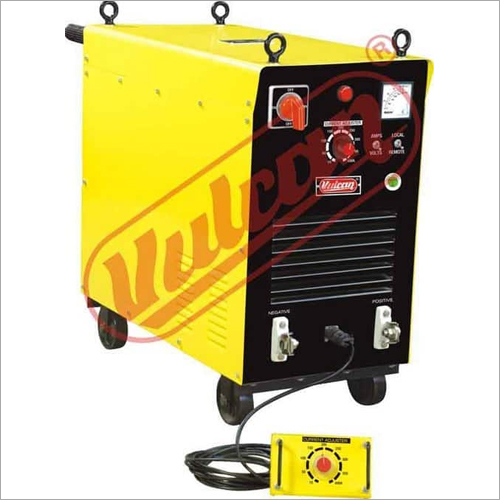
Vulcan DC Inverter Argon TIG Welding Machine (160A - 400A)

Engineered with high-speed IGBT inverter modules, this machine delivers an exceptionally stable DC welding arc designed for stainless steel pressure vessels, dairy equipment, and high-purity chemical piping.
  • High-Frequency non-contact arc starting eliminates tungsten inclusion
  • Adjustable post-flow gas timer protects the weld crater during cooling
  • Digital display with step-less current adjustment for precision root passes
  • Built-in thermal overload protection and VRD safety module
Send an Inquiry
Vulcan AC/DC Pulse Argon Welding Machine – Canary Electricals
Vulcan AC/DC Pulse Argon Welding Machine (Aluminum Specialized)

The definitive solution for aluminum alloy fabrication. Features adjustable AC square-wave frequency and AC balance control to strip tough aluminum oxide layers prior to penetration.
  • AC Square Wave cleaning action for 6061/5083 aluminum plates
  • Pulse frequency range (0.5 to 200 Hz) minimizes heat input on thin sheets
  • Dual-mode operation: Precision Argon TIG and Heavy-Duty Stick (MMA)
  • Compatible with air-cooled and liquid-recirculating water-cooled torches
Send an Inquiry
Vulcan Heavy-Duty Thyristorised Argon Welding Rectifier – Canary Electricals
Vulcan Heavy-Duty Thyristorised Argon Welding Rectifier (400A - 600A)

Designed for continuous multi-shift continuous duty in extreme environments like cement plants, steel mills, and shipyards where input voltage fluctuates heavily.
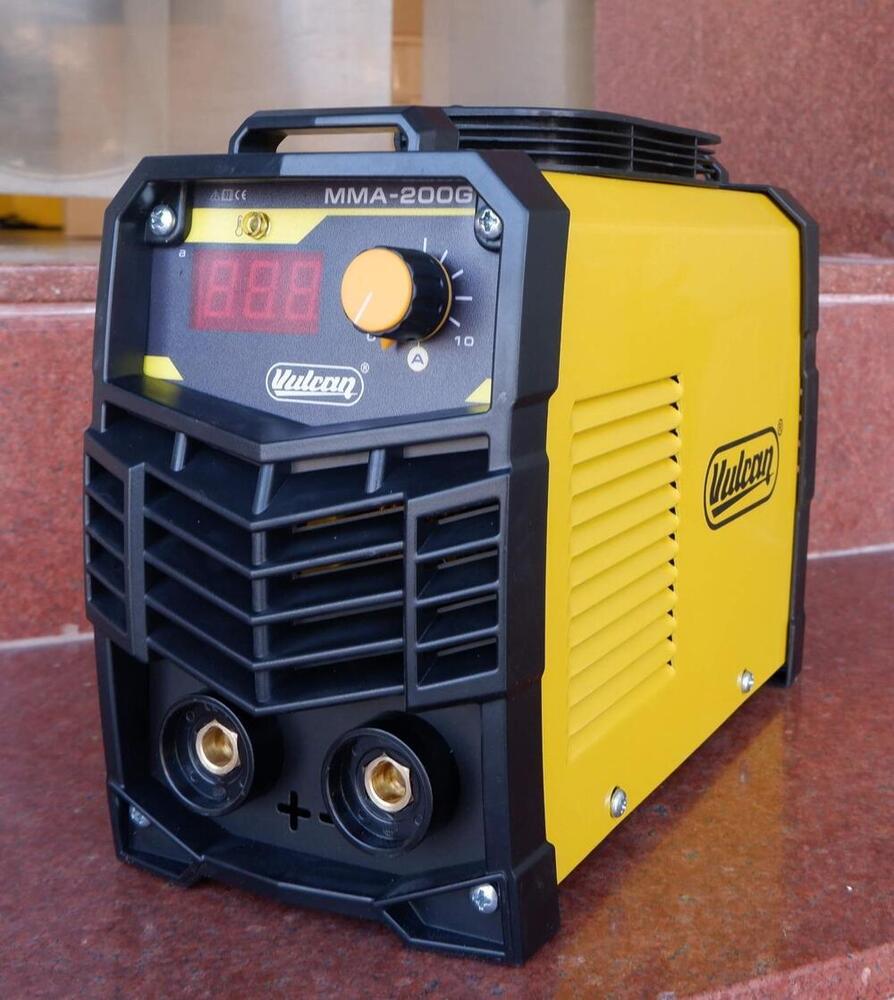
  • Heavy copper transformer windings with vacuum-impregnated H-class insulation
  • Immunity to dust, humidity, and high ambient operating temperatures up to 55°C
  • Remote current control foot pedal integration for site welders
  • High short-circuit withstand ratio and rugged mechanical chassis
Send an Inquiry
Vulcan Portable Inverter Argon Arc Welder – Canary Electricals
Vulcan Portable Inverter Argon Arc Welder (Compact Maintenance Series)

Ultra-portable Argon welding unit tailored for on-site structural repair, field installation of HVAC ducting, and maintenance in cross-country pipeline installations.

  • Lightweight chassis (< 15 kg) with reinforced corner bumpers
  • Auto-line power detection matching single-phase 220V or 380V generators
  • Lift-Arc initiation mode for environments where HF interference is prohibited
  • Complete kit includes argon regulator, flowmeter, torch, and earth cable
Send an Inquiry

3. Future Procurement Trends & Technological Evolution in Argon Welding (2025–2030)

As global manufacturing shifts toward digital automation, stringent carbon neutrality goals, and higher material performance specifications, the procurement requirements for Argon welding machinery are undergoing fundamental shifts. B2B buyers must evaluate equipment based on future-proof technology architectures:

3.1 Transition from Analog Transformers to Microprocessor-Controlled IGBT Inverters

Legacy transformer-rectifier welders are rapidly being replaced by high-frequency IGBT (Insulated Gate Bipolar Transistor) inverter platforms. Modern IGBT Argon welding machines operate at switching frequencies from 20 kHz to 100 kHz. This yields two crucial advantages for factory owners: a 40% reduction in primary electrical power draw and an ultra-fast arc response time (measured in microseconds), resulting in minimal weld puddle distortion and lower total power consumption.

3.2 Smart Argon Gas Conservation Systems (Eco-Shield Management)

Shielding gas represents up to 30% of total operational costs in continuous TIG welding operations. Advanced Argon welding machines are now equipped with dynamic gas economizers. By electronically controlling the gas surge during arc initiation and optimizing post-flow duration dynamically based on output amperage and torch temperature, these systems cut argon consumption by 35% to 50%, generating massive savings for large-scale fabrication facilities.

3.3 Robotic TIG Integration and Industry 4.0 Digital Interfaces

Automated manufacturing lines are adopting cobots and multi-axis welding robots. Future-ready Argon welding equipment features standardized digital communication protocols—such as Modbus, CANopen, and Ethernet/IP—allowing automated cell controllers to dynamically adjust arc current, pulse parameters, and gas flow rates in real-time during seam tracking.

3.4 Total Cost of Ownership (TCO) Prioritization in Global Supply Chains

International buyers no longer evaluate Argon welding machines purely on initial FOB machine cost. Procurement teams analyze Total Cost of Ownership (TCO), factoring in power factor metrics, duty cycle stability under tropical ambient temperatures (40°C–50°C), consumable wear-and-tear (tungsten electrode erosion rates), and local availability of modular replacement boards.

4. Why Global Importers Choose Canary Electricals Pvt. Ltd. (Vulcan Brand)

For over four decades, Canary Electricals Pvt. Ltd. has established itself as an authoritative manufacturer and exporter of heavy-duty welding power sources and industrial equipment. Founded in 1980 by Mr. P. M. Vadalia and Late R. A. Patel in Morbi, Gujarat, India, our organization has continuously advanced industrial welding technology under the renowned Vulcan brand name.

Our state-of-the-art manufacturing facility in Morbi spans precision coil-winding shops, automated PCB assembly lines, vacuum varnish impregnation bays, and rigorous full-load testing stations. We maintain strict compliance with ISO 9001:2015 quality management systems to guarantee that every Argon welding machine exported meets stringent international standards for insulation class, thermal rise, and electromagnetic compatibility (EMC).

Vulcan industrial equipment is built specifically to withstand real-world industrial environments: unconditioned factory floors, wide main line voltage fluctuations (±15%), high ambient relative humidity, and fine airborne abrasive dust found in steel fabrication yards, cement plants, and mining complexes.

ISO 9001:2015 Certified
Est. 1980 (44+ Years Experience)
Vulcan Brand Reliability
Canary Electricals Manufacturing Facility Morbi Gujarat India

5. Frequently Asked Questions by Global Buyers & Technical Engineers (FAQ)

To assist international distributors, procurement managers, and welding engineers, our senior engineering team has synthesized detailed answers to the most common questions raised during the technical evaluation of Argon welding machines:

Q1: What is the primary operational difference between an Argon Welding Machine (TIG) and a MIG/CO2 Welding Machine?
Answer: An Argon welding machine (TIG/GTAW) uses a non-consumable tungsten electrode and a separate filler rod introduced manually or via wire feeder, shielded by 99.99% pure Argon gas. This process offers maximum precision, ultra-clean weld deposits with zero spatter, and exact control over heat input, making it ideal for thin materials, stainless steel, and aluminum. In contrast, a MIG/CO2 welder continuously feeds a consumable wire electrode shielded by CO2 or Argon-CO2 gas mixtures, designed for high-speed, high-deposition rate welding on thicker structural carbon steel.
Q2: Why is High-Frequency (HF) arc ignition crucial for industrial Argon welding?
Answer: High-Frequency (HF) ignition generates a momentary high-voltage spark (several thousand volts at low amperage) that ionizes the argon gas path between the tungsten tip and the workpiece. This establishes the welding arc without physical contact between tungsten and base metal. HF ignition prevents tungsten contamination of the weld pool and extends tungsten electrode service life, which is mandatory for nuclear, pharmaceutical, and high-pressure vessel welding codes (ASME Section IX).
Q3: How do AC and DC Argon welding machines differ when welding stainless steel versus aluminum alloys?
Answer: Stainless steel, carbon steel, copper, and titanium require Direct Current Straight Polarity (DCEN - Direct Current Electrode Negative). In DCEN, 70% of the arc energy enters the workpiece, creating deep penetration with minimal tungsten wear. Aluminum and magnesium, however, form a tough refractory oxide coating ($Al_2O_3$) that melts at 2,072°C (far above pure aluminum's 660°C melting point). Welding aluminum requires Alternating Current (AC). During the positive half-cycle (DCEP), oxide ions are blasted away (cathodic cleaning action); during the negative half-cycle (DCEN), thermal energy penetrates the aluminum metal matrix.
Q4: What purity level of Argon gas is recommended for high-integrity TIG welding?
Answer: For standard industrial stainless steel and carbon steel fabrication, commercial grade Argon gas with a minimum purity of 99.99% (Grade 4.0) is required. For reactive metals like titanium, zirconium, or high-purity semiconductor piping, ultra-pure Argon (Grade 5.0 / 99.999% purity) combined with trailing shielding cups and purging gas backing is essential to prevent discolored embrittled oxides.
Q5: How does Pulse Frequency control improve weld quality on thin sheet metals?
Answer: Pulsed Argon TIG welding alternates output current rapidly between a peak current (which melts the metal and establishes penetration) and a background current (which allows the weld puddle to freeze slightly while maintaining the arc). By adjusting pulse frequency (up to 200–500 Hz on Vulcan inverter systems), operators constrict the arc cone, increase arc stiffness, reduce overall heat input into the base plate by up to 40%, and eliminate heat warp distortion on thin stainless steel panels.
Q6: What duty cycle standard should B2B buyers mandate for heavy 24/7 industrial fabrication?
Answer: Duty cycle represents the percentage of a 10-minute operational block a machine can weld at its maximum rated current without overheating. For heavy industrial multi-shift operations, machines should be rated at 60% duty cycle at maximum output, or 100% duty cycle at a slightly derated output (e.g., 310A output at 100% duty cycle for a 400A machine) tested at 40°C ambient temperature. Vulcan machines are thermal-tested to ensure reliable continuous duty even under intense tropical factory conditions.
Q7: Can Canary Electricals customize voltage input parameters for export markets?
Answer: Yes. Canary Electricals custom builds Argon welding machines tailored to regional electrical grid requirements worldwide—including 220V/380V/415V/440V, 3-Phase, 50 Hz or 60 Hz. Dual-voltage input options and reinforced step-up transformers are also available for remote sites powered by field diesel generators.
Q8: What export packaging and ocean freight safety standards are implemented for bulk orders?
Answer: All export machinery is enclosed in moisture-barrier vapor bags with desiccant packs, bolted to heavy-duty heat-treated wooden pallets (ISPM-15 compliant for international maritime customs), and crated in corrugated industrial boxes or reinforced wooden cases to prevent transit shock, salt-air corrosion, and handling damage during container transport.
Q9: What spare parts and consumables should be bundled with an initial Argon welding machine import container?
Answer: We recommend stocking essential torch wear parts: 2% Thoriated and 2% Ceriated Tungsten electrodes, copper collets, collet bodies, gas lens kits, alumina ceramic nozzles (sizes 5–8), replacement flexible torch heads, silicon torch cables, gas solenoid valves, and spare main IGBT/thyristor driver control cards for zero-downtime plant operation.
Q10: How can buyers request custom OEM branding or distributor partnership agreements?
Answer: Global distributors, equipment importers, and private-label buyers can initiate direct OEM/ODM discussions by submitting their target technical specifications, annual volume estimates, and regional distribution requirements using the inquiry button below. Our sales engineering office responds within 24 hours with complete FOB/CIF pricing, technical datasheets, and lead time schedules.

Request a Customized Factory Direct Quote for Industrial Argon Welding Machines

Partner with an ISO 9001:2015 certified manufacturer established in 1980. Contact Canary Electricals Pvt. Ltd. today for technical consultation, factory-direct pricing, and global export delivery arrangements.

Send an Inquiry