Discover expert tutorials, buying guides, operational tips, and industry trends on MIG/MAG, Spot welding equipment and air compressors.
China’s inverter MAG welding machine sector deserves a closer look as manufacturers seek stable arc performance, lower energy use, and consistent weld quality. The World Steel Association reported 1.88 billion tonnes of global crude steel production in 2024. That scale matters: fabrication shops need equipment that can handle repeatable joints, varied materials, and demanding production schedules. Steel output alone, however, does not measure welding-machine demand.
For buyers, an Inverter MAG Welding Machine is more than a power source. Wire-feed stability, control response, duty cycle, service access, and spare-parts availability all shape its value on the shop floor. A clean bead is reassuring. It is not the whole story. As welding-process expert John Norrish’s published work suggests, process choice should suit the application; put as a paraphrase, “Match the process to the job, not just the machine’s headline rating.” That is an editorial rendering, not a verbatim quotation.
This “China Top 10” overview compares manufacturers through practical criteria: product range, technical documentation, quality systems, export experience, and after-sales support. Company claims still need checking. Specifications can look impressive on paper, while real performance depends on setup, consumables, and operator skill. Readers should verify certifications and test sample welds before purchase. The ranking is a starting point, not a substitute for due diligence.
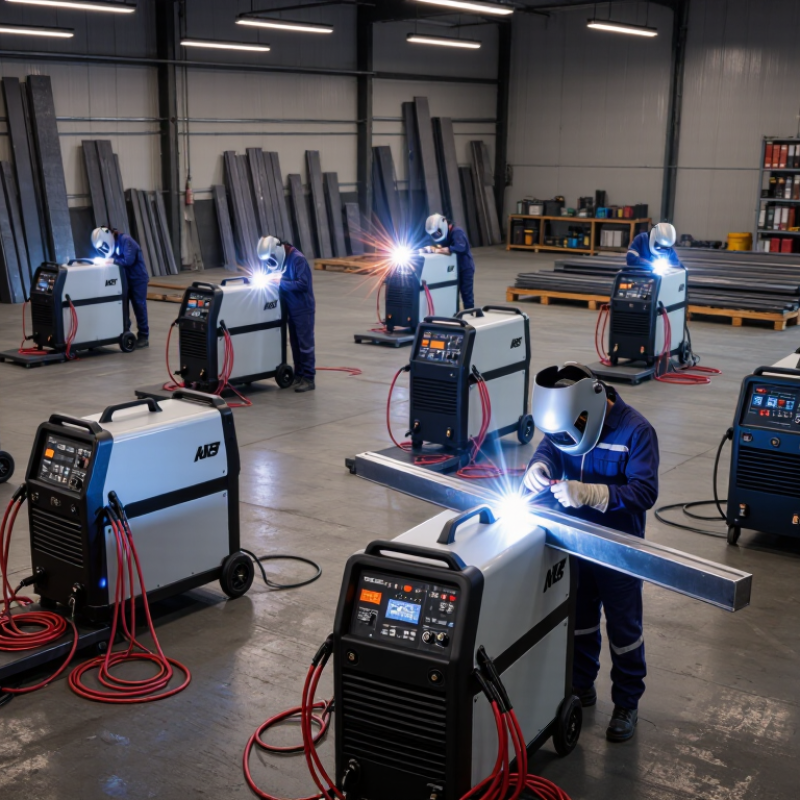
An inverter MAG welding machine uses electronic power conversion to control the welding arc. It feeds wire continuously through a torch while shielding gas protects the molten weld pool. In MAG welding, the gas contains active components, so the right gas and wire must suit the metal and job. The inverter design can make output control more responsive and the machine easier to carry than many traditional units. Still, compact does not mean effortless.
During setup, match voltage, wire-feed speed, wire diameter, and gas flow to the material thickness and joint position. A thin sheet may burn through if the settings are too high; a low wire speed can make the arc unstable. Listen to the arc and inspect the bead, but do not rely on sound alone. Check the workpiece, connections, torch liner, and feed rollers when results vary. Ventilation and suitable protective equipment remain essential.
Tips: Test settings on a scrap piece of the same thickness. Look for an even bead and steady feeding. Small adjustments help. I’ve found that a clean surface often matters more than expected, though it will not fix every setup problem.
How Chinese Manufacturers Are Evaluated
A MAG inverter should be judged by repeatable welds, not a polished product sheet. Buyers can request test records for output stability, duty cycle, wire-feed consistency, and performance after sustained operation. Ask to see the actual test setup, including wire diameter, shielding gas, material thickness, and ambient temperature. Small details matter. A short showroom demo cannot prove reliable operation across a full shift.
Technical documentation also needs scrutiny. IEC 60974-1 sets requirements for arc-welding power sources, while ISO 3834 addresses quality requirements for fusion welding. These standards help structure checks; they do not replace independent verification. The International Federation of Robotics’ World Robotics 2024 report recorded 541,302 industrial robot installations worldwide in 2023. That figure signals growing automation, but it does not certify any welding machine. Assess compatibility with robotic systems separately, including communication interfaces and stable arc starts. Verify factory quality controls, spare-parts availability, warranty terms, and response times with written records. A scoring sheet can still miss real-world variation, especially between production batches. Test samples from more than one unit when practical.
Profiles of ten leading Chinese inverter MAG welding machine manufacturers are most useful when they compare engineering evidence, not slogans. Look for output range, rated duty cycle, wire-feed stability, and performance during long welds. A steady arc should leave an even bead on a test plate, with limited spatter and consistent penetration. Also check whether the machine supports common wire diameters and shielding-gas mixes. These details affect fabrication shops more than a high peak-current figure.
Tips: Ask for a test weld using your material, wire, and gas. Record settings and inspect the bead. Small differences matter.
Market context helps, but it needs careful interpretation. The International Federation of Robotics’ World Robotics 2024 report recorded 276,288 industrial robot installations in China during 2023, about 51% of global installations. This signals a large automation ecosystem, not a measured share of MAG machine sales. Compare each manufacturer’s published specifications with independent test results, service response, spare-parts access, and warranty terms. A tidy specification sheet can still hide weak thermal performance. I would want to see the machine run under load before treating any ranking as decisive.
Comparing ten inverter MAG welding machine manufacturers requires more than reading amperage on a nameplate. Grand View Research estimated the global welding equipment market at USD 15.07 billion in 2023, with projected growth through 2030. That broad market figure is not a MAG-machine ranking, but it signals a crowded field. Product ranges commonly span compact workshop units and higher-duty industrial systems. Check rated output at the stated duty cycle, wire-feed stability, supported wire diameters, and whether pulse or synergic modes are included. Small details matter.
Technology claims should be tested against real work. Synergic control can simplify parameter selection, while pulse transfer may help control spatter on thinner material; neither replaces correct setup or operator skill. Compare performance across the materials and thicknesses your shop actually uses. A shortlist can still mislead. I would verify thermal protection, consumable availability, service access, and the accuracy of the displayed settings before buying. For compliance, look for applicable IEC 60974 requirements, including IEC 60974-1 for safety and IEC 60974-10 for electromagnetic compatibility. Certification scope differs by market, and a conformity mark alone does not prove superior weld quality. Ask for current test documents, not just a brochure claim.
Anonymous market overview, not a ranked or company-specific directory. The rows represent common supplier and product-range profiles in China’s inverter MAG/MIG welding-machine market; they should not be treated as verified details about ten named manufacturers. Specifications and approvals vary by model, production batch, and destination market.
| Anonymous market profile | Typical MAG/MIG product range | Common technology options | Typical applications | Certification and verification notes |
|---|---|---|---|---|
| Profile 1 — Light-duty portable | Compact inverter machines, commonly around 160–250 A; some models use single-phase input. | IGBT inverter; basic voltage and wire-feed adjustment; some models offer synergic settings. | Repair work, maintenance, and light fabrication. | Check the exact model’s nameplate, input supply, and applicable market approvals. Do not infer product certification from a supplier’s company-level ISO certificate. |
| Profile 2 — General-purpose workshop | Typically 200–350 A machines, with gas-shielded and, on some models, gasless wire capability. | Inverter power source; adjustable wire-feed speed and voltage; optional inductance control. | Small workshops, vehicle repair, and general steel fabrication. | Request model-specific declarations and test documentation for the destination market; confirm the approved configuration includes the supplied torch and accessories. |
| Profile 3 — Synergic-control range | Commonly 200–400 A; product lines may include both compact and wheeled units. | Synergic programs that coordinate wire-feed speed and voltage; digital displays on selected models. | Fabrication shops seeking faster setup across different wire and material combinations. | Ask for the available program list and the tested wire, gas, and material combinations; certification scope is model-specific. |
| Profile 4 — Heavy-duty single-wire systems | Typically 300–500 A machines, often with separate wire feeders or trolley-mounted configurations. | Higher-output inverter platforms; selectable operating modes and enhanced thermal protection may be available. | Heavy fabrication, structural work, and longer welding runs. | Compare rated output and duty cycle using the same test standard and ambient conditions. Obtain the full test report or rating plate for the exact model. |
| Profile 5 — Pulse-capable product range | Selected mid- and high-output models, commonly offered alongside conventional MAG/MIG units. | Pulsed or double-pulsed modes on specified models; synergic control may be included. | Applications that benefit from controlled heat input or improved handling of particular materials and positions. | Confirm which pulse modes are included in the quoted model and test them with the intended wire, shielding gas, and material thickness. |
| Profile 6 — Multi-process machines | Combination units may support MAG/MIG together with MMA, and sometimes TIG functions, depending on model. | Shared inverter platform with process selection; functions and output ratings can differ by process. | Maintenance teams and workshops requiring more than one welding process from one power source. | Check the rating for each process separately. A machine’s certification documents should match its exact model and electrical configuration. |
| Profile 7 — Industrial feeder and torch options | Mid- to high-output power sources offered with different feeder, torch, and cable configurations. | Detachable or integrated wire feeder options; compatibility depends on the machine and feeder interface. | Production lines and fabrication operations where reach or component replacement matters. | Verify feeder compatibility, torch rating, cable length, and supplied accessories in the quotation and technical manual. |
| Profile 8 — Export-oriented configurations | Ranges may include compact through industrial machines, configured for different input voltages and plugs. | Input-voltage options and control-panel languages vary by order; confirm the actual production configuration. | Importers and distributors serving multiple electrical markets. | For Europe, request applicable CE documentation, including the relevant conformity declaration and supporting technical information. CE marking is not a general quality grade. |
| Profile 9 — OEM and private-label supply | Product selection and appearance can be configured to an order; available ranges depend on the underlying platform. | May use shared platform designs with customer-specific labels, packaging, or accessories. | Distributors and importers building their own product assortment. | Match certificates and test reports to the actual factory, model, and configuration—not only to a trading company or a similarly named product. |
| Profile 10 — Application-specific systems | Configured machines may combine a power source with a feeder, trolley, cooling unit, or extended cable package. | Configuration choices depend on the process, duty requirements, environment, and installation layout. | Specialized fabrication cells and jobs requiring a tailored equipment package. | Request a complete bill of materials and confirm that the assessed or certified scope covers the supplied system and intended use. |
Certification checks: ISO 9001 is a quality-management-system certification, not proof that a particular welding machine is product-certified. For every purchase, verify the certificate holder, model coverage, issuing body, validity, applicable standards, and destination-market requirements directly against current documentation.
When comparing China’s inverter MAG welding machine manufacturers, look beyond price and advertised output. Grand View Research’s 2024 Welding Equipment Market report valued the global market at USD 15.37 billion in 2023, with projected annual growth of 5.0% through 2030. Market growth alone does not prove a supplier’s quality; request test records for the exact model you plan to buy.
For MAG welding, check stable arc performance across the wire diameters and material thicknesses used in your workshop. Ask for duty-cycle ratings, input-voltage range, wire-feed accuracy, and thermal-protection details. Then test the machine on your own sample material. Test it hot. A brochure cannot show how the arc behaves after repeated starts or under sustained load. Confirm that documentation references applicable IEC 60974-1 requirements, and ask how each unit is inspected before shipment.
After-sales support matters when production stops. Ask about spare-part availability, fault diagnosis, warranty terms, and response times in writing. Check whether manuals are clear and whether technicians can guide your operators remotely. A low quote may omit useful cables or a suitable torch, so compare complete configurations. One detail buyers sometimes miss: service promises are harder to assess than weld beads. Request a sample inspection report and verify the listed tests. No supplier is perfect; look for transparent limits, not polished claims.
Confirm that a machine supports the shielding gases required for your applications. The chart shows the typical CO₂ content ranges for two argon-based gas classifications in ISO 14175; check the gas supplier’s certificate for the exact blend.
It converts electrical power electronically and feeds wire through a torch. Shielding gas protects the molten weld pool.
It is often easier to carry, but compact size does not make welding effortless. Setup still matters.
Match voltage, wire-feed speed, wire diameter, and gas flow to the metal thickness and joint position. Test on scrap first.
Incorrect settings, dirty material, loose connections, or feed problems may contribute. Check the torch liner and feed rollers, too.
Request test records for output stability, duty cycle, and wire feeding. Ask for the test conditions, including material thickness and gas type.
No. They help define requirements, but they do not prove weld quality. Review current documents and arrange practical tests.
They can simplify adjustments or help control spatter on thin material. Neither replaces correct setup or operator skill.
Review service response times, spare parts, warranty terms, and factory quality records. Test more than one unit when practical.
Use ventilation and suitable protective equipment. Inspect connections and the workpiece before welding. Small checks help.
This article introduces the Inverter MAG Welding Machine and explains how inverter technology supports stable arc performance, efficient energy use, and practical control across a range of welding applications. It also outlines the criteria used to assess Chinese manufacturers, including product quality, manufacturing capability, technical support, reliability, and relevant certifications. Rather than focusing on brand names, the overview considers the strengths and market positioning of ten leading manufacturers in general terms.
Readers will find a comparison of product ranges, technologies, and certification considerations, along with guidance on choosing a suitable supplier. Key factors include welding requirements, material and thickness, output specifications, duty cycle, operating environment, budget, after-sales service, and access to replacement parts. By weighing these points, buyers can better identify an Inverter MAG Welding Machine that matches their operational needs and supports dependable performance over time.