Knowledge Base & Technical Insights

Industrial Welding &
Compressor Articles

Discover expert tutorials, buying guides, operational tips, and industry trends on MIG/MAG, Spot welding equipment and air compressors.

0%

Choosing the right CO2 MIG Welding Machine is not simply a matter of comparing amperage, price, and appearance. In a busy fabrication shop, the decision affects arc stability, gas consumption, weld penetration, operator fatigue, and long-term maintenance. A machine that looks powerful on a specification sheet may struggle with thin automotive panels or inconsistent workshop power. Real conditions matter.

The American Welding Society’s Welding Workforce Data report has highlighted a serious shortage of skilled welding professionals in the United States. That pressure makes productivity and ease of operation increasingly important. Meanwhile, ISO 14175 classifies shielding gases by composition and performance, reminding buyers that pure carbon dioxide behaves differently from mixed gases. It can create deeper penetration and more spatter, but it may also demand better parameter control. Small adjustments matter.

The U.S. Bureau of Labor Statistics continues to identify welding as an important manufacturing occupation, supporting the need for dependable equipment and practical training. However, industry data cannot choose a machine for every workshop. Material thickness, duty cycle, wire size, input voltage, and service support must be examined together. A 250-amp unit may be sufficient for light structural work, yet unsuitable for repeated heavy fabrication. That assumption deserves testing.

This guide explains how to compare machines using measurable criteria and workshop experience. It considers arc performance, control functions, safety features, operating costs, and repair access. The best choice is rarely the most expensive model. It is the machine that delivers stable welds, predictable results, and manageable costs during real production. работоспособность matters more than marketing language.
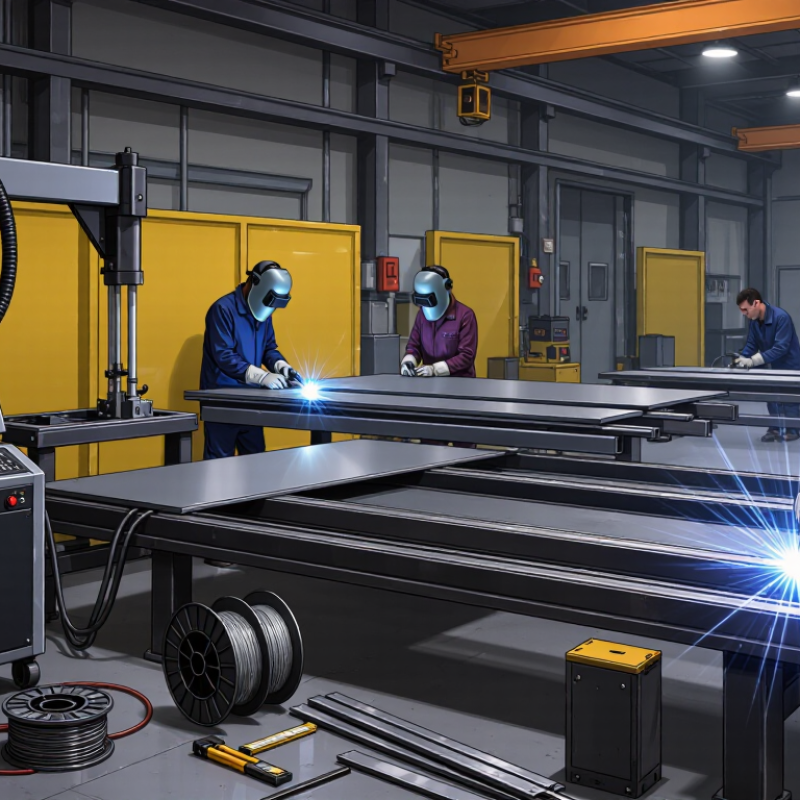
How to Choose the Best CO2 MIG Welding Machine

Define the Welding Tasks and Materials You Need to Handle

Before choosing a CO2 MIG welding machine, define the work it must perform. List the materials, thicknesses, joint types, and expected production hours. A workshop repairing 3 mm mild steel needs different settings than a fabricator joining 12 mm structural plate. Write it down.

For mild steel, pure CO2 shielding can provide deep penetration and lower gas cost. However, it often creates a harsher arc and more spatter. If clean appearance matters, consider a machine compatible with mixed shielding gases. Confirm its output range, wire diameter options, and duty cycle. A small unit may weld thin sheet smoothly but overheat during repeated heavy joints. I have seen operators focus on maximum amperage and overlook cooling time.

Material choice also limits your gas and wire decisions. Aluminum generally requires different wire-feeding equipment and shielding gas, not standard CO2. Stainless steel needs suitable wire and gas chemistry to protect corrosion resistance. Check whether the machine supports spool or push-pull feeding when softer wires are involved. Measure your available power supply, too. An impressive machine is useless if the circuit cannot support it. Keep a record of actual weld lengths, pauses, and failed settings. Your first estimate may be wrong. That record makes the next purchase more reliable.

How to Choose the Best CO2 MIG Welding Machine - Define the Welding Tasks and Materials You Need to Handle

How to use this chart: For carbon-steel work with 100% CO₂ shielding gas, select a machine whose continuous output covers the expected current range and leaves approximately 20–30% reserve for duty-cycle limitations, voltage variation, and extended welds.

These are typical planning ranges for solid wire and short-circuit or spray-transfer MIG setups. Actual settings depend on joint design, welding position, wire diameter, polarity, and material preparation. Stainless steel generally uses an argon-based gas with a small CO₂ percentage, while aluminum normally requires argon rather than CO₂.

Compare CO2 MIG Welder Power, Duty Cycle, and Wire Capacity

How to Choose the Best CO2 MIG Welding Machine

Power, duty cycle, and wire capacity decide whether a CO2 MIG welder feels dependable or frustrating. I usually match output to the thickest steel, not the average job. For 3–6 mm steel, a practical machine often needs about 180–250 A. Thicker sections may demand higher output and a stable 220–300 A range. However, advertised maximum amperage can hide poor performance at continuous load. Check voltage control, wire-feed stability, and the rated output at 40°C. IEC 60974-1:2021 uses a ten-minute duty-cycle period. A 60% rating at 200 A means six minutes of welding and four minutes of cooling. That figure is easy to misunderstand.

Wire capacity affects productivity more than many buyers expect. A 5 kg reel reduces machine weight and suits occasional repairs. A 15 kg reel limits replacement stops during fabrication. Confirm the feeder accepts the required reel size, wire diameter, and spool hub. The AWS Welding Handbook recommends matching wire diameter and current to material thickness and joint design. A larger wire is not automatically better. It may require higher current and stronger feeding pressure. I have sometimes chosen a powerful machine, then disliked its unstable low-current arc. That was my mistake.

Tips: Compare duty-cycle ratings at the same amperage. Read the complete test condition. Check whether the machine supports 0.8, 1.0, or 1.2 mm wire. Leave cooling space around the case. A compact reel can be the wiser choice.

Evaluate Gas Systems, Controls, and Welding Performance

Choosing a CO2 MIG welding machine requires more than checking its maximum amperage.

The gas system often determines arc stability, penetration, and operating cost. Inspect the regulator, hose connections, solenoid valve, and flowmeter carefully. Loose fittings can waste gas and introduce porosity into the weld.

A stable flow near the recommended range should protect the arc without creating turbulence.

Controls should feel precise, even when wearing thick gloves. Look for clear voltage and wire-feed adjustments. Independent controls make it easier to correct a harsh arc or excessive spatter.

Digital displays improve repeatability, but they do not replace practical testing. Some displays appear accurate while the actual output changes under load.

Test it.

Welding performance becomes clearer on real steel, not a showroom plate.

Use clean, similar-thickness samples and observe bead shape, penetration, and spatter. A steady machine should start without excessive popping and maintain a consistent arc length.

Listen closely. A soft, regular crackle usually indicates better tuning than a violent, irregular sound.

Check duty cycle honestly, especially for long fabrication sessions. Overheating can interrupt work and shorten component life. I once underestimated cable resistance during a shop test, and the machine seemed weaker than expected.

That mistake reinforced an important habit: inspect the complete welding setup, not only the power source.

A machine that offers modest settings but stable gas delivery may outperform a stronger model with poor control response.

Real conditions matter.

Check Safety Features, Maintenance Needs, and Operating Costs

How to Choose the Best CO2 MIG Welding Machine

Safety should be checked before output power. OSHA requires effective ventilation for welding operations under 29 CFR 1910.252. For stainless or coated steel, fumes may contain chromium compounds. OSHA’s hexavalent chromium limit is 5 micrograms per cubic meter over eight hours. Choose a machine with thermal overload protection, stable grounding, and clear gas-flow controls. A built-in fault indicator helps operators react before a small failure becomes a dangerous one. It is easy to overlook.

Maintenance affects both quality and operating costs. Check whether contact tips, liners, drive rollers, and filters are easy to replace. The IEC 60974-1 duty-cycle standard rates equipment at a defined load and temperature, so compare machines using the same rating. A high headline amperage can mislead. A unit rated for 200 amps at 60% duty cycle may outperform a cheaper unit rated at 250 amps at 20%. NIOSH welding guidance also emphasizes local exhaust and exposure control, not just personal protective equipment.

Calculate energy instead of trusting sales language. At 24 volts and 200 amps, a 35% arc-on time uses about 1.68 kWh per operating hour before efficiency losses. Add shielding gas, wire, electricity, and replacement parts. Gas leaks are especially wasteful; a small leak can empty a cylinder overnight. Service records should track liner wear, tip changes, gas consumption, and downtime. My checklist is not perfect, because workload changes the answer. Still, a machine with simpler maintenance often costs less over several years.

Match Machine Specifications to Your Workshop and Budget

Choosing the best CO2 MIG welding machine starts with your workshop, not the catalog price. Measure your available power supply before comparing output ratings. A machine requiring three-phase power may be unsuitable for a small garage. Check the amperage range, duty cycle, wire diameter, and gas connection. These specifications should match your regular materials, from thin sheet steel to heavier frames.

Your budget should include more than the machine. Allow money for a regulator, torch consumables, wire, gas, protective equipment, and maintenance. A higher duty cycle can reduce waiting time during long fabrication jobs. However, it may be unnecessary for occasional repairs. In my workshop experience, oversized equipment often becomes expensive storage. I once chose a powerful unit that rarely reached half its capacity. That decision looked professional, but it was not economical.

Tips: Compare total ownership costs, not just purchase prices. Test the machine if possible. Listen for stable wire feeding and inspect the control layout. Leave room for future work, but avoid paying for features you cannot explain. Thermal protection, clear adjustment controls, and accessible replacement parts are practical advantages. Also, check the warranty terms and local service support. A lower-priced machine can become costly when one small component takes weeks to replace. The ideal choice may feel slightly conservative, and that is acceptable.

FAQS

What should I define before choosing a CO2 MIG welding machine?

List the materials, thicknesses, joint types, and expected welding hours. Write it down. A machine for 3 mm mild steel may not suit 12 mm structural plate.

What output range is suitable for common mild steel work?

Welding 3–6 mm steel often needs about 180–250 A. Thicker sections may require a stable 220–300 A range. Match output to your thickest regular job, not your average repair.

Why is duty cycle important?

Duty cycle shows how long the machine can weld during a ten-minute period. A 60% rating at 200 A means six minutes welding and four minutes cooling. Cooling space matters. Maximum amperage alone can mislead you.

What wire diameter and reel size should I choose?

Check support for 0.8, 1.0, and 1.2 mm wire. A 5 kg reel suits occasional repairs and keeps the machine lighter. A 15 kg reel reduces replacement stops during fabrication. Bigger is not always better.

Can pure CO2 shielding gas provide good weld quality?

Pure CO2 can offer deep penetration and lower gas cost on mild steel. It may also create a harsher arc and more spatter. Mixed shielding gas can help when bead appearance matters. Your first gas choice may be wrong.

What gas-system parts should I inspect?

Examine the regulator, hose connections, solenoid valve, and flowmeter. Loose fittings waste gas and may cause weld porosity. Use steady flow near the recommended range. Avoid turbulence.

How can I test welding performance before buying?

Weld clean samples with similar thicknesses to your real work. Observe bead shape, penetration, spatter, starts, and arc consistency. A soft, regular crackle usually suggests better tuning. Test it first.

What power-supply and feeding issues should I consider?

Measure the available circuit before purchasing the machine. An impressive unit is useless if the circuit cannot support it. Aluminum needs suitable feeding equipment and shielding gas, not standard CO2. Softer wires may require spool or push-pull feeding.

Conclusion

Choosing the best CO2 MIG Welding Machine starts with understanding the work it must perform. Consider the metals, thicknesses, joint types, and frequency of welding in your workshop. Next, compare power output, duty cycle, and wire capacity to ensure the machine can handle your projects without overheating or requiring frequent adjustments. A suitable model should provide enough power for your materials while supporting the wire sizes and welding speeds you commonly use.

It is also important to evaluate the gas system, control options, and overall arc stability, as these affect weld quality and ease of operation. Safety features, simple maintenance, replacement part availability, and long-term operating costs should be reviewed before making a decision. Finally, match the machine’s specifications to your available workspace, electrical supply, skill level, and budget. The right balance of performance, reliability, convenience, and cost will help you select a machine that delivers consistent results and supports future workshop needs.


Ethan

Ethan

Ethan is a dedicated marketing professional with a deep understanding of the company’s products, services, and customer-focused solutions. With a strong background in market research, content strategy, and digital communication, he transforms complex product information into clear, practical, and......