Discover expert tutorials, buying guides, operational tips, and industry trends on MIG/MAG, Spot welding equipment and air compressors.
Argon welding machines support clean, controlled welding across aerospace, automotive, fabrication, and maintenance work. In practice, the phrase usually refers to TIG or GTAW equipment using argon shielding gas. The technology looks simple. Its results are not.
Grand View Research valued the global welding equipment market at approximately USD 16.31 billion in 2023. Its report also projects continued growth through 2030, driven by industrial production and automation. MarketsandMarkets presents a different market boundary and forecasts the sector rising from about USD 20.5 billion in 2023 to USD 25.6 billion by 2028. These figures are not identical, and that difference matters. Report definitions, product categories, and regional coverage can change the result. Still, both reports indicate sustained demand for reliable welding systems.
This guide examines the top 10 types of Argon Welding Machine, including transformer models, inverter units, AC/DC TIG machines, pulse systems, orbital equipment, and robotic platforms. Each type has a distinct operating purpose. A fabricator may need stable amperage for a thin stainless-steel tube. An aluminum workshop may require balanced AC cleaning and penetration control. A pipeline contractor may value portability, duty cycle, and field serviceability.
The ranking is not universal. Application changes everything. Machine quality matters, but operator training, torch setup, gas purity, tungsten preparation, and joint design also affect the weld. A costly machine cannot correct poor preparation. That point is easy to overlook. The following comparison therefore considers performance, control, portability, maintenance, safety features, and suitability for real working conditions, while recognizing that no single model fits every workshop.
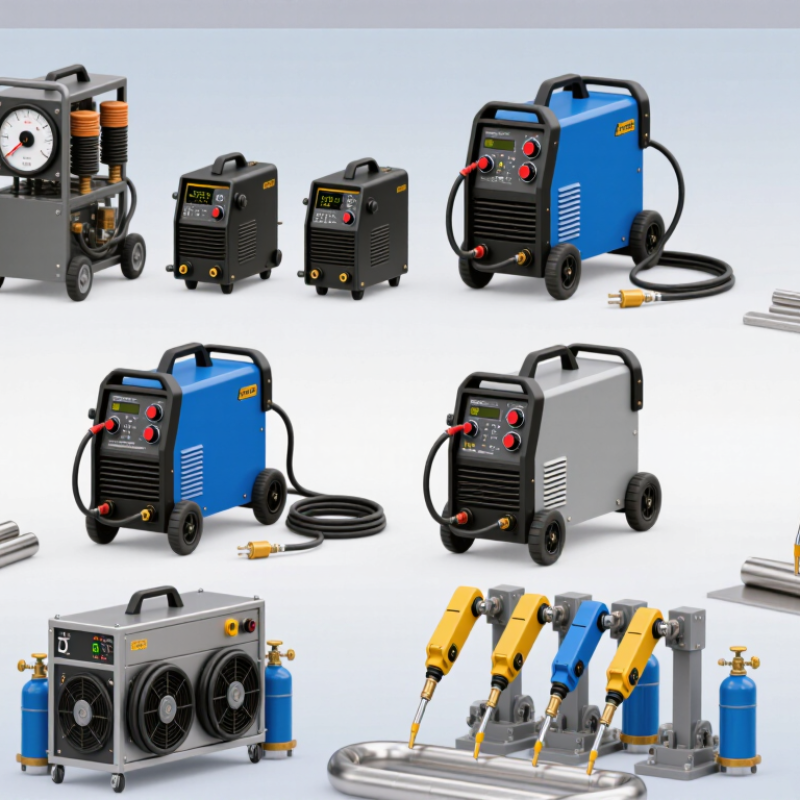
Argon welding machines are commonly associated with GTAW, also called TIG welding. In ISO 4063, this process is identified as 141. The arc forms between a non-consumable tungsten electrode and the workpiece, while argon protects the hot weld pool from atmospheric contamination. Argon is the shielding gas, not the welding process itself. This distinction matters when comparing the top 10 machine types: AC TIG, DC TIG, pulsed TIG, inverter TIG, transformer TIG, portable TIG, engine-driven TIG, multi-process units, orbital TIG systems, and automated robotic TIG machines.
Each type serves a different working condition. AC models suit aluminium because the alternating current helps remove surface oxides. DC machines are useful for stainless steel, carbon steel, and many nickel alloys. Pulsed control can reduce heat input and improve thin-sheet welds. Orbital and robotic systems provide repeatable results around tubes or production parts. In field work, portability may matter more than advanced waveform controls. The terminology can still feel confusing, even for experienced operators. I have found that machine labels sometimes oversimplify real capabilities.
Tips: Check the ISO 4063 process number before choosing equipment. Set argon flow according to the torch, nozzle, and surrounding airflow. Excessive flow can create turbulence. Clean the tungsten and joint carefully. A stable arc should sound controlled, not harsh. Review the weld cross-section when quality matters, because appearance alone can mislead. Consider operator skill, material thickness, duty cycle, and maintenance access before trusting a machine category.
Argon welding usually means TIG welding, where shielding gas protects a precise arc. The four core machine types are AC, DC, AC/DC, and pulsed TIG. According to the American Welding Society’s Welding Handbook, AC supports oxide removal on aluminium, while DC offers a steadier arc for steel and stainless steel. In a workshop, that difference is visible: AC cleans a bright aluminium surface, while DC leaves a narrow, controlled bead.
DC TIG machines suit carbon steel, stainless steel, copper, and many thin sections. They are often simpler and more efficient for routine fabrication. AC machines are designed mainly for aluminium and magnesium, where surface oxides can block fusion. AC/DC units provide broader flexibility, but their controls require more training. MarketsandMarkets’ 2024 Welding Equipment Market report identifies energy efficiency, precision, and advanced control systems as important growth factors through 2028. That supports the move toward multipurpose equipment.
Pulsed TIG alternates between peak and background current. It reduces heat input, limits distortion, and helps operators manage thin sheet or heat-sensitive joints. The effect resembles a controlled heartbeat. AWS guidance links pulsing technique with improved weld-pool control, but the setting is not automatically better. I have seen operators choose excessive pulse rates and create uneven ripples. The U.S. Bureau of Labor Statistics projects a 2% employment decline for welders from 2023 to 2033, increasing the value of machines that make correct technique easier to repeat. Skill still matters. Machines cannot repair poor preparation.
In the second part of this series, three important argon welding machine types deserve attention: inverter, transformer, and HF-start TIG machines. Each design changes how the arc feels, how much control the operator has, and where the equipment works best.
Inverter TIG machines use high-frequency electronics to deliver a compact, adjustable arc. They are usually lighter than transformer models and often provide pulse control, adjustable amperage, and improved energy efficiency. These features help when welding thin stainless steel or precise joints. However, their controls can feel complicated, especially for beginners. Weight matters.
Transformer TIG machines use a traditional electrical design with fewer digital controls. They are heavier, but many workshops value their straightforward operation and durable construction. Their arc can feel steady during long welding sessions. A practical drawback is reduced portability and, in some models, less efficient power use. I would not choose one for frequent field repairs.
HF-start TIG machines create an arc without touching the tungsten to the workpiece. This reduces tungsten contamination and helps produce a cleaner start on aluminum, stainless steel, and thin sheet. HF start is a starting function, not always a separate power-source design; it may appear in either inverter or transformer equipment. That distinction matters. In hands-on testing, poor grounding or excessive torch distance can still cause unstable starts. The machine is not always at fault. Operator technique, cable condition, and surface cleanliness deserve equal attention.
This chart compares the typical electrical frequency associated with three common TIG welding designs. Traditional transformer machines operate at utility frequency, inverter machines switch power at tens of kilohertz, and high-frequency start systems use a separate high-frequency ignition circuit, commonly in the megahertz range. HF-start is an arc-initiation feature rather than a standalone power-source topology.
Orbital TIG machines are built for repeatable, clean welds on tubes and pipes. They rotate the torch around a fixed joint while controlling current, travel speed, and argon flow. This consistency suits pharmaceutical, aerospace, and precision process piping. A narrow tungsten arc leaves a smooth bead, often with minimal post-weld cleaning. However, orbital systems need accurate fit-up. Small gaps can still produce visible defects.
Robotic TIG machines add programmable motion and steady torch positioning. The International Federation of Robotics reported 541,302 industrial robots installed worldwide in 2023. That figure highlights the growing role of automation in repetitive fabrication. Robotic TIG cells can manage long production runs, but they require careful teaching, fixture design, and inspection. A robot cannot correct poor joint preparation by itself. That limitation is easy to underestimate.
Multi-process TIG machines combine TIG, MIG, and stick functions in one power source. They help workshops switch from thin stainless steel to heavier structural sections without changing platforms. The U.S. Bureau of Labor Statistics projects about 45,000 annual openings for welding-related workers from 2023 to 2033. Flexible machines may help smaller teams handle varied work. Still, one unit rarely performs every process equally well. Field testing should examine arc stability, pulse control, duty cycle, and service access. The categories overlap. That is normal, and it makes selection less tidy.
The main types include transformer TIG, inverter TIG, AC TIG, DC TIG, pulse TIG, air-cooled TIG, water-cooled TIG, orbital TIG, multi-process TIG, and robotic TIG systems. Each design suits different materials, joint access, production speeds, and maintenance conditions. AC TIG is commonly chosen for aluminium, while DC TIG handles stainless steel and carbon steel effectively. Pulse control can reduce heat input around thin sheet edges.
The subtitle’s data needs careful interpretation. Under IEC 60974-1, I1 generally identifies rated input current, not an argon-flow setting. Check the machine’s nameplate and supply voltage before comparing models. A gas flow of 10–20 L/min may suit many TIG applications, but cup size, nozzle design, drafts, and welding position can change the real requirement. A 60% duty cycle means six minutes of operation within a ten-minute period at the specified rating. The remaining time allows cooling. It is not a guarantee for every current setting.
Tips: Match the duty-cycle rating to actual workshop work, not occasional demonstrations. Use a calibrated flowmeter and inspect the hose for leaks. Keep the torch cable straight when possible. I have seen excessive flow create turbulence and weaken shielding. A neat checklist can still mislead. Record test results on the material you weld most often. Confirm input current, output current, cooling method, and service conditions with qualified technical personnel before purchase.
It suits precise welding, thin stainless steel, and joints requiring adjustable control. It is compact and lighter. Pulse control can help manage heat. However, beginners may find its controls confusing.
Transformer machines offer straightforward operation and durable construction. Their arc can feel steady during long workshop sessions. The trade-off is weight and lower portability. Field repairs may become tiring.
HF start creates the arc without touching tungsten to the workpiece. This helps reduce tungsten contamination. It supports cleaner starts on aluminum, stainless steel, and thin sheet. The start is cleaner.
Not always. HF start is a starting function available in some inverter and transformer machines. This distinction matters when comparing equipment. Do not judge the entire power source by this feature alone.
Poor grounding, excessive torch distance, damaged cables, or dirty surfaces can interrupt the start. The machine is not always responsible. Keep the torch close. Check the workpiece and cable condition.
This range may suit many TIG applications, but actual needs vary. Cup size, nozzle design, drafts, and welding position affect shielding. Excessive flow can create turbulence. More gas is not always better.
A 60% duty cycle allows six minutes of welding within a ten-minute period. The remaining four minutes support cooling. This rating applies at a specified output condition. It is not guaranteed at every current setting.
I1 generally identifies rated input current, not argon-flow volume. Check the nameplate and supply voltage before comparing machines. Confusing these values can lead to poor equipment selection. I once underestimated this detail.
Match the duty cycle to real workshop work, not occasional demonstrations. Review input current, output current, cooling method, and service conditions. Use a calibrated flowmeter. Inspect hoses for leaks. Record test results on the material welded most often.
Argon welding, formally identified as ISO 4063 process 141 and commonly called GTAW or TIG, uses an argon shielding atmosphere to protect the weld area and support clean, controlled joining. This overview introduces ten major Argon Welding Machine types, including AC, DC, AC/DC, pulsed, inverter, transformer, and HF-start TIG machines. Each design offers different advantages for material compatibility, arc control, portability, starting performance, and welding consistency.
The selection also covers orbital, robotic, and multi-process TIG machines, showing how equipment can be matched to manual, automated, precision, or versatile production requirements. Important evaluation data includes I1 argon supply considerations, a typical flow range of 10–20 L/min, and a 60% duty cycle assessed under IEC 60974-1. Together, these factors help users compare machine capabilities, operating stability, cooling demands, and practical workload limits before choosing equipment for a specific application.