Knowledge Base & Technical Insights

Industrial Welding &
Compressor Articles

Discover expert tutorials, buying guides, operational tips, and industry trends on MIG/MAG, Spot welding equipment and air compressors.

0%

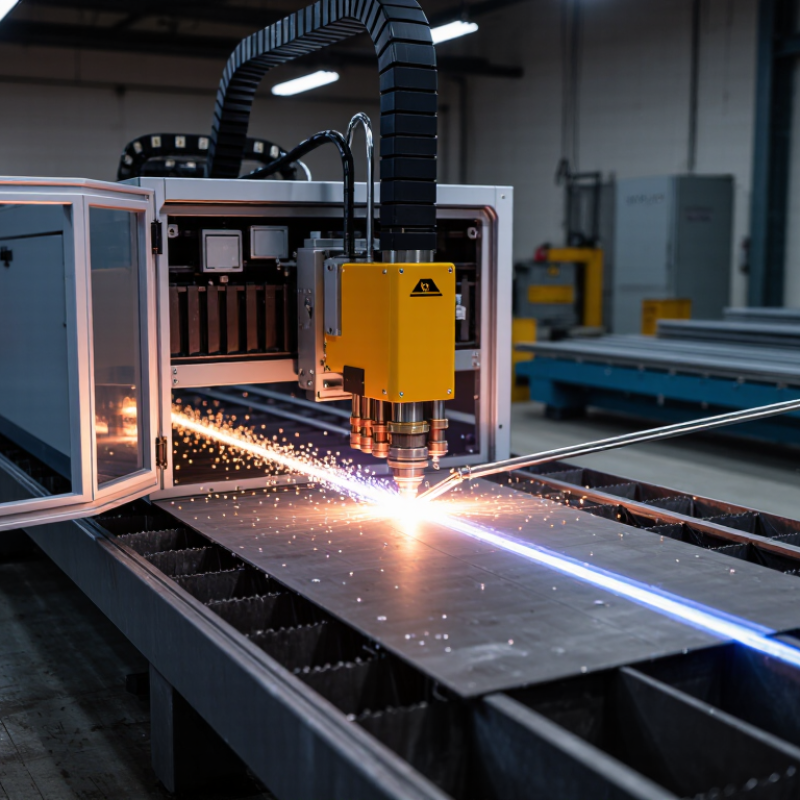
Choosing the right cutting equipment affects productivity, accuracy, operating costs, and workplace safety. An Air Plasma Cutting Machine offers a practical solution for workshops handling conductive metals. It uses a focused plasma arc to melt metal, while compressed air removes the molten material. This process can cut steel, stainless steel, and aluminum with impressive speed. It also supports detailed work, from straight plate cuts to small brackets and repair components.

Experienced fabricators often value its quick setup. An operator can mark a cutting line, connect the air supply, and begin work within minutes. Compared with many mechanical methods, plasma cutting creates less physical contact with the workpiece. This reduces tool wear and makes irregular shapes easier to produce. A suitable machine can also complement CNC tables, improving repeatability across multiple parts. However, performance depends on amperage, air quality, consumables, and operator technique. Cheap compressed air can cause rough edges and shorten nozzle life.

That limitation matters.

This guide examines why businesses and independent makers choose an Air Plasma Cutting Machine. It considers cutting performance, material thickness, energy use, maintenance, and safety practices. It also explains where plasma technology may not be the best option. Very thin sheet can warp from excessive heat, while nonconductive materials require another method. These details deserve attention before purchase. A reliable decision should come from real workload demands, not attractive specifications alone. Even skilled users can overlook maintenance costs or underestimate ventilation needs. That honest assessment leads to safer operation and more consistent results.
Why Choose an Air Plasma Cutting Machine?

What Is an Air Plasma Cutting Machine?

An air plasma cutting machine uses compressed air and electricity to create a focused plasma arc. The arc melts conductive metal, while high-speed air blows the molten material away. Unlike oxy-fuel cutting, it does not rely on a separate fuel gas. It can cut steel, stainless steel, and aluminum with a narrow heat-affected zone.

The U.S. Department of Energy reports that compressed air can consume about 10% of industrial electricity, and sometimes much more in inefficient facilities. This matters. A small leak, undersized compressor, or wet air line can weaken the arc and increase operating costs. A moisture separator, stable air pressure, and clean work clamp are practical essentials. In a workshop, operators can often see the difference immediately: a steady arc leaves a brighter edge, while poor airflow creates heavy dross underneath.

The machine’s real performance depends on more than its advertised amperage. The duty cycle, material thickness, torch height, and consumable condition all affect the cut. Industry safety guidance from OSHA and NIOSH emphasizes ventilation and exposure control because plasma cutting can produce fumes, noise, sparks, and ultraviolet radiation. Eye and respiratory protection remain necessary. It is fast, but not careless-proof. One overlooked setting can ruin a clean sheet. Reports from the International Energy Agency also reinforce the value of improving industrial energy efficiency, making air-system maintenance worth reviewing regularly.

Why Choose an Air Plasma Cutting Machine?

Air plasma cutting machines use a high-temperature plasma arc and compressed air to cut electrically conductive metals such as mild steel, stainless steel, and aluminum. The chart shows typical clean-cut thickness ranges for manual air plasma cutters at different rated output currents. Actual performance depends on material type, cutting speed, air pressure, consumable condition, and machine settings.

How Air Plasma Cutting Technology Works

Why Choose an Air Plasma Cutting Machine?

How Air Plasma Cutting Technology Works

Air plasma cutting begins with compressed air entering a torch through a narrow passage. An electrical arc then ionizes the air, creating plasma with temperatures that can exceed 20,000°C. This focused jet melts conductive metal, while the airflow pushes molten material through the cut. The process is fast and visibly precise.

Inside the torch, the electrode starts the arc, and the nozzle shapes the plasma stream. A swirl ring helps stabilize airflow around the arc. Clean, dry air matters. Moisture can damage consumables and create rough edges. I have seen a small compressor problem turn a clean cut into a jagged one.

Material thickness, amperage, travel speed, and torch height must work together. Excessive speed leaves an angled edge. Too much current widens the kerf. ISO 9013 provides quality classifications for thermal-cut surfaces, giving operators a practical inspection reference. However, workshop results may differ from laboratory data.

According to a 2024 market analysis by Grand View Research, demand for plasma cutting equipment is expected to grow steadily through the decade, supported by metal fabrication and construction. That growth reflects productivity needs, not automatic quality. Operator training still matters. Less waste sounds simple. It is not always.

Key Advantages of Air Plasma Cutting Machines

Air plasma cutting machines offer a practical balance of speed, flexibility, and operating cost. They use compressed air to create a focused plasma arc, which melts conductive metal quickly. Setup is simple. Connect the air line, attach the ground clamp, and select the correct amperage. For maintenance teams and small workshops, this reduces preparation time between jobs.

One key advantage is material versatility. A suitable machine can cut mild steel, stainless steel, and aluminum with the right settings. Operators can follow straight edges, templates, or programmed paths. Handheld models also reach awkward corners that larger equipment may not access. A clean, dry air supply improves arc stability and protects internal components. Moisture matters more than many beginners expect. A water separator and regular filter checks can prevent uneven cuts.

Air plasma cutting is fast, but it is not perfect. Cutting thick plate too slowly may create heavy dross underneath. Excessive amperage can widen the kerf and leave a rough edge. Some aluminum cuts may show oxidation or minor beveling. Test cuts help confirm speed, height, and current before production begins. Wear suitable eye, hand, and hearing protection, and provide effective ventilation for metal fumes. In real workshop use, consumable wear is easy to overlook. Inspect the electrode and nozzle regularly; small damage can quietly reduce cut quality.

Suitable Materials and Cutting Applications

Why Choose an Air Plasma Cutting Machine?

Suitable Materials and Cutting Applications

Air plasma cutting machines suit electrically conductive metals, including mild steel, stainless steel, aluminum, copper, and brass. They are not suitable for wood, glass, or nonconductive plastics. The process uses a compressed-air jet and an electric arc to melt metal quickly. Clean results depend on material thickness, amperage, air pressure, and torch height.

For workshop fabrication, plasma systems handle sheet metal, structural profiles, repair work, ducting, agricultural equipment, and custom brackets. Thin steel can receive detailed cuts. Thicker plate needs higher output and slower travel. A poor setup leaves dross along the lower edge. That is frustrating, but usually correctable.

According to Grand View Research’s 2024 analysis, the global plasma cutting machine market was valued at approximately USD 2 billion in 2023. The report also identifies metal fabrication and construction as major application areas. These figures suggest strong industrial demand, not universal suitability. The American Welding Society emphasizes that cut quality depends on process control, consumables, and operator training. Practice matters.

In real production, plasma cutting offers speed and reasonable flexibility. It can prepare parts for welding, assembly, and repair without mechanical contact. However, very thin sheet may warp from heat. Precision-critical components may still require laser or waterjet processing. Choosing plasma simply because it cuts fast can become an expensive mistake. Test cuts should come first.

How to Choose and Operate the Right Machine

Why Choose an Air Plasma Cutting Machine?

An air plasma cutting machine uses compressed air and electrical energy to create a focused cutting arc. It can cut conductive metals faster than many manual tools. The cut is narrow, and the machine is usually easier to move than larger industrial systems. I have found that speed matters most when preparing brackets, panels, or repair parts. Still, speed alone should not decide the purchase.

How to Choose and Operate the Right Machine

Match the machine’s rated capacity with your usual material thickness. A unit rated for 12 millimeters should not handle 12-millimeter steel continuously. Leave extra capacity for cleaner cuts and longer service life. Check the duty cycle, power supply, air pressure range, torch design, replacement parts, and control layout. A stable workbench also improves accuracy.

Keep the metal clean and firmly supported. Wear a proper face shield, flame-resistant clothing, gloves, and hearing protection. Remove flammable materials from the cutting area. Set the air pressure according to the operating manual, then test a short line on scrap metal. Hold the torch at a steady angle and keep the correct stand-off distance. Move too slowly, and the underside collects heavy dross. Move too quickly, and the arc may fail to pierce fully.

Small mistakes still happen. Experienced operators sometimes choose settings by habit. That habit can waste metal. Inspect the cut edge, listen for an uneven arc, and adjust one setting at a time. Let the torch cool before checking consumable parts. Clean maintenance often matters more than expensive features.

Why Choose an Air Plasma Cutting Machine? - How to Choose and Operate the Right Machine

Evaluation Dimension Typical Data or Requirement Why It Matters Selection and Operating Guidance
Cutting Process An electric arc ionizes compressed air into plasma, which melts the metal and removes the molten material. The process cuts electrically conductive metals without requiring an oxy-fuel gas mixture. Use plasma cutting for carbon steel, stainless steel, aluminum, copper, brass, and other electrically conductive metals.
Recommended Metal Thickness Common portable machines are generally used for thin sheet through medium plate; the practical range depends on output current and material type. Rated cutting capacity differs from the maximum separation capacity. Choose a machine whose recommended cutting capacity exceeds the thickest material used regularly. Treat maximum separation capacity as an emergency limit, not a production target.
Output Current Light-duty units often provide approximately 30–50 A; medium-duty units commonly provide approximately 50–80 A. Higher current usually supports faster cutting or greater material thickness, but it also increases consumable wear and power demand. Select current according to the material thickness, desired cutting speed, duty cycle, and available electrical supply.
Compressed-Air Pressure Many air plasma systems operate within approximately 4.5–6.5 bar (65–95 psi), subject to the machine specifications. Incorrect pressure can cause unstable arcs, poor cut quality, and premature electrode or nozzle wear. Set pressure at the machine inlet while air is flowing. Follow the operating manual rather than adjusting pressure based only on the compressor tank gauge.
Air Quality The air supply should be clean, dry, and free from excessive oil, water, and particulate contamination. Moisture and oil can interfere with the plasma arc and damage internal components. Use a suitable compressor, drain moisture regularly, and install an appropriate filter or air-drying system when required.
Duty Cycle Duty cycle is commonly stated as the percentage of a 10-minute period that the machine can operate at a specified current. A higher duty cycle reduces overheating during repeated or continuous cutting. For intermittent workshop work, a moderate duty cycle may be adequate. For production cutting, choose a higher duty cycle and provide adequate ventilation.
Electrical Supply Portable systems may use single-phase power, while higher-output systems may require a larger circuit or three-phase power. Insufficient voltage or circuit capacity can cause nuisance tripping, reduced output, or equipment damage. Check input voltage, rated input current, plug type, breaker capacity, and local electrical requirements before purchase.
Cutting Speed Speed depends on current, material type, thickness, torch height, consumable condition, and operator technique. Moving too slowly can widen the cut and create excess dross; moving too quickly may leave incomplete penetration. Begin with the recommended speed range, maintain a steady travel rate, and adjust gradually while observing the arc and cut edge.
Cut Quality A quality cut has adequate penetration, limited dross, a relatively smooth edge, and minimal angularity. Cut quality affects finishing time, dimensional accuracy, and the need for secondary grinding. Keep the torch perpendicular when appropriate, maintain the correct standoff, and replace worn consumables.
Consumable Life Electrodes, nozzles, swirl rings, and shields are wear parts; service life varies with material, current, air quality, and technique. Worn consumables can produce a distorted arc, poor edge quality, and reduced cutting performance. Inspect consumables regularly, avoid dragging the torch unless designed for it, and replace parts when the manufacturer’s wear limits are reached.
Ignition Method Contact-start systems use physical contact; pilot-arc systems can initiate the arc without directly touching the workpiece. Pilot-arc operation is useful for expanded metal, painted surfaces, and cutting where torch contact is inconvenient. Choose the ignition type according to surface condition, cutting frequency, and the need to preserve the nozzle.
Portability Compact units are easier to transport but may have lower output, lower duty cycle, or fewer adjustment options. Portability is important for maintenance, construction, field repair, and small workshops. Balance machine weight and handle design against output requirements, cable length, and the availability of compressed air at the worksite.
Safety Equipment Required protection generally includes a suitable welding or plasma face shield, safety glasses, gloves, flame-resistant clothing, and hearing protection. Plasma cutting produces ultraviolet radiation, sparks, molten metal, fumes, noise, and hot workpieces. Use local exhaust or effective ventilation, remove flammable materials, ground the work correctly, and follow workplace safety regulations.
Operating Sequence Inspect equipment, connect air and power, set current and pressure, position the torch, pierce or edge-start, cut steadily, and shut down safely. A consistent sequence improves safety, cut quality, and equipment life. Before maintenance, disconnect power and air, allow hot parts to cool, and follow the machine’s lockout and service instructions.

Note: Operating ranges are representative industry values. Always verify current, pressure, duty cycle, electrical requirements, safety procedures, and cutting capacity in the specific machine’s technical documentation.

FAQS

How does an air plasma cutting machine cut metal?

Compressed air enters the torch through a narrow passage. An electrical arc ionizes the air into extremely hot plasma.

Which materials can an air plasma cutter handle?

It can cut mild steel, stainless steel, aluminum, copper, and brass.

Why is clean, dry air important?

Moisture can damage the electrode and nozzle. It may also create rough edges and unstable arcs.

What affects plasma cut quality?

Material thickness, amperage, travel speed, air pressure, and torch height must work together.

What are common applications for air plasma cutting?

Workshops use it for sheet metal, structural profiles, ducting, repairs, brackets, and agricultural equipment.

Is plasma cutting suitable for thin and thick metal?

Yes, but settings must change with thickness. Thin sheet allows detailed cuts, while thick plate needs higher output.

How can operators reduce dross and rough edges?

Adjust travel speed, current, torch height, and air pressure before production.

What maintenance does an air plasma cutter need?

Inspect the electrode and nozzle regularly for wear or small damage. Replace worn consumables when cut quality declines.

What safety measures should operators follow?

Wear suitable eye, hand, and hearing protection. Provide effective ventilation for metal fumes.

When might another cutting method be better?

Plasma offers speed and flexibility, but it is not ideal for every job.

Conclusion

An Air Plasma Cutting Machine is a powerful tool that uses a high-temperature plasma arc to melt and remove electrically conductive metal. By forcing compressed air through a narrow torch nozzle, the machine creates a focused cutting stream that can produce clean, accurate cuts at high speed. This technology is suitable for materials such as mild steel, stainless steel, aluminum, copper, and other conductive metals, making it useful for fabrication, maintenance, construction, automotive work, and custom projects.

Key advantages include fast cutting performance, relatively low operating costs, easy setup, and the ability to handle different metal thicknesses. When choosing a machine, users should consider cutting capacity, power requirements, duty cycle, portability, air quality, and available safety features. Proper operation involves securing the workpiece, using suitable protective equipment, maintaining a steady torch position, and following the machine’s operating instructions. Regular cleaning and inspection also help maintain reliable performance and extend service life.


Charlotte

Charlotte

Charlotte is a professional marketing specialist with a strong understanding of the company’s products, customers, and industry landscape. Through a combination of market research, strategic planning, and clear communication, she helps translate complex product features into practical value for......