Discover expert tutorials, buying guides, operational tips, and industry trends on MIG/MAG, Spot welding equipment and air compressors.
Choosing the right welding technology can shape production speed, product quality, and long-term operating costs. An Aluminum Welding Machine deserves attention because aluminum combines low weight, corrosion resistance, and strong recycling value. In a busy workshop, this may mean cleaner frames, lighter assemblies, and fewer handling problems. It can also mean a demanding learning curve.
The International Aluminium Institute reports that recycled aluminum requires only about 5% of the energy used for primary aluminum production. That figure strengthens the business case for controlled fabrication and efficient material use. Less scrap matters. Every rejected panel, rail, or enclosure represents wasted metal, labor, shielding gas, and machine time. Modern welding systems can support repeatable parameters, stable arc performance, and better heat control. These features help reduce distortion, especially on thin sheets and complex joints. The American Welding Society’s AWS D1.2/D1.2M standard also highlights the need for qualified procedures when welding aluminum structures.
However, equipment alone does not guarantee reliable results. Aluminum quickly forms an oxide layer, and its high thermal conductivity can pull heat away from the weld zone. Operators still need proper cleaning, torch technique, wire selection, and parameter testing. Small mistakes show clearly: a porous bead, a warped corner, or a weak start point. The answer is not automatic. A practical investment should consider duty cycle, pulse capability, service support, operator training, and expected production volume. This article examines why an Aluminum Welding Machine may fit a growing business, while also questioning when its cost and complexity may outweigh the benefits.
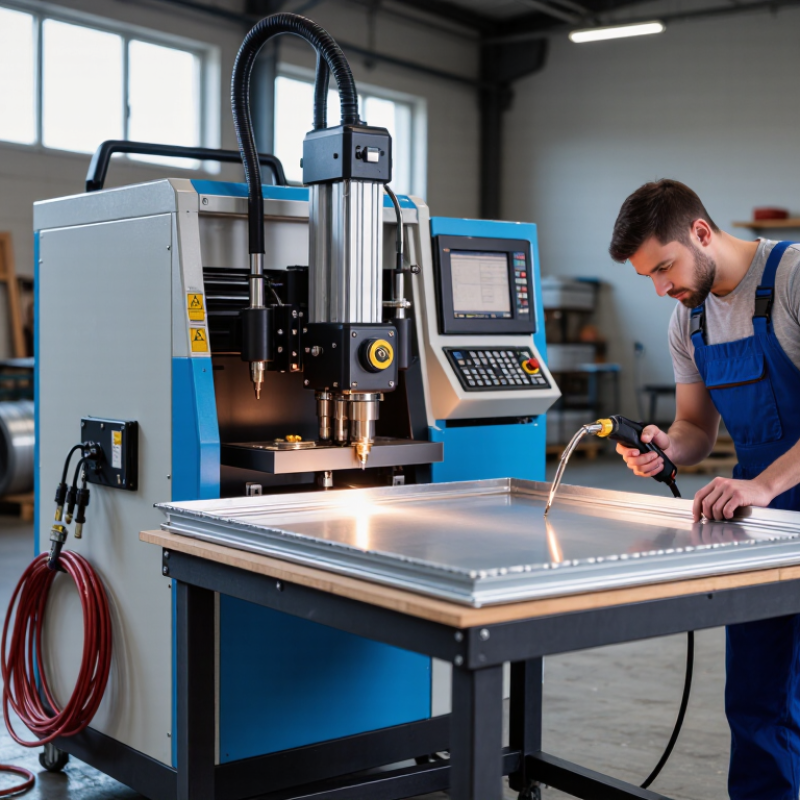
An aluminum welding machine is equipment designed to join aluminum parts using controlled electrical heat. It may support TIG, MIG, or both welding methods. Unlike steel, aluminum conducts heat quickly and forms a tough oxide layer on its surface. This makes accurate settings essential.
A TIG setup uses a tungsten electrode and separate filler rod. It gives precise control for thin panels, frames, and visible joints. A MIG setup feeds aluminum wire continuously, which can improve production speed. Many machines provide alternating current, adjustable pulse control, and shielding gas connections. Argon usually protects the molten weld from air contamination.
Clean preparation matters greatly. Remove oil and oxide with dedicated tools before welding. Keep the wire liner and contact tip suitable for soft aluminum wire. I have found that poor feeding often looks like a machine failure, but the real cause may be excessive cable bends or incorrect tension. Small errors become visible quickly.
The machine is not a magic box. Operators still need practice, proper ventilation, eye protection, and qualified procedures. A strong weld may look smooth yet contain hidden porosity. Test coupons, visual checks, and suitable inspection methods can reveal problems early. Settings should be recorded, although real materials sometimes require careful adjustment.
An aluminum welding machine controls heat, current, wire, and shielding gas in a coordinated arc. Many machines use AC TIG for clean, precise joints. Alternating current helps break the tough oxide layer on aluminum. The electrode creates the arc, while argon shields the molten pool from air. Without stable shielding, the weld can turn gray, porous, or weak. It is not magic. The settings matter.
Aluminum carries heat away quickly, so the machine often needs higher starting energy. It must also reduce heat before the joint overheats. Pulse control helps manage this cycle by switching between peak and background current. In MIG welding, soft aluminum wire feeds through a suitable liner and contact tip. The gun angle, travel speed, and wire feed rate must match the material thickness.
Clean the surface with a dedicated stainless-steel brush. Remove oil, moisture, and oxide carefully.
Small contamination can spoil an otherwise neat bead.
In production work, I check machine calibration, gas flow, and test coupons before welding valuable parts. A short practice bead reveals porosity, excessive penetration, or poor fusion. Operators should follow qualified welding procedures and inspect critical joints using appropriate methods.
I have found that automatic settings save time, but they do not replace judgment. Thin sheet can burn through quickly. Thick sections may still lack fusion. Reviewing failed welds honestly improves setup decisions, even when the machine performed as expected.
Why Choose an Aluminum Welding Machine for Your Business?
Aluminum welding supports businesses that build lighter, corrosion-resistant products. Transportation fabricators use it for trailers, vehicle frames, battery enclosures, and repair work. The U.S. Department of Energy reports that a 10% vehicle weight reduction can improve fuel economy by roughly 6% to 8%. That makes accurate aluminum welding commercially valuable.
Marine manufacturers also benefit. Aluminum hulls resist seawater corrosion and reduce structural weight. HVAC companies use welded aluminum for ducts, housings, and heat-transfer components. Construction workshops apply it to railings, façades, platforms, and custom structures. The International Aluminium Institute projects aluminum demand could increase by 80% between 2020 and 2050. More demand may create more fabrication opportunities. Still, the choice is not always obvious. Aluminum transfers heat quickly and forms oxide layers. Poor cleaning can cause porosity, weak joints, or expensive rework.
Tips: Select AC TIG for precise, visible joints. Choose pulse MIG for faster production. Use dedicated stainless-steel brushes before welding. Keep filler wire dry and correctly matched. Record amperage, travel speed, and shielding-gas flow. Small process notes matter. In real workshops, operators often underestimate joint preparation. That mistake can erase the productivity advantage. The American Welding Society recommends qualified procedures and trained personnel for consistent weld quality. Regular inspection, including visual checks and selected nondestructive testing, helps protect customer confidence and long-term performance.
Aluminum welding supports major end-use industries because aluminum is lightweight, corrosion-resistant, electrically conductive, and highly recyclable.
The chart shows rounded global aluminum end-use demand shares by application. Transportation, construction, packaging, electrical products, and machinery are key business areas where aluminum welding is commonly required.
Source: Rounded industry end-use estimates based on publicly reported global aluminum market distributions.
Aluminum welding can give businesses lighter products without sacrificing useful strength. That matters in vehicle frames, HVAC parts, marine equipment, and custom fabrication. Lower weight may reduce transport costs and simplify installation. Aluminum also resists rust, which can reduce maintenance in wet or coastal environments.
The process has practical advantages. An AC TIG welding machine can help remove aluminum oxide while producing clean, controlled welds. Pulsed MIG settings can improve production speed on thicker components. Heat moves quickly. Operators need suitable amperage, clean filler rods, and careful torch movement. A properly prepared joint often produces fewer visible defects and less rework. That can protect both labor budgets and delivery schedules.
The learning curve is real. Aluminum can distort easily, especially on thin sheets. Poor cleaning may trap contamination inside the weld. I would not promise immediate savings without testing the workflow first. A small sample project can reveal gas usage, consumable costs, operator skill gaps, and actual welding speed. Businesses should record these results and compare them with current steel fabrication methods. Training, ventilation, eye protection, and documented welding procedures remain essential. A reliable machine helps, but it cannot replace sound preparation or inspection.
Choosing the right welding machine starts with your actual production needs, not the machine’s appearance. Aluminum often requires AC TIG for precise, clean welds on thin materials. For larger frames or repeated jobs, a pulse MIG machine may improve speed and consistency. Think about aluminum thickness, joint design, production volume, and the finish customers expect.
I have found that duty cycle matters more than many buyers expect. A machine that overheats during a busy shift can delay work and increase frustration. Check its output range, cooling method, input power, and control accuracy. New operators may need simple settings, while experienced welders often value adjustable pulse frequency and arc control. A costly machine is not automatically the best choice. That is worth remembering.
Tips: Test the machine on your common aluminum thickness before purchasing. Check whether it supports the correct torch, spool gun, wire size, and shielding gas setup. Ask about operator training and local service support. Keep sample welds for comparison. Small details matter. Also, leave room for honest review: your first choice may not suit every project, especially when material thickness changes. A practical trial can reveal problems that a specification sheet hides.
It coordinates heat, current, wire, and shielding gas around an electric arc. AC TIG often helps break aluminum’s tough oxide layer. Argon protects the molten pool from air. The settings matter.
Aluminum quickly forms a hard oxide layer. Alternating current helps clean this layer during welding. It also supports a more controlled arc. Without proper cleaning, the bead may look gray and porous.
Aluminum carries heat away quickly. The machine may need higher starting energy. However, too much heat can burn through thin sheet. Pulse control alternates peak and background current. That cycle helps limit overheating.
Argon commonly shields the molten weld pool. Stable gas coverage prevents air from entering the joint. Poor coverage can cause porosity, weakness, or discoloration. Check gas flow before welding.
Remove oil, moisture, and oxide before welding. Use a dedicated stainless-steel brush. Keep the cleaned area dry. Even small contamination can spoil a neat-looking bead.
Soft aluminum wire needs a suitable liner and contact tip. Gun angle, travel speed, and wire feed must match material thickness. Incorrect settings may cause poor fusion or excessive penetration. The bead can look acceptable but still be weak.
Aluminum can produce lighter products with useful strength. This may simplify installation and reduce transport weight. Its rust resistance can lower maintenance in wet environments. Examples include vehicle frames, HVAC parts, marine equipment, and custom fabrications.
Automatic settings can save time, but they do not replace judgment. Test coupons can reveal porosity, distortion, or poor fusion. A short practice bead is valuable. Savings are not guaranteed. Review failed welds honestly, even when the machine seemed correct.
An Aluminum Welding Machine is a specialized tool designed to join aluminum components with precision, strength, and consistency. It typically uses controlled heat, an electric arc, and a suitable shielding gas to melt the base material and welding filler without unnecessarily damaging the surrounding area. Depending on the machine’s design, operators can adjust current, pulse settings, and other parameters to achieve clean, stable welds on different aluminum thicknesses.
Businesses in transportation, construction, manufacturing, marine equipment, and metal fabrication can benefit from aluminum welding because the material is lightweight, corrosion-resistant, and durable. Choosing the right Aluminum Welding Machine requires evaluating production volume, material thickness, required welding methods, power supply, operating environment, and user skill level. A well-matched machine can improve productivity, reduce material waste, support reliable product quality, and help businesses meet project requirements more efficiently.