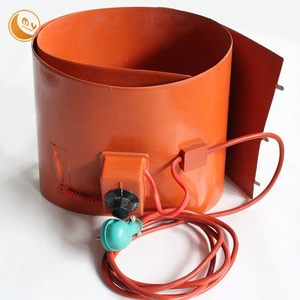
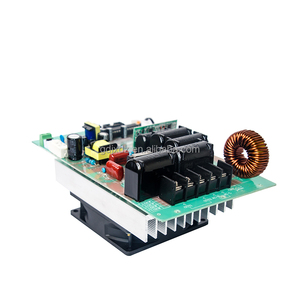
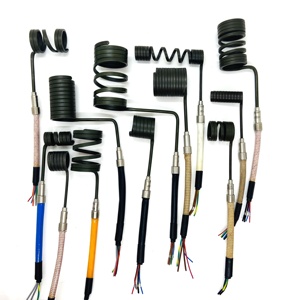
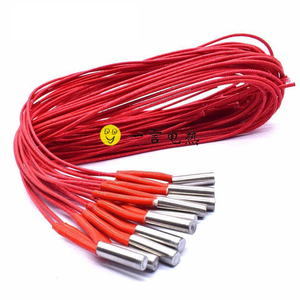
High-Frequency IGBT Inverter Electromagnetic Heating Systems & Component Solutions
CE Certified Industrial Induction Product Portfolio
Explore our robust lineup of OEM/ODM industrial electromagnetic heaters, control boards, high-frequency power supplies, and specialized heating elements.
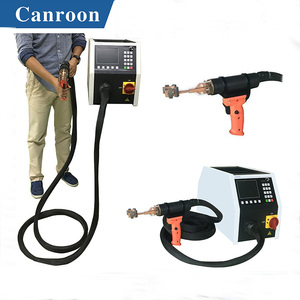
IGBT High Frequency Small Size Induction Heater Machine Power Supply for Brazing Hardening Annealing Curing Paint Removal
Engineering Whitepaper: Advanced Electromagnetic Induction Heating in Modern Manufacturing
As global industrial manufacturing pivots rapidly toward strict carbon-neutrality mandates, energy-efficient operational models, and Industry 4.0 automation, traditional resistance heating systems (such as ceramic band heaters, oil burner boilers, and open flame torches) are fast becoming obsolete. Electromagnetic induction heating represents a quantum leap in industrial thermal processing. By utilizing high-frequency alternating magnetic fields to generate internal eddy currents ($I^2R$ Joule losses) directly inside conductive workpieces, induction technology achieves instant, non-contact heating with thermal energy transfer efficiency routinely exceeding 95% to 98%.
This technical whitepaper, produced by senior thermal process engineers and power electronics specialists, analyzes the physics, operational advantages, circuit design topologies, and strategic procurement frameworks for CE-certified industrial induction heating power supplies, control boards, barrel heaters for plastic extruders, and precision metal-working equipment.
1. Fundamental Physics & Electromagnetic Energy Gain Calculations
Unlike thermal conduction or convection, which relies on a slow thermal gradient across ambient air or contact interfaces, electromagnetic induction operates via Faraday’s Law of Electromagnetic Induction and Ampère’s Circuital Law. When high-frequency AC power flows through a custom-shaped copper induction coil, an oscillating magnetic field is established. Placing a ferromagnetic or conductive target inside this field induces high-density eddy currents within the skin depth layer ($\delta$) of the material:
$$\delta = \sqrt{\frac{\rho}{\pi \cdot f \cdot \mu_r \cdot \mu_0}}$$
Where $\rho$ represents electrical resistivity, $f$ represents the operating frequency of the IGBT switching unit (typically 20 kHz to 100 kHz for medium/high-frequency units), $\mu_r$ is relative magnetic permeability, and $\mu_0$ is the permeability of free space. By precisely matching the inverter's resonance frequency to workpiece metallurgy, energy is deposited with sub-millimeter precision. This eliminates thermal inertia, slashes pre-heating cycles from hours to minutes, and cuts factory floor ambient heat emissions by up to 80%.
2. Comparative Analysis: Induction vs. Traditional Resistance Heating
To demonstrate the economic rationale for equipment retrofitting and capital investment, the table below compares industrial-grade IGBT electromagnetic induction heating systems against traditional resistance band heaters on plastic extruders and industrial hydronic boilers:
Performance Metric
High-Frequency IGBT Induction Heating
Traditional Resistance Band Heating
Fuel / Flame Direct Heating
Thermal Efficiency
95% - 98%
40% - 60%
25% - 40%
Pre-heating Speed
Ultra-Fast (30 - 90 seconds)
Slow (30 - 60 minutes)
Moderate (15 - 30 minutes)
Barrel/Surface Temperature Control
PID ±1°C Precision
±5°C to ±10°C Fluctuation
Unstable / High Deviation
Surface Heat Radiation Loss
Negligible (<35°C Touch Safe)
High (>150°C Ambient Heat Radiation)
Extreme Fire / Burn Hazard
Heater Element Lifespan
>50,000 Hours (Non-Contact)
3,000 - 8,000 Hours (Burnout prone)
Variable (Requires continuous maintenance)
Average Energy Savings Ratio
30% - 70% Savings
Baseline Reference
High Carbon Footprint
3. Global Future Procurement & Technology Trends (2025–2030)
Procurement directors and plant engineering specialists must align their supply chains with the next era of industrial thermal technology. Key trends driving the global B2B market for induction heating include:
Trend 01Silicon Carbide (SiC) & IGBT Module Integration: Advanced power electronics are migrating toward SiC MOSFET and third-generation IGBT modules, enabling higher switching frequencies (>100 kHz) with reduced switching losses, smaller form factors, and superior thermal tolerance in harsh industrial environments.
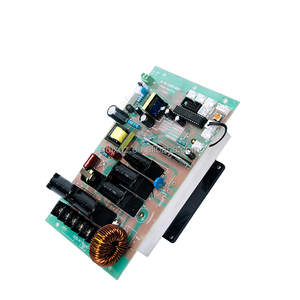
Trend 02IoT-Enabled Digital PID Micro-Control Boards: Embedded microcontrollers (such as 2.5kW to 3.5kW mainboards) now incorporate real-time phase-locked loop (PLL) tracking, automatic load impedance matching, RS485/Modbus communication, and predictive fault diagnostics.
Trend 03Modular Plastic Extruder Retrofitting: Plastic film, pipe, and injection molding plants worldwide are converting barrel heating zones to electromagnetic induction coils, drastically lowering factory power draw, improving melt homogeny, and recovering equipment payback within 6 to 12 months.
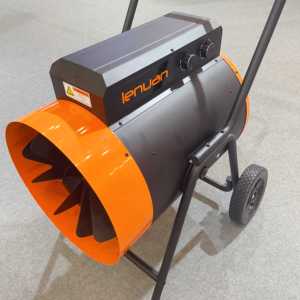
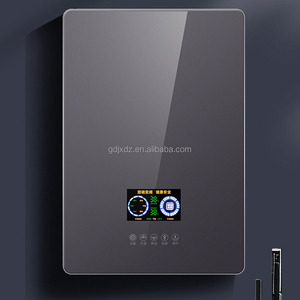
Trend 04Commercial & Residential Hydronic Decarbonization: High-efficiency instant induction water heaters and forced-air induction heaters are replacing gas/oil boilers in eco-friendly heating systems, supporting municipal electrification initiatives.
Why Partner With Our Factory & Export Division
Inheriting four decades of industrial electrical manufacturing expertise, robust engineering standards, and complete global compliance.
44+ Years Manufacturing Legacy
Established in 1980 (pioneered by industrial power engineers), our facility operates under ISO 9001:2015 strict quality management standards. We engineer heavy-duty industrial systems built to withstand extreme electrical fluctuation, high ambient heat, and dusty factory conditions.
CE Certified & Compliance Tested
All export-bound induction power supplies, control boards, and heating assemblies strictly conform to CE Electromagnetic Compatibility (EMC Directive 2014/30/EU) and Low Voltage Directive (LVD 2014/35/EU), ensuring flawless integration into international markets.
OEM / ODM Customization & Coils
From 2.5kW PCB control modules for equipment builders to 50kW+ industrial metal heating power supplies, we offer bespoke inductor coil geometry design, customized voltage configurations (110V, 220-240V, 380V-415V), and proprietary firmware programming.
Global B2B Supply Chain & Export
Serving buyers across 30+ nations across Africa, the Middle East, Southeast Asia, Europe, and the Americas. We maintain dedicated export-grade sea/air packaging, comprehensive commercial documentation, and continuous remote engineering support.
Rigorous Power Electronics Testing
Every induction mainboard, cartridge heater, and power supply undergoes 100% full-load burn-in testing, high-voltage insulation breakdown checks, and thermal imaging diagnostics prior to warehouse dispatch.
Full-Lifecycle Engineering Support
Our technical team provides complete pre-sales thermal simulation guidance, custom coil winding schematics, on-site commissioning advice, and lifetime replacement spare parts availability for international buyers.
Comprehensive B2B Procurement FAQ
Technical answers for purchasing managers, electrical engineers, and equipment importers.
What compliance certificates do your industrial induction heaters hold for international import?
Our entire factory product range holds CE certification, fully satisfying European Union safety standards under the EMC Directive (2014/30/EU) and Low Voltage Directive (LVD 2014/35/EU). Furthermore, our factory operations are certified under ISO 9001:2015 quality management systems. Test reports and certificates of conformity (CoC) can be provided with every export shipment for smooth customs clearance.
How does retrofitting plastic extruders with induction heaters achieve 30% to 70% energy savings?
Traditional resistance band heaters transfer heat from the outside of ceramic/mica bands into the barrel surface via conduction, losing over 50% of thermal energy into the surrounding factory atmosphere. Electromagnetic induction heaters wrap an insulated induction coil around the barrel; the barrel itself becomes the heat generator via induced magnetic eddy currents. Thermal insulation wrap installed beneath the coil keeps 98% of heat trapped inside the barrel, drastically reducing power draw and cooling air-conditioning loads in your plant.
Can your 2.5kW to 3.5kW control boards be integrated into custom OEM heating machinery?
Yes. Our 2.5kW to 3.5kW (and higher capacity) electromagnetic heating control boards are purpose-designed for OEM integration. They feature universal 220V/240V AC input, digital display interfaces, multi-channel PID temperature sensor inputs (K-type thermocouples), soft-start circuitry, phase-locked loop frequency tracking, and extensive protection against over-current, over-voltage, phase loss, and over-temperature.
What cooling mechanisms are required for high-frequency induction power supplies?
Lower-power units (up to 5kW) typically utilize high-CFM forced-air cooling with heavy-duty aluminum heatsinks and ball-bearing fans. Medium to high-power IGBT induction generators (10kW to 100kW+) utilize closed-loop water cooling circuits to cool the internal IGBT switching modules and hollow copper induction coils. We supply complete specifications for required water flow rates, pressure, and thermal dissipation metrics.
What is the typical production lead time and minimum order quantity (MOQ) for international buyers?
Standard stock items (such as standard control boards, cartridge heaters, and portable forced air units) can be dispatched within 3 to 7 business days. Custom engineered induction heating systems, special voltage transformers, or large-volume OEM orders typically require 15 to 25 business days. Flexible MOQ options are available to support initial engineering samples and prototype testing.
Ready to Upgrade Your Factory Thermal Processing Efficiency?
Contact our senior engineering team today for technical consultations, customized induction coil calculations, formal commercial quotes, and global factory-direct shipping options.