Engineered for Heavy Duty Fabrication, Structural Steel & High-Volume OEM Manufacturing
Pioneering Robust Industrial Welding & Cutting Solutions Under the Vulcan Brand Since 1980
Established in 1980 by Mr. P. M. Vadalia and Late R. A. Patel in Morbi, Gujarat, India, Canary Electricals Pvt. Ltd. has grown into an international powerhouse in electrical engineering and industrial joining technologies. Operating under the flagship Vulcan brand, the company manufactures nearly 100 continuous-duty product lines. Specializing in heavy-duty MIG/MAG welding machines, thyristorized rectifiers, spot welders, and industrial air compressors, Canary Electricals serves critical infrastructure worldwide.
Engineered to withstand extreme environmental challenges—including fluctuating power supplies, dusty workshop floors, and elevated ambient temperatures up to 50°C—every unit undergoes exhaustive thermal load and insulation tests. With stringent compliance to European Union Directive standards (EN 60974-1 and EN 60974-10 EMC requirements), our production facility guarantees structural integrity, arc stability, and operational safety for global procurement networks.
Decoding Low Voltage Directives (LVD), Electromagnetic Compatibility (EMC), and Duty Cycle Reliability
In modern international procurement, a CE Certificate on MIG/MAG welding equipment is far more than a regulatory checkbox—it represents verifiable engineering benchmarks for electrical safety, user protection, and grid compatibility. Global buyers navigating international supply chains must evaluate factories based on three primary European Normative (EN) standards:
Specifies safety and performance requirements for professional arc welding power sources. It dictates creepage and clearance distances, open-circuit voltage limits (U0), dielectric strength, and thermal protection protocols against duty cycle overloads.
Governs Electromagnetic Compatibility (Class A/B). Ensures the MIG welder does not inject harmonic distortion into the facility grid or interfere with adjacent CNC machinery, robotics, or digital measurement sensors.
Establishes mechanical and electrical safety parameters for wire feeders, ensuring smooth wire drive torque, insulation against energized welding circuits, and emergency stop cut-off integration.
The duty cycle represents the percentage of a 10-minute period that a MIG welder can operate at its maximum rated output without overheating. Standard laboratory testing under CE guidelines mandates ambient temperature evaluation at 40°C (104°F).
| Welder Class | Rated Amperage @ 60% Duty Cycle | Rated Amperage @ 100% Duty Cycle | Primary Application Spectrum | Recommended Shielding Gas |
|---|---|---|---|---|
| Compact Workshop MIG | 180A - 200A | 140A - 160A | Light sheet metal, auto body repair, maintenance | 75/25 Ar/CO2, Pure CO2 |
| Industrial Inverter MIG | 350A - 400A | 270A - 310A | Structural steel, pressure vessels, trailer fabrication | 80/20 Ar/CO2, 90/10 Ar/CO2 |
| Heavy Heavy-Industry Pulsed MIG | 500A - 600A | 388A - 465A | Shipbuilding, heavy mining machinery, bridge construction | Ar/CO2/O2 Tri-Mix, 98/2 Ar/CO2 |
Duty cycle decay can be mathematically modeled using the formula:
Where T is the duty cycle percentage and I is the operating current. CE certified industrial factories design transformer windings with High-Thermal Class H insulation (180°C limit) to prevent thermal degradation during continuous 100% duty cycle applications.
Navigating Technological Shifts: IGBT Power Topologies, Synergic Waveform Control & Green Manufacturing
Legacy transformer-rectifier welding machines, while exceptionally durable in rough environments, suffer from high idle power consumption and low power factor (0.65 - 0.75). The global procurement market is rapidly shifting toward High-Frequency Insulated Gate Bipolar Transistor (IGBT) Inverters. Operating at switching frequencies between 20 kHz and 100 kHz, IGBT power sources deliver:
Modern CE certified MIG welding factories are incorporating microprocessors pre-programmed with synergic curves. Operators simply select material thickness, wire diameter, and gas composition; the machine automatically calculates wire feed speed and output voltage. Furthermore, IoT-enabled MIG power sources allow plant management to track deposition rates, gas usage, and duty-cycle efficiency in real time via OPC-UA industrial protocols.
When joining heat-sensitive alloys such as 5000/6000 series aluminum or thin-gauge stainless steel, standard short-arc MIG causes excessive heat input, burn-through, and distortion. Double Pulsed MIG Welding modulates current between high peak and low background pulses, creating TIG-like ripple bead aesthetics at MIG deposition speeds while eliminating melt-through risk.
While initial capital expenditure for a CE certified synergic inverter MIG welder is 20-30% higher than a basic transformer unit, the reduction in post-weld cleanup (spatter removal), lower gas consumption (smart solenoid controls), and reduced electricity bills yield a payback period of under 9 months in continuous industrial shifts.
Extensive Track Record in Global B2B Supply Chains, Heavy Industry & Custom OEM Manufacturing
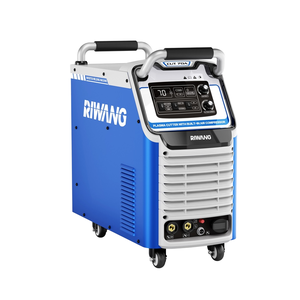
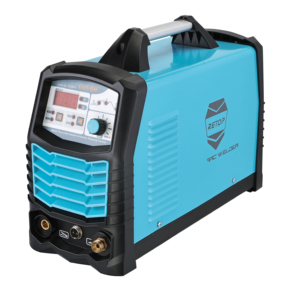
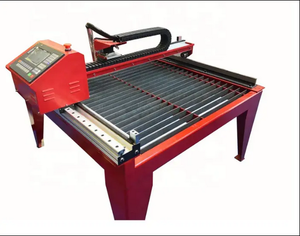
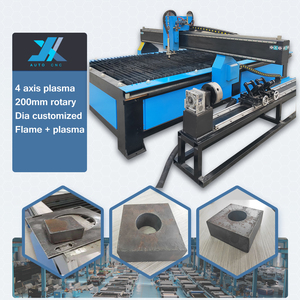
From compact 200A MIG welders to heavy-duty 600A thyristorized rectifiers, air plasma cutters, spot welding machines, step-up transformers, and screw air compressors, we provide complete, integrated fabrication workshops under one manufacturer roof.
Trusted by enterprise buyers in over 30 countries across Africa, the Middle East, South Asia, and Latin America. Our export team manages complex international shipping logistics, customs documentation, and regional voltage customizations (e.g., 220V/380V/415V/440V 50/60Hz).
Our Vulcan brand equipment is engineered specifically for rugged industrial operations—cement manufacturing plants, steel mills, fertilizer facilities, railway wagon manufacturing, and shipyard dry docks where dust resistance and thermal endurance are paramount.
Expert Insights on Selecting, Importing, and Maintaining CE Certified MIG Welding Equipment
Partner with Canary Electricals Pvt. Ltd. for reliable, CE certified industrial MIG welding power sources, plasma cutters, and air compressors. Contact our engineering sales team for custom specifications, bulk pricing, and technical support.
