Explore our top-rated industrial air receiver tanks, pressure storage systems, and CNC vessel shell cutting units manufactured under strict ISO 9001 and ASME quality protocols.
An authoritative analysis on pneumatic stability, thermodynamic dampening, moisture separation, and life-cycle energy reduction for industrial procurement managers.
Reciprocating and rotary screw air compressors generate cyclic discharge pressure waves. An engineered air receiver vessel serves as a mechanical buffer, neutralizing peak velocity spikes and equalizing line pressure down to ±0.1 bar variance.
As compressed air expands inside the receiver shell, its velocity drops rapidly, causing natural radiant cooling. This temperature drop precipitates over 65% of entrained moisture and aerosolized oil droplets prior to downstream refrigerated or desiccant air dryers.
Without sufficient air receiver volume, compressors undergo rapid start-stop cycles (short-cycling), increasing electrical motor thermal stress and power consumption. Proper air tank sizing reduces compressor motor loading cycles by up to 40% annually.
Comparative parameter guide for industrial buyers selecting carbon steel (Q235B/Q345R) and stainless steel (SS304/SS316L) air pressure storage vessels.
| Vessel Model / Type | Volumetric Capacity (Liters / M³) | Design Pressure (Bar / MPa) | Material Specification | Primary Certification | Recommended Application |
|---|---|---|---|---|---|
| Vertical Low-Pressure Receiver | 300L - 2,000L (0.3 - 2.0 m³) | 8.0 - 10.0 Bar (0.8 - 1.0 MPa) | Carbon Steel Q235B / Q345R | GB150 / ISO9001 / CE | General Manufacturing, Pneumatic Tool Lines |
| Vertical Medium-Pressure Receiver | 1,000L - 10,000L (1.0 - 10 m³) | 16.0 - 30.0 Bar (1.6 - 3.0 MPa) | High-Yield Steel Q345R / SA516 Gr 70 | ASME Sec VIII Div 1 / CE-PED | PET Bottle Blowing, Laser Cutting Storage |
| High-Pressure Air Storage Buffer | 500L - 5,000L (0.5 - 5.0 m³) | 40.0 - 100.0 Bar (4.0 - 10.0 MPa) | Heavy Plate Steel SA516 / Stainless 316L | ASME / SELO / SQL | Mining, Heavy Machinery, Aerospace Testing |
| Sanitary Stainless Air Tank | 100L - 3,000L (0.1 - 3.0 m³) | 8.0 - 16.0 Bar (0.8 - 1.6 MPa) | Stainless Steel 304 / 316L (Pickled/Polished) | FDA Standard / CE / ISO | Pharmaceutical, Food & Beverage Processing |
| Horizontal Air Receiver Vessel | 500L - 8,000L (0.5 - 8.0 m³) | 8.0 - 13.0 Bar (0.8 - 1.3 MPa) | Q235B / Internal Epoxy Lined | GB150 / ISO9001 | Space-Constrained Skids, Mobile Compressors |
Pressure vessels are categorized as critical safety assets. As top-tier Chinese air receiver exporters, our manufacturing process adheres to international pressure code regulations.
All longitudinal and circumferential shell seams are welded using state-of-the-art double-sided automatic Submerged Arc Welding (SAW). This guarantees complete root penetration, zero slag inclusion, and superior fatigue resistance under high cyclic pressure variations.
Every critical weld seam undergoes Radiographic Testing (RT) and Ultrasonic Testing (UT) to verify internal structural integrity. We enforce zero-defect acceptance criteria prior to proceeding to hydrostatic pressure verification.
Before surface finishing, every air receiver vessel is hydrostatically tested at 1.25x to 1.5x its rated maximum allowable working pressure (MAWP) for a minimum hold time of 30 minutes, ensuring absolute leak-free reliability.
Internal surfaces can be coated with food-grade epoxy resin or specialized zinc-phosphate rust inhibitors. External surfaces undergo shot-blasting to SA 2.5 clean finish followed by heavy-duty polyurethane electrostatic powder coating.
Established with over four decades of engineering experience (since 1980), our manufacturing organization—certified under ISO 9001:2015—has grown into a premier global hub for compressed air storage tanks, industrial welding systems, and specialized CNC shell fabrication equipment under the renowned Vulcan brand lineage.
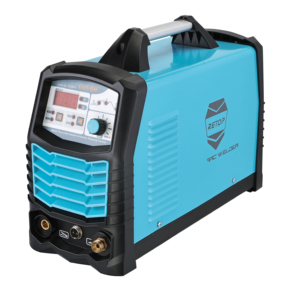
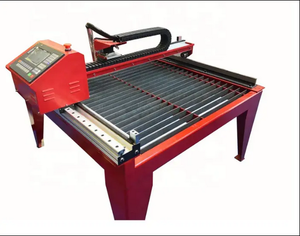
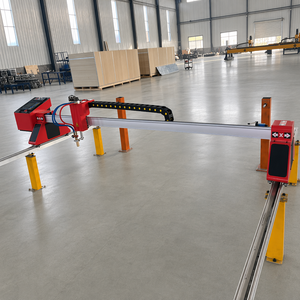
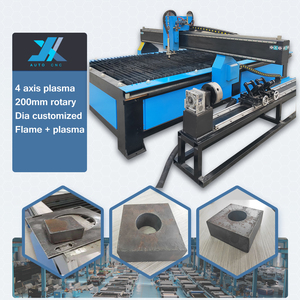
Our expansive industrial complex in Morbi, Gujarat, together with advanced manufacturing partnerships across China, produces over 100 distinct product models. We specialize in custom-engineered pressure vessels, air receivers, MIG/TIG welding rectifiers, plasma cutting machinery, and heavy-duty screw compressors engineered to thrive under extreme voltage fluctuations, harsh dust, and high ambient thermal environments.
Trusted across 30+ countries in Africa, the Middle East, South Asia, South America, and Europe, our air receivers serve critical roles in cement plants, petrochemical refineries, steel production mills, mining infrastructure, shipbuilding yards, and automated manufacturing plants worldwide.
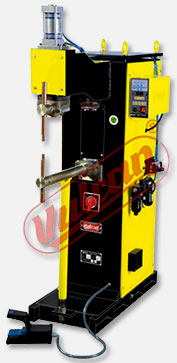
Key technological evolutions driving international procurement decisions for air storage and pneumatic energy management systems.
Future industrial air receivers are transitioning from passive steel shells to connected smart assets. Integration of digital pressure transducers, thermal sensors, and ultrasonic wall-thickness monitors enables real-time telemetry, predictive maintenance alerts, and automated condensate purge cycles tied directly to plant SCADA networks.
Global energy efficiency mandates are driving the replacement of traditional timed solenoid drain valves with intelligent zero-compressed-air-loss capacitive condensate drains. Replacing legacy drains on air receiver tanks saves up to 1.5 kW of wasted air energy per drain point, significantly reducing operational carbon footprints.
International buyers increasingly favor plug-and-play modular skid systems. Integrating screw compressors, vertical air receivers, refrigerated air dryers, and multi-stage oil coalescing filters onto a single vibration-dampened frame reduces site installation costs by up to 60% and guarantees pre-certified factory testing.
How advanced metallurgy, precision automated welding, and specialized surface coatings are raising performance benchmarks for exported Chinese pressure vessels.
By utilizing modern Q345R and SA516 grade micro-alloyed fine-grain steel plates, manufacturers can reduce vessel wall thickness while maintaining superior burst pressure margins. This lightweighting lowers international ocean freight costs without sacrificing mechanical strength.
To eliminate internal rust contamination in sensitive applications like medical air, electronics, and food packaging, air receivers now feature internal thermoplastic fusion-bonded coatings that resist aggressive condensate acids and oil vapors for over 15 years.
Transitioning to high-power fiber laser cutting machines and multi-axis welding robots allows Chinese air receiver exporters to achieve zero-gap fit-up tolerances, ensuring pristine weld seam aesthetics, uniform heat-affected zones (HAZ), and structural perfection.
Detailed answers to technical, regulatory, and logistics queries commonly raised by international plant engineers and procurement specialists.
The standard engineering rule-of-thumb for sizing an air receiver is 10 to 15 liters of storage volume per Liter/Second (L/s) of continuous compressor free air delivery (FAD), or roughly 1 Gallon per CFM. For precise sizing under fluctuating demand loads, use the thermodynamic formula:
V = (Q × P1 × t) / (P2 - P3)
Where: V = Receiver Volume (m³), Q = Peak Air Demand (m³/min), P1 = Ambient Inlet Pressure (bar abs), t = Time duration of peak load (minutes), P2 = Maximum Tank Pressure (bar abs), and P3 = Minimum Allowable Tool Pressure (bar abs). Sizing slightly larger prevents excessive compressor cycling and lowers operational energy costs.
Technically, both vertical and horizontal receivers perform identical thermodynamic functions (pulsation dampening, cooling, moisture condensation). However, Vertical Air Receivers are preferred in most industrial facilities because they occupy a significantly smaller floor space footprint and optimize gravitational moisture separation down to the bottom drain port. Horizontal Air Receivers are primarily selected when ceiling height is limited or when mounting a top-mounted compressor unit directly onto the vessel top plate for compact skid systems.
Leading Chinese air receiver manufacturers provide certified vessels compliant with global standards based on destination country requirements:
• ASME Section VIII Div 1 (U-Stamp / UM-Stamp) for North America & international oil/gas projects.
• CE / PED (2014/68/EU) Certification for the European Union market.
• GB150 Pressure Vessel Code (SELO / SQL License) for Asian & domestic Chinese compliance.
• ISO 9001:2015 Quality Management System certification for standard factory quality oversight.
According to ASME and CE pressure vessel safety mandates, every air receiver tank must be equipped with three essential safety devices:
1. ASME/CE Safety Relief Valve (SRV): Set to open automatically if pressure exceeds the Maximum Allowable Working Pressure (MAWP).
2. Calibrated Pressure Gauge: Visually displaying internal system static pressure.
3. Automatic Drain Valve: (Electronic timer, zero-loss capacitive, or manual ball valve) located at the lowest vessel point to discharge accumulated oil-water condensate continuously.
The ideal compressed air installation includes TWO air receivers:
• Wet Air Receiver (Installed BEFORE Dryer): Receives hot air directly from the compressor aftercooler. It cools the air, knocks out heavy moisture droplets, and stabilizes pressure entering the dryer, preventing dryer thermal overload.
• Dry Air Receiver (Installed AFTER Dryer): Acts as a clean, dry buffer storage tank to supply sudden downstream peak demands without causing pressure drop pulses through the dryer filtration system.
Routine visual inspection of external paint integrity and automatic drain functioning should occur weekly. Internal visual inspections via inspection ports (handholes/manholes) and ultrasonic wall-thickness measurements should be performed every 2 to 3 years. Comprehensive hydrostatic re-testing or non-destructive thickness testing is typically mandated by regional pressure safety authorities every 5 to 10 years depending on local statutory laws.
Chinese pressure vessel OEMs offer extensive custom fabrication, including:
• Custom pressure ratings up to 100 bar (10 MPa).
• Special alloy materials including SS304, SS316L, 904L, or duplex stainless steel.
• Custom nozzle placement, flange standards (ANSI B16.5, DIN, JIS), and manhole sizes.
• Specialized internal epoxy linings, hot-dip galvanizing, or customized external brand color polyurethane paint.
Exported air receiver tanks undergo heavy-duty export packaging: nozzle openings are sealed with plastic protective plugs or blind flanges; the vessel shell is wrapped in anti-corrosion VCI stretch film and bubble wrap; large tanks are secured onto wooden saddles or heavy steel shipping skids inside Open Top (OT) or standard High Cube (HC) shipping containers with steel wire lashing to prevent movement during transit.
Contact our engineering sales department today for factory-direct technical drawings, ASME/CE compliance documentation, and competitive B2B quotation pricing.
