Engineered for Precision Turning, Heavy Tank Fabrication & Motor Core Assembly
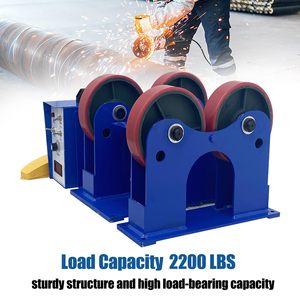
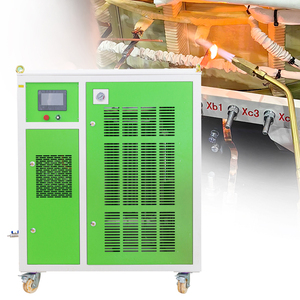
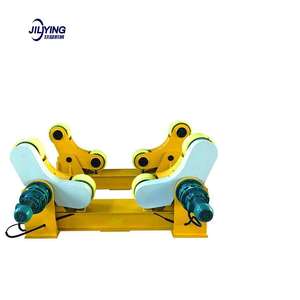
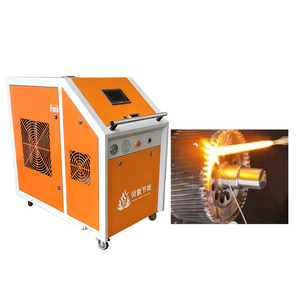
In modern industrial manufacturing, pressure vessel fabrication, wind tower assembly, and pipeline construction require strict dynamic rotation control, thermal stability, and exact circumferential positioning. As leading manufacturers and exporters of welding rotators in China, our engineering teams combine electro-mechanical synchronization, advanced metallurgy, and digital closed-loop feedback systems to maximize productivity and seam integrity.
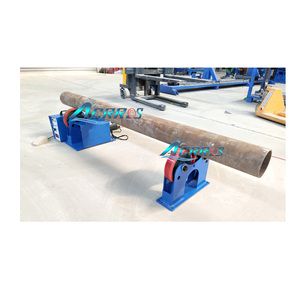
Welding turning rolls—commonly referred to as welding rotators—are essential positioning tools designed to rotate cylindrical workpieces under automated or manual welding heads. Whether dealing with heavy-walled boiler drums, thin-gauge stainless steel tanks, or induction motor rotors, selecting the appropriate rotator architecture directly governs defect rates, linear bead uniformity, and overall workshop throughput.
Information Gain Insight: Modern automated submerged arc welding (SAW) and gas metal arc welding (GMAW) processes require rotation speed consistency within ±1% under variable eccentricity load conditions. Premium Chinese manufacturers achieve this through vector-controlled AC inverter drives coupled with heavy-duty worm-gear reducers.
Industrial rotator systems are classified based on their adjustment mechanisms, payload spectrums, and vessel drift compensation capabilities:
Automatically adjust wheel angle spans to fit varying workpiece diameters without manual screw adjustment, distributing weight evenly across four wheel pairs per unit.
Feature fixed wheel brackets moved manually along lead screws or pre-drilled pin slots. Ideal for high-capacity applications up to 1,000 tons requiring absolute rigid structural lock.
Incorporate hydraulic or servo-driven motorized micro-adjustments along the axial plane to counteract longitudinal vessel walking during long seam welding operations.
Selecting the optimal welding rotator requires matching workpiece dimensions, alloy sensitivity, and surface protection requirements with the right mechanical setup. Below is an engineering analysis of specialized turning solutions supplied by top Chinese exporters.
The wheel material directly influences tractive friction and surface deformation of the vessel shell. High-grade polyurethane (PU) wheels offer non-marring properties ideal for stainless steel, aluminum, and titanium vessels, absorbing minor surface irregularities. For ultra-heavy wall carbon steel drums (exceeding 100 metric tons), forged steel wheels with hardened surface treatments (HRC 55-60) are mandated to prevent creep deformation under extreme line contact pressure.
| Roller Material Type | Max Recommended Load / Axis | Surface Protection Level | Temperature Threshold | Primary Industry Application |
|---|---|---|---|---|
| Heavy-Duty Polyurethane (95 Shore A) | Up to 60 Metric Tons | High (Zero Contact Contamination) | -20°C to +80°C | Food Grade Tanks, Stainless Chemical Vessels |
| Forged & Hardened Carbon Steel | Up to 1,000+ Metric Tons | Low (Metal-to-Metal Contact) | -40°C to +300°C | Nuclear Reactors, Heavy Boiler Drums |
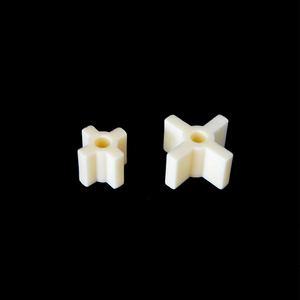
| 99% Alumina Ceramic Rotor Insert | Specialized Process Components | Ultra-High Corrosion Resistance | Up to 1,600°C | Molten Aluminum Degassing, Chemical Scrubbing |
| Composite Steel-Rubber Hybrid | Up to 120 Metric Tons | Moderate Friction Grip | -10°C to +100°C | Wind Turbine Tower Segment Welding |
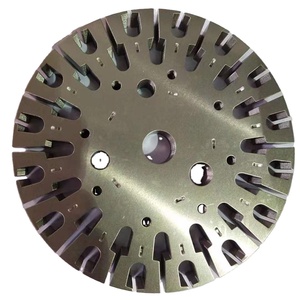
Beyond traditional vessel turning rolls, precision electrical manufacturing requires specialized rotor processing machinery. Copper-bar induction motor rotors demand exact thermal control during oxyhydrogen gas brazing of end rings. Integrating continuous rotary positioning during high-temperature brazing ensures uniform capillary alloy flow and minimizes electrical rotor imbalance.
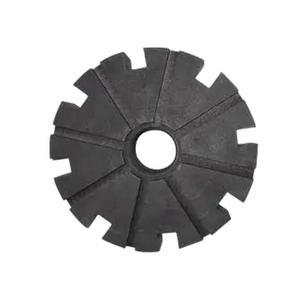
Similarly, in aluminum foundry operations, wear-resistant degassing rotors made from high-density graphite or 99% alumina ceramics must withstand corrosive molten metal environments while operating at high rotational speeds to disperse hydrogen gas bubbles efficiently.
As global EPC (Engineering, Procurement, and Construction) contractors and heavy fabricators embrace Industry 4.0 standards, purchasing criteria for welding turning rolls are shifting from basic mechanical stability to digital connectivity, dynamic automation, and energy efficiency.
Modern fabrication lines require rotators equipped with absolute encoders and Ethernet/IP protocols. Multi-drive systems now utilize master-slave digital synchronization, eliminating torsional twisting across long thin-walled pipes.
Laser sensors monitor vessel edge alignment in real time. If axial movement exceeds 0.5mm, hydraulic actuators elevate one side of the idler frame automatically, counteracting drift without operator intervention.
Next-generation variable frequency drives (VFD) cut energy consumption by up to 30% while maintaining smooth torque delivery at low RPMs (down to 50 mm/min circumferential speed).
Procurement officers must look beyond initial equipment acquisition costs. Key total cost of ownership (TCO) drivers include replacement cycle times for polyurethane tyres, gearbox backlash tolerances, modularity for future robotic arm integration, and supplier compliance with international electrical standards (CE, UL, CSA).
Combining over four decades of industrial electrical and mechanical manufacturing excellence, our manufacturing facilities operate under strict ISO 9001:2015 quality management systems. Originally established in 1980, our production expertise covers complete welding power sources, motor components, and heavy automation rotators exported to over 30 countries across Africa, the Middle East, South Asia, and the Americas.
Rigorous quality control covering incoming steel raw material, gear machining tolerances, and full-load burn-in testing.
Tailored frame dimensions, high-temperature ceramic coatings, and custom motor voltages (220V–690V) to match project specs.
Comprehensive export packaging, seaworthy wooden crating, and complete technical documentation with remote commissioning guidance.
Rigid structural steel frames engineered to endure harsh shipyard, cement plant, and petrochemical site conditions.
Quality Assurance Protocol: Every rotator assembly undergoes a 24-hour continuous load running test, insulation resistance verification, dynamic balancing, and VFD responsiveness testing prior to factory sign-off.
Detailed answers to common engineering, sizing, and procurement inquiries regarding industrial welding rotators and rotor systems.
To determine the total weight capacity needed, calculate the combined maximum weight of the workpiece shell, internal stiffeners, end caps, and flux load. A safety factor of at least 1.25 to 1.5 should be applied to accommodate impact loading during vessel loading via overhead crane. A rotator set usually consists of one Power Unit (Drive) and one Idler Unit. The total capacity rating (e.g., 20 Tons) covers the combined load supported across both units.
Self-Aligning rotators automatically adapt their four-wheel assemblies to accommodate workpieces of varying diameters within a defined range without manual adjustment. They provide quick setup times for shops handling diverse tank sizes. Conventional rotators require manual adjustment of the wheel centers (using lead screws or bolt positions) but offer higher structural rigidity and greater weight capacity (up to 1,000+ tons).
Axial drift occurs due to geometrical imperfections in the vessel shell or slight misalignment of the roller beds. Anti-drift systems utilize precision displacement sensors (laser or mechanical probe) to detect longitudinal movement. When drift is detected, a hydraulic or motorized mechanism elevates or angles one end of the idler roller shaft, generating a counteracting force that brings the vessel back to its nominal center line within ±0.5 mm tolerance.
Polyurethane (PU) rollers are recommended for thin-walled workpieces, stainless steel, copper, or non-ferrous tanks where surface scratching and iron contamination must be prevented. PU offers superior friction coefficient to prevent slipping. However, solid forged steel rollers are required for heavy thick-walled steel vessels (generally over 60–100 tons) or high-temperature preheated workpieces where polyurethane would deform or degrade under excessive heat and point load pressure.
Oxyhydrogen (HHO) gas generators utilize water electrolysis to produce a clean, high-temperature flame (up to 2800°C) on demand. When brazing copper rotor bars to end rings in induction motors, the HHO flame provides rapid, localized heat transfer without carbon emissions or oxidation residues. This results in superior electrical conductivity at the joint, lower thermal deformation of the silicon steel stator/rotor laminations, and reduced operating costs compared to conventional bottled cylinder gases.
Standard preventive maintenance includes: (1) Weekly inspection of gearbox oil levels and greasing of drive shaft bearings; (2) Monthly checking of polyurethane wheel surfaces for embedded metal chips or uneven wear; (3) Quarterly verification of motor terminal tightness and VFD cooling fan operation; and (4) Semi-annual calibration of rotation speed readouts to ensure speed accuracy aligns with welding procedure specifications (WPS).
Yes. Our industrial rotators feature centralized control interfaces (PLC interface cards, Modbus/Profibus support, foot switches, and analog speed inputs) that allow seamless integration with welding column and boom manipulators, automated SAW welding heads, and seam tracking sensors for fully synchronized orbital welding cells.
Whether you require standard 5-ton turning rolls, custom 500-ton anti-drift rotator beds, or specialized motor rotor brazing systems, our engineering team provides complete solution design, competitive factory pricing, and full export support.
Inquire Now