Engineered for precise step-down/step-up voltage matching, zero-ground potential drift, and total electrical noise isolation across automated machinery and heavy utilities.
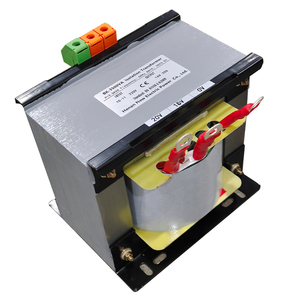
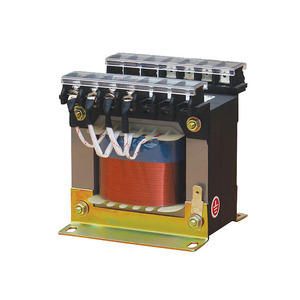
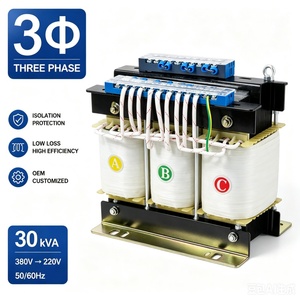
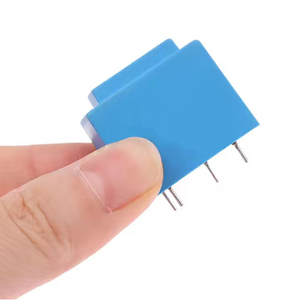
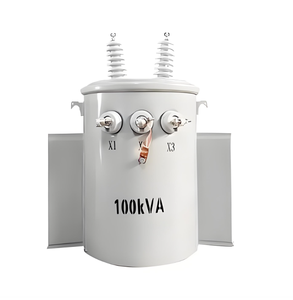
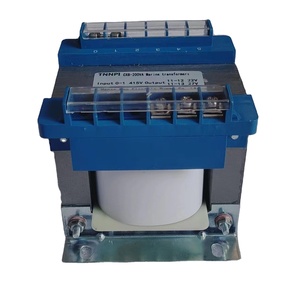
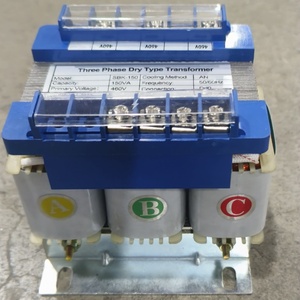
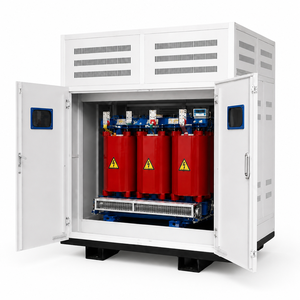
In modern industrial power distribution, an isolation transformer is far more than a simple magnetic step-down or step-up voltage converter. It operates as a strategic decoupling barrier engineered to eliminate physical electrical connection between the input AC power source and sensitive downstream equipment. By converting electrical energy into magnetic flux within a magnetic core and back into AC power, the isolation transformer establishes physical galvanic isolation. This mechanism blocks direct DC current paths, neutralizes ground loops, mitigates high-frequency electrical noise, and protects human operators from catastrophic shock hazards.
The primary vector for high-frequency interference—such as electromagnetic interference (EMI) and radio frequency interference (RFI)—entering industrial automation systems is inter-winding capacitive coupling ($C_{iw}$). Standard dual-winding transformers allow fast voltage transients ($dv/dt$) to pass directly from primary to secondary windings through this stray capacitance.
To combat this, premium isolation transformers manufactured by top Chinese suppliers integrate a physical Faraday Shield—a non-magnetic conductive copper or aluminum electrostatic barrier inserted between the primary and secondary coils, fully insulated from both windings and connected directly to earth ground.
Common-mode noise occurs equally on both line conductors relative to ground. Integrating an earthed electrostatic Faraday shield redirects high-frequency capacitive currents to ground, achieving attenuation levels between 60 dB and 120 dB across frequencies from 10 kHz to 10 MHz.
Differential-mode surges caused by switching power supplies or grid spikes are attenuated through optimized magnetic core saturation characteristics, low-loss grain-oriented silicon steel lamination, and selective filtering designs.
By establishing a newly derived neutral point at the secondary winding (e.g., Wye connection), isolation transformers completely isolate downstream CNC equipment and PLC controllers from upstream floating ground potentials and phase imbalances.
The operational efficiency, thermal dissipation, and lifespan of an isolation transformer depend heavily on raw material selection and winding techniques. Industrial-grade transformers utilize Cold-Rolled Grain-Oriented (CRGO) silicon steel sheets stacked with precision lap joints to reduce hysteresis and eddy current losses.
| Parameter / Material | Standard Commercial Grade | High-Performance Industrial Grade (Our Standard) | Impact on System Performance |
|---|---|---|---|
| Core Steel Core Grade | Non-oriented silicon steel (M45/M36) | Cold-Rolled Grain-Oriented (CRGO M4 / 23ZH85) | Reduces no-load magnetizing losses by up to 45% and minimizes magnetic acoustic noise (<45 dB). |
| Winding Conductor | Recycled Copper / Commercial Aluminum | 99.99% Electrolytic Oxygen-Free Copper (EFC) | Lowers $I^2R$ copper losses, maximizes electrical conductivity, and improves overload tolerance. |
| Insulation Thermal Class | Class B (130°C) or Class F (155°C) | Class H (180°C) or Class N (200°C) Nomex Insulation | Ensures robust thermal stability during continuous full-load operating conditions in warm climates. |
| Impregnation Method | Dip & Bake Varnish | Vacuum Pressure Impregnation (VPI) / Cast Resin | Eliminates internal air voids, prevents moisture ingress, and boosts dielectric breakdown strength (>4 kV). |
Modern industrial and commercial facilities are populated with non-linear loads—Variable Frequency Drives (VFDs), switch-mode power supplies (SMPS), LED lighting systems, welding rectifiers, and robotics. Unlike linear resistive loads, non-linear equipment draws current in abrupt non-sinusoidal pulses. This injects severe triplen harmonics ($3^{rd}, 9^{th}, 15^{th}$) into the neutral conductor, causing extreme core overheating, skin-effect resistance in conductors, and premature insulation breakdown in standard transformers.
To withstand non-harmonic thermal stress without derating, specialized K-Factor isolation transformers must be deployed. K-factor measures a transformer's capability to handle harmonic currents while maintaining safe operating temperatures according to ANSI/IEEE C57.110 standards.
Designed for environments where non-linear loads represent up to 50% of the total connected capacity. Ideal for general office buildings, machine shop control circuits, and basic motor drive installations.
Tailored for heavy industrial facilities, telecommunication hubs, and data centers where non-linear harmonic loads make up 100% of the electrical supply. Features double-sized neutral conductors to carry heavy harmonic return currents safely.
Our custom OEM manufacturing capabilities allow us to construct K-4, K-13, and K-20 rated three-phase isolation transformers with fully transposed neutral bars, secondary electrostatic shielding, and custom primary/secondary tapping options (e.g., ±2.5%, ±5%).
As the worldwide industrial sector accelerates its transition toward smart automation, renewable microgrids, and electric vehicle infrastructure, the global market for isolation transformers is experiencing structural evolution. B2B buyers, EPC contractors, and original equipment manufacturers (OEMs) must adapt their procurement strategies to align with these trends:
Solar PV plants, battery energy storage systems (BESS), and EV fast-charging stations demand specialized step-up and step-down isolation transformers rated for continuous bidirectional power flow and harsh outdoor environments (IP65/NEMA 3R/4X).
Procurement preference is rapidly shifting toward smart isolation transformers equipped with built-in fiber-optic thermal sensors, vibration accelerometers, and real-time online Dissolved Gas Analysis (DGA) telemetry for predictive maintenance.
Global regulatory bodies (EU Tier 2 Eco-design, US DOE 2016 standards) require ultra-low no-load and full-load losses. Chinese manufacturers leading the market are utilizing amorphous metal cores and optimized CRGO laminations to exceed international efficiency standards.
Choosing the correct transformer topology is critical for optimizing capital expenditure (CAPEX) and operational performance (OPEX). The matrix below provides an engineering comparison to guide international buyers:
| Feature / Topology | Dry-Type Vacuum Pressure Impregnated (VPI) | Epoxy Cast Resin Dry-Type | Oil-Immersed Distribution |
|---|---|---|---|
| Primary Application | Indoor machine tools, control panels, CNC machinery | Commercial high-rise, mining, high-humidity environments | Outdoor substations, utility poles, heavy industrial yards |
| Cooling Mechanism | Air Natural (AN) / Air Forced (AF) | Air Natural (AN) / Air Forced (AF) | Oil Natural Air Natural (ONAN) |
| Fire Safety Rating | High (Non-flammable Nomex/Varnish) | Maximum (Self-extinguishing, F1 rated) | Requires fire walls & oil containment basins |
| Maintenance Needs | Low (Periodic dust cleaning & torque check) | Minimal (Smooth resin surface prevents dust accumulation) | Moderate (Oil dielectric testing & gasket checks) |
| Cost Profile | Most Cost-Effective CAPEX | Moderate CAPEX / Low OPEX | Optimal for High Power (kVA) Outdoor Needs |
As an established industrial electrical equipment manufacturer founded in 1980, our production hub in China spans advanced winding, core assembly, vacuum drying, and automated testing facilities. We adhere strictly to ISO 9001:2015 quality management systems, ensuring every single unit delivered to global buyers satisfies international electrical standards (IEC 61558-2-4, ANSI C57.12, CE, and UL compliance).
Utilizing computer-controlled multi-spindle automatic winding machines, we guarantee tight coil geometry, precise turn ratios, and minimal stray flux leakage. Both high-voltage and low-voltage windings are executed with uniform insulation interleaving to withstand high surge voltages.
Completed core-and-coil assemblies undergo multi-stage thermal baking followed by deep vacuum impregnation with solventless high-temperature varnish. This process seals micro-cavities, eliminates partial discharge risk (<10 pC), and protects against moisture and chemical fumes.
Before shipment, 100% of our single-phase and three-phase isolation transformers pass full quality testing on our automated test benches:
Our engineering team addresses common technical and commercial queries raised by global procurement managers, system integrators, and electrical distributors:
Whether you require low-voltage single-phase control isolation transformers, heavy 3-phase dry-type units, or high-voltage oil-immersed pole transformers, our engineering team provides customized solutions tailored to your technical specifications.
