Explore our export-ready range of high-precision plasma systems and arc welding consumables engineered for structural steel, aluminum fabrication, and automated manufacturing.
In modern heavy fabrication, shipyards, pressure vessel manufacturing, and automated automotive assembly, the selection of filler metals directly determines structural integrity, weld seam fracture toughness, and total operational cost. As a leading manufacturer and exporter from China, built upon a foundation of engineering excellence established in 1980 under strict ISO 9001:2015 quality control protocols, our manufacturing ecosystem provides high-yield welding wires tailored for global B2B procurement needs.
Operating under rigorous international standards including AWS (American Welding Society), EN, ISO, and CE certifications, our state-of-the-art wire-drawing, copper-plating, and flux-formulation lines deliver welding consumables designed for extreme working conditions—ranging from high humidity marine construction to fluctuating field power supplies and high-vibration heavy industrial machinery.
High-gain procurement requires precise matching between base metals, shielding gases, joint designs, and filler wire chemical composition. Below is an expert engineering breakdown of primary welding wire classifications manufactured in China for worldwide distribution.
Manufactured from high-grade deoxidized carbon steel rods. Features ultra-uniform copper plating for maximum electrical conductivity, minimal contact tip wear, and smooth feedability in high-speed robotic systems. High levels of Manganese (Mn) and Silicon (Si) provide robust deoxidation against heavy mill scale and surface rust.
Engineered for fast-freezing slag formation in all-position welding. Delivers micro-alloyed rutile slag systems that produce smooth arcs, low spatter rates, easy slag removal, and superior radiographic weld soundness. Ideal for structural steel building frames, heavy bridge girders, and shipbuilding.
Designed for heavy-section butt and fillet welding in conjunction with agglomerated neutral fluxes. Delivers high deposition rates, deep penetration, and consistent Charpy V-notch impact toughness values down to -40°C in heavy-gauge boiler plate and wind tower manufacturing.
Precision shaved and polished aluminum filler wires (ER4043, ER5356) with strict hydrogen gas porosity control, along with low-carbon stainless wires (ER308L, ER316L) offering high intergranular corrosion resistance for chemical processing and cryogenic service.
To provide complete transparency and information gain for industrial procurement engineers, the standard chemical and mechanical parameters of our primary export-grade welding consumables are detailed below.
| Specification / Alloy | Carbon (C) % | Manganese (Mn) % | Silicon (Si) % | Tensile Strength (MPa) | Yield Strength (MPa) | Elongation (%) | Typical Application |
|---|---|---|---|---|---|---|---|
| AWS A5.18 ER70S-6 | 0.06 – 0.15 | 1.40 – 1.85 | 0.80 – 1.15 | ≥ 500 | ≥ 420 | ≥ 22 | General carbon steel fabrication, automotive frames, pipes |
| AWS A5.20 E71T-1C | 0.04 – 0.10 | 1.00 – 1.75 | 0.30 – 0.80 | 490 – 660 | ≥ 400 | ≥ 22 | Shipbuilding, structural steelwork, heavy machinery bases |
| AWS A5.17 EM12K (SAW) | 0.05 – 0.15 | 0.80 – 1.25 | 0.10 – 0.35 | ≥ 480 | ≥ 400 | ≥ 24 | Pressure vessels, offshore jacket structures, wind turbine towers |
| AWS A5.9 ER308L | ≤ 0.03 | 1.00 – 2.50 | 0.30 – 0.65 | ≥ 550 | ≥ 380 | ≥ 35 | Food processing equipment, chemical storage tanks, 304/304L stainless |
| AWS A5.10 ER5356 | — (Mg 4.5-5.5) | 0.05 – 0.20 | ≤ 0.25 | ≥ 250 | ≥ 120 | ≥ 17 | Marine structural aluminum, automotive chassis, transport trailers |
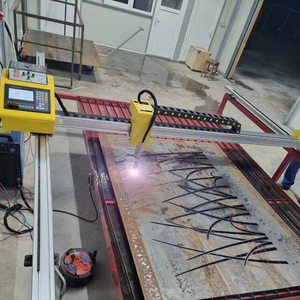
Optimal welding results depend not only on wire quality but also on joint prep bevel consistency. Modern automated fabrication plants integrate high-amperage CNC plasma cutting systems with automated wire feeding units to minimize re-work and defect rates.
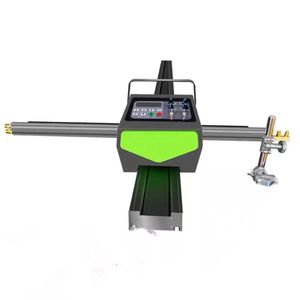
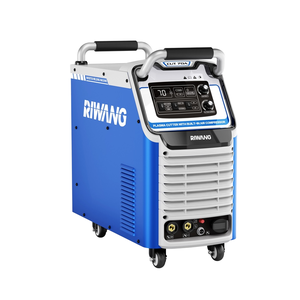
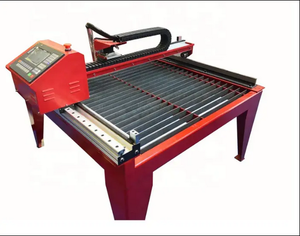
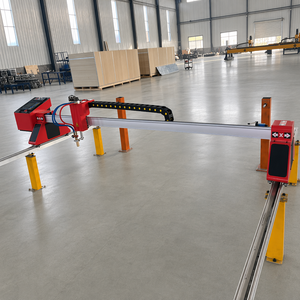
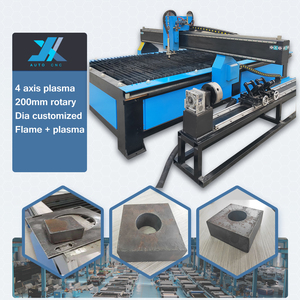
When edge bevels are cut using advanced equipment—such as 120A/200A Portable Gantry CNC Plasma Cutting Machines or 1530 Water Table CNC Plasma Cutters—the cut faces exhibit minimal dross and narrow heat-affected zones (HAZ). Aligning precise plasma edge geometries with smooth-feeding ER70S-6 MIG wire or E71T-1C FCAW flux-cored wire eliminates burn-through, decreases porosity in root passes, and increases total deposition efficiency by up to 28% compared to manual bevel preparation.
Procurement managers and supply chain directors in heavy industry face evolving demands regarding sustainability, cost efficiency, and automated integration. Sourcing welding wires from tier-1 Chinese manufacturers requires an understanding of key sector shifts over the next decade.
Transitioning from traditional 15kg plastic spools to 250kg and 350kg continuous bulk drum packs. Bulk drums reduce downtime during robot cell re-spooling, protect wires from environmental humidity, and ensure smooth wire payoff across long conduit cables.
Environmental safety regulations (such as OSHA and EU directives) are driving demand for copper-free solid MIG wires and low-hexavalent-chromium flux-cored wires. Copper-free wires reduce toxic welding fumes while eliminating copper flake buildup inside liner conduits.
With the European Union’s Carbon Border Adjustment Mechanism (CBAM), top Chinese wire exporters are adopting low-carbon steel billet sourcing, scrap-recycle electric arc furnace (EAF) steelmaking, and solar-powered wire drawing facilities to lower embodied carbon certificates.
As automotive and crane manufacturing shifts toward lightweight, high-yield steels (e.g., Hardox, Weldox, DOMEX), procurement is shifting toward matching filler metals rated at 800–1000 MPa tensile strength with specialized Nickel-Molybdenum-Chromium alloy formulations.
To maintain zero-defect delivery across 30+ countries, our manufacturing base enforces a comprehensive quality control protocol throughout every stage of wire production.
Direct-reading Spark Optical Emission Spectrometry (OES) checks each batch of raw steel rod to verify exact C, Mn, Si, P, and S levels before drawing.
Dual-axis laser micrometers continuously monitor wire wire diameter and ovality during high-speed multi-pass drawing to guarantee strict ±0.01mm tolerances.
Chemical immersion and mechanical wipe testing verify copper plating density and adhesion, preventing flaking and rust formation during long-term ocean shipping.
Finished spools are test-fed through a 5-meter curved torch liner to record feeding force dynamics and ensure consistent wire delivery without bird-nesting.
Flux-cored wires undergo mercury vapor or gas chromatography testing to ensure diffusible hydrogen levels remain under H4/H8 standards, mitigating cold cracking risks.
All-weld-metal test plates are prepared to evaluate tensile strength, yield strength, percentage elongation, and low-temperature Charpy V-Notch (CVN) impact toughness.
Below are expert technical responses to common questions raised by international procurement managers, welding engineers, and OEM buyers when sourcing welding consumables from China.
Optimize your procurement costs, enhance weld deposition rates, and ensure structural compliance with our export-grade consumables and cutting machinery.
Get Catalog