Explore our core catalog of heavy-duty spot welders, CNC plasma cutters, and inverter-based welding machinery engineered for global manufacturing plants.
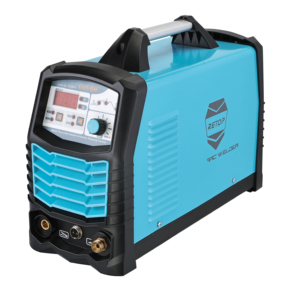
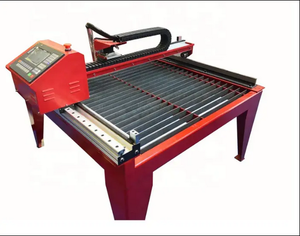
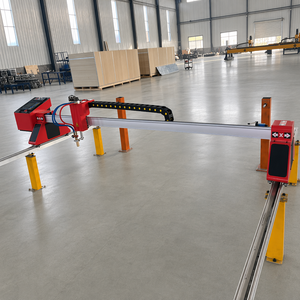
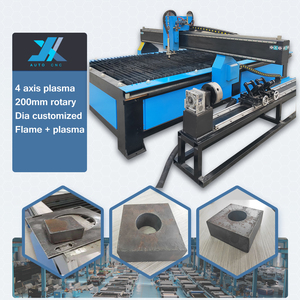
When global B2B buyers search for China Wholesale Spot Welder Manufacturers & Factory direct supplies, the primary search intent revolves around structural durability, thermal efficiency, precise current control, and total operational cost (TCO). Spot welding—a staple of resistance welding—remains the backbone of metal sheet joining across automotive assembly lines, battery pack production (EV lithium cell tab welding), HVAC ductwork fabrication, and structural steel manufacturing.
Navigating the Chinese manufacturing landscape requires a granular understanding of machine topologies: moving from legacy single-phase AC pedestal spot welders to advanced Medium Frequency Direct Current (MFDC) Inverter Spot Welders. Premier Chinese factories now deliver machines equipped with digital microprocessors, closed-loop feedback systems, and pneumatic or servo-driven pressure heads that deliver consistent nugget diameter without heat deformation.
Understanding the engineering tradeoffs is vital for OEM factory floor efficiency and energy minimization.
| Technical Parameter | Traditional AC Spot Welders (50/60Hz) | MFDC Inverter Spot Welders (1000Hz+) | Impact on Procurement ROI |
|---|---|---|---|
| Power Factor & Efficiency | Low Power Factor (~0.5–0.7), high line surge | High Power Factor (>0.9), balanced 3-phase load | Up to 40% reduction in electricity costs |
| Weld Time Resolution | Coarse: Measured in AC cycles (20ms resolution) | Ultra-Precise: Millisecond control (1ms resolution) | Eliminates burn-through on thin alloys |
| Spatter & Thermal Distortion | High spatter due to peak sine wave current | Minimal spatter, flat DC thermal profile | Reduces post-weld grinding and rework |
| Electrode Wear Rate | Rapid wear due to thermal spikes | Extended tip life (2x to 3x longevity) | Substantially lowers consumable replacement cost |
| Target Applications | Thick carbon steel plates, basic wire mesh | Aluminum, galvanized sheet, EV battery tabs | Unlocks high-margin precision engineering contracts |
Key shifts shaping how international sourcing managers purchase spot welding equipment from Chinese factories over the next decade.
Modern spot welder buyers demand real-time telemetry. Next-generation Chinese factories are embedding Modbus, Ethernet/IP, and Wi-Fi modules into machine controllers. Sourcing directors can now remotely track weld count, current curves, displacement depth, and thermal overload alerts for total traceability.
Pneumatic cylinders are rapidly being replaced by servo-driven squeeze mechanisms. Servo actuators permit program-controlled force profiles during the squeeze, weld, and hold cycles—reducing impact noise, eliminating tip mushrooming, and ensuring uniform nugget formation across non-uniform sheet stacks.
The global transition to Electric Vehicles (EVs) and energy storage systems requires joining dissimilar metals—such as copper to aluminum or nickel-plated steel to copper busbars. Chinese OEM manufacturers are innovating hybrid spot-micro-welding heads capable of high peak currents with minimal cycle pulse times.
Established with a commitment to industrial-grade electrical and welding machinery, our manufacturing facilities embody over four decades of technical refinement. Manufactured under the trusted Vulcan brand standard and verified by ISO 9001:2015 quality systems, our equipment is built to operate under harsh, fluctuating factory conditions—including unconditioned ambient temperatures and variable line voltages.
From heavy-duty transformer spot welders to precise inverter plasma cutters and air compressor units, our product lines serve heavy industries across cement plants, steel mills, automotive stamping workshops, shipbuilding yards, and agricultural equipment factories in over 30 countries.
Every spot welder undergoes full load testing, insulation resistance checks, and pneumatic force calibration before export packing.
Custom arm lengths, custom copper electrode shapes, dual-head configurations, and localized voltage transformers (220V/380V/415V/480V).
Full availability of replacement SCR thyristors, water-cooled transformers, copper arms, and digital controller boards.
Export-grade wooden crate packaging compliant with ISPM-15 standards for ocean and air freight safety.
Expert technical answers to assist procurement officers and plant engineers during the vendor evaluation process.
A: KVA (Kilovolt-Amperes) selection depends on metal type, total sheet thickness, and required weld speed. For standard low-carbon steel (1.5mm + 1.5mm), a 25KVA to 50KVA spot welder is typically sufficient. However, for aluminum or galvanized steel—which require higher current densities to break oxide layers—a 75KVA to 150KVA MFDC spot welder is recommended to prevent weak nugget formation.
A: Resistance welding generates immense thermal energy at the contact tips. Water-cooled electrode holders and transformers dissipate heat rapidly, keeping copper tips below annealing temperatures. This prevents electrode tip mushrooming, maintains uniform contact surface area, and extends consumable life by up to 300%.
A: Yes. Professional Chinese spot welding machine manufacturers routinely produce custom transformer windings to suit destination grid requirements, including 220V Single-Phase, 380V Three-Phase, 415V (UK/Australia standard), 440V, and 480V (North American industrial standard) at both 50Hz and 60Hz.
A: Reputable factories should provide: 1) Secondary Current Calibration Curve Reports, 2) Pneumatic Pressure Holding Test Certificates, 3) Insulation Resistance & High-Voltage Dielectric Withstand Test Logs, and 4) Sample Weld Tensile Shear Strength Test Data.
A: Squeeze pressure determines contact resistance between metal sheets. Insufficient pressure causes violent spatter, expulsion, and electrode burning. Excessive pressure lowers electrical resistance too much, resulting in undersized weld nuggets. Microprocessor-controlled pneumatic valves ensure precise force application throughout the Squeeze, Weld, Hold, and Off timing cycles.
A: Standard pedestal or benchtop spot welders typically have a minimum order quantity (MOQ) of 1 unit, with lead times ranging from 10 to 20 days. Custom automated multi-spot welding fixtures or robot-integrated units generally require 30 to 45 days for mechanical engineering, assembly, and testing.
Looking for a reliable spot welder manufacturing partner in China? Download our full 2025 machinery catalog or speak directly with our engineering team for custom OEM/ODM solutions.
