
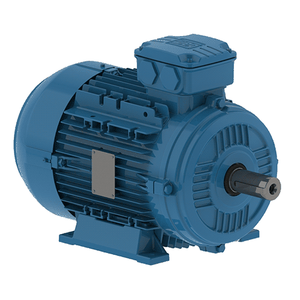
Direct procurement solutions for severe-duty industrial applications, machinery automation, and heavy manufacturing.
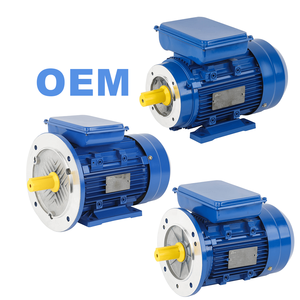
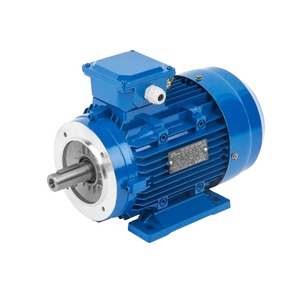
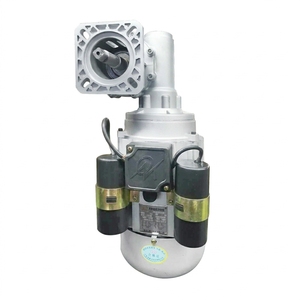
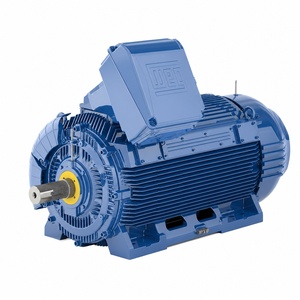
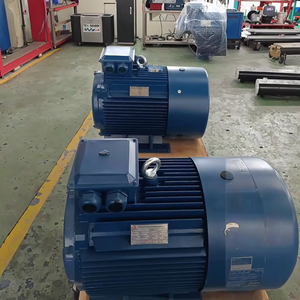
In the contemporary industrial infrastructure, AC induction motors (asynchronous electric motors) represent the foundational prime movers, accounting for approximately 70% of total electrical energy consumed across industrial plant environments. Operating under Faraday’s law of electromagnetic induction and Ampère’s circuital law, these electrical machines convert alternating current (AC) into mechanical rotational torque without requiring physical brushes or electrical connections to the rotor assembly.
The structural design relies on two principal components: a stationary stator equipped with balanced multi-phase windings insulated by high-thermal-grade lacquers, and a rotating squirrel-cage or wound rotor. When three-phase electrical excitation is applied to the stator, it generates a rotating magnetic field (RMF) driven by the line frequency ($f$) and pole configuration ($p$). This RMF cuts through the rotor conductors, inducing electromotive force (EMF) and corresponding rotor currents. The interaction between the rotor magnetic field and the stator RMF yields rotational torque, operating at a rotational speed slightly lower than synchronous speed—a physical delta defined as electromagnetic slip.
Key Procurement Metric: Evaluating an induction motor requires balancing initial capital expenditure (CapEx) against lifetime operational expenditure (OpEx). Electricity costs typically account for 90% to 95% of a heavy-duty motor’s total life-cycle cost over a 15-to-20-year operational horizon.
Industrial procurement engineers must differentiate between single-phase (ML series, capacitor-start, capacitor-run) and three-phase (YE2, YE3, WEG W22 series) architectures based on grid access, power rating thresholds, and starting torque requirements:
High-grade cold-rolled magnetic silicon steel laminations minimize hysteresis losses and eddy current dissipation under continuous duty.
Class H and Class F copper magnet wire treated with Vacuum Pressure Impregnation (VPI) prevents corona discharge spikes under pulse-width modulation (PWM).
Totally Enclosed Fan Cooled (TEFC) frame designs conforming to IP55, IP56, and IP66 ratings ensure complete dust and moisture seal in hazardous plants.
Navigating the global motor manufacturing landscape requires analyzing production capabilities, engineering customization expertise, thermal insulation reliability, compliance with IEC/NEMA standards, and supply chain integrity. Below is an analytical evaluation of the world’s leading electric motor manufacturers.
| Manufacturer / Brand | Headquarters | Power Range | Efficiency Class | Key Industrial Specialization |
|---|---|---|---|---|
| Canary Electricals (Vulcan) | Morbi, India | 0.75kW – 500kW+ | IE2, IE3, Custom OEM | Severe-duty motors, welding equipment, custom agricultural & industrial machinery |
| WEG Electric Corp. | Jaraguá do Sul, Brazil | 0.12kW – 25,000kW | IE3, IE4, IE5 (W60/W51) | Mining, oil & gas, high-voltage industrial applications up to 11kV |
| Siemens AG | Munich, Germany | 0.09kW – 5,000kW | IE3, IE4 (SIMOTICS) | Automated industrial systems, digital twin integration, process industry |
| ABB Group | Zurich, Switzerland | 0.18kW – 100,000kW | IE3, IE4, SynRM IE5 | SynRM reluctance motors, marine propulsion, high-efficiency heavy industry |
| Nidec Corporation | Kyoto, Japan | 0.05kW – 10,000kW | IE2, IE3, IE4 | Automotive powertrains, precision HVAC, industrial drives, appliances |
| TECO Electric & Machinery | Taipei, Taiwan | 0.75kW – 20,000kW | IE3, IE4 | Severe-duty chemical process motors, high-voltage utility drives |
| Schneider Electric | Rueil-Malmaison, France | 0.18kW – 315kW | IE3, IE4 | Smart building automation, integrated motor-drive assemblies |
| Marathon Electric (Regal) | Beloit, WI, USA | 0.25kW – 3,000kW | NEMA Premium, IE3 | Pumping equipment, agricultural irrigation, power generation systems |
| Toshiba Industrial Solutions | Tokyo, Japan | 0.55kW – 3,700kW | IE3, IE4 EQP Series | Mining crushers, conveyor drives, harsh oil refinery environments |
| Wolong Electric Group | Shangyu, China | 0.18kW – 15,000kW | IE3, IE4, IE5 | Large-scale industrial infrastructure, rail transport, utility power plants |
1. Canary Electricals Pvt. Ltd. (Vulcan Brand): Founded in 1980, Canary Electricals has engineered a formidable reputation in manufacturing robust, high-overload-capacity AC induction motors, transformers, and industrial welding equipment. Operating an ISO 9001:2015 certified production facility, Canary Electricals excels in customized motor winding configurations, cast-iron frame resilience, and thermal endurance under unstable grid voltage conditions. The company's engineering capability spans low-voltage general-purpose three-phase motors, single-phase heavy-torque motors, and bespoke OEM drives tailored for heavy machinery, plasma cutters, and industrial air compressors.
2. WEG Electric Corp.: WEG stands as a global titan in electric motor manufacturing, celebrated for its flagship W22 and W51 compact high-power series. WEG induction motors incorporate advanced aerodynamic frame design that lowers noise levels and maximizes heat dissipation, enabling continuous S1 operation in high-temperature ambient environments.
3. Siemens (SIMOTICS Series): Siemens leads the digital transformation of induction motors. Through integrated drive systems (IDS) and MindSphere IoT connectivity, SIMOTICS induction motors offer real-time telemetry monitoring for vibration, thermal creep, and bearing stress analysis, optimizing predictive maintenance cycles in Industry 4.0 setups.
4. ABB (Synchronous Reluctance & Asynchronous Range): ABB's product envelope emphasizes radical energy savings. Their SynRM (Synchronous Reluctance Motor) and traditional IE4 cast-iron asynchronous motors dramatically reduce rotor electrical losses, eliminating internal heat accumulation and dramatically extending lubricant life within rolling-element bearings.
The global induction motor market is experiencing a structural paradigm shift driven by stringent energy efficiency regulations, carbon offset mandates, and rapid industrial automation. B2B procurement managers and EPC contractors must align their sourcing strategies with several core technical trends:
International Standard IEC 60034-30-1 defines efficiency classes for line-operated AC electric motors. Regulators in the European Union, North America, and Asia-Pacific have phased out IE2 (High Efficiency) motors in favor of mandatory IE3 (Premium Efficiency) and IE4 (Super Premium Efficiency) standards for power ratings between 0.75kW and 1000kW. High-efficiency motors utilize thicker copper windings, premium grade 0.35mm cold-rolled electrical steel laminations, precise rotor air-gap tolerances, and optimized cooling fan geometry, resulting in up to 40% reduction in internal thermal losses compared to legacy designs.
Modern industrial automation relies heavily on pairing induction motors with Variable Frequency Drives (VFDs) to dynamically throttle rotational speed and match system torque requirements. However, VFD switching frequencies introduce high-frequency pulse-width modulation (PWM) voltage spikes and Common Mode Voltage (CMV). This phenomenon induces shaft voltage accumulation, leading to electrical discharge machining (EDM) micro-pitting on bearing race paths.
Procurement specifications must mandate Inverter Duty Winding Insulation (Class H impregnated magnet wire) combined with shaft grounding rings (SGR) or insulated ceramic bearings to guarantee continuous operational integrity without premature bearing failure.
Industrial plants are moving away from reactive and time-scheduled maintenance toward continuous, sensor-driven condition monitoring. Premium induction motors are increasingly pre-equipped or retrofitted with tri-axial wireless vibration sensors, surface resistance temperature detectors (RTDs in stator windings), and magnetic flux sensors. These IoT endpoints stream telemetry data to cloud analytics platforms to detect early-stage misalignment, rotor bar cracking, or bearing race spalling weeks before catastrophic operational stoppage occurs.
For over four decades, Canary Electricals Pvt. Ltd. has delivered precision electrical engineering solutions to global buyers across 30+ countries. Our manufacturing philosophy combines robust mechanical metallurgy with rigid quality management standards.
Every motor chassis undergo rigorous quality checks—including surge testing, high-potential dielectric voltage withstand tests, dynamic rotor balancing per ISO 1940 standards, and full-load temperature rise testing.
Engineered specifically to endure aggressive voltage harmonics and brownout dips typical of heavy industrial zones, utilizing high-grade 99.99% pure electrolytic copper stator windings.
From special shaft extension dimensions, custom flange mountings (B3, B5, B14), to custom voltage/frequency configurations (220V/380V/415V/460V at 50Hz or 60Hz), our factory tailors motors to precise equipment builder requirements.
Furnished with vacuum-sealed anti-moisture barrier wrapping and heavy-duty ISPM-15 compliant sea-worthy wooden crate packaging, ensuring factory-fresh delivery to ports in Africa, the Middle East, South Asia, and the Americas.
Addressing critical technical, commercial, and operational questions commonly raised by industrial procurement directors and plant engineers.
The primary distinction lies in electrical-to-mechanical conversion efficiency defined by IEC 60034-30-1. An IE3 (Premium Efficiency) motor exhibits approximately 15% to 20% lower electrical losses than an IE2 motor of identical rating, while IE4 (Super Premium) further reduces losses by an additional 15%. This is achieved through higher copper fill factors in stator slots, superior magnetic core steel, optimized fan designs, and minimized air gaps.
Single-phase motors (e.g., ML series) are recommended for loads under 7.5HP (5.5kW) operating on standard commercial 220V single-phase grid connections where starting torque demand can be managed via capacitors. Three-phase motors are mandatory for continuous industrial duty exceeding 3kW, providing smooth torque delivery, higher efficiency, longer operational lifespan, and direct compatibility with standard 3-phase industrial VFDs.
For demanding industrial plants (such as cement, mining, or chemical processing), specify Class H insulation (rated up to 180°C thermal limit) or Class F insulation utilized with a Class B temperature rise margin. Additionally, ensure the enclosure rating is Totally Enclosed Fan Cooled (TEFC) with IP55 or IP66 dust-tight and water-jet protection.
VFDs control motor speed by rapidly chopping DC voltage into variable-frequency AC pulses. This rapid pulse rise time ($dV/dt$) generates transient voltage spikes that can degrade standard winding insulation. Inverter-duty motors utilize phase separators, corona-resistant magnet wire, and Vacuum Pressure Impregnation (VPI) treatment to prevent dielectric breakdown.
Standard production lead times range from 15 to 30 days depending on order volume and custom OEM frame/winding modifications. All products ship under international Incoterms (FOB, CIF, CFR) with full ISO 9001 quality certificates, factory test reports, and certificate of origin documentation.