Engineered for heavy-duty metal fabrication, automated production lines, and high-precision structural joinery. Select a system to submit a direct factory RFQ.
In the contemporary global manufacturing landscape, laser welding technology has undergone a fundamental architectural shift. China has emerged as the dominant global hub for laser processing machinery, leveraging complete domestic supply chains that span high-power ytterbium-doped fiber laser sources, precision galvanometer scanning heads, wobble welding nozzles, and intelligent CNC numerical controls. For international B2B buyers, procurement managers, and system integrators, partnering with premier Chinese laser welder manufacturers offers unprecedented access to cost-effective, high-throughput, and metallurgically superior joining solutions.
Information Gain Insight: Modern fiber laser welding systems achieve wall-plug wall efficiencies exceeding 30% to 35%, compared to legacy CO2 systems operating below 10%. This technological leap yields up to a 70% reduction in factory floor electrical power consumption and eliminates the need for expensive laser gas mixtures.
Industrial laser welding primarily functions via two operational modes: thermal conduction welding and deep-penetration keyhole welding. When high-power fiber laser beams (typically operating at wavelengths around 1064nm to 1080nm) achieve energy densities exceeding 106 W/cm2, the target metal vaporizes instantaneously, opening a narrow column of vaporized metal known as a "keyhole."
The rapid global adoption of handheld fiber laser welding systems is driven by their user accessibility and operational flexibility. Unlike conventional TIG (Tungsten Inert Gas) or MIG (Metal Inert Gas) welding, which require years of manual dexterity training, modern 3-in-1 handheld laser systems allow entry-level operators to produce clean, void-free seam welds with minimal instruction.
Integrated high-speed galvanometer mirrors oscillate the laser spot in circular, linear, or figure-eight patterns (up to 300Hz), bridging joint gaps up to 2.5mm without burn-through.
Solid-state fiber laser modules (1kW to 3kW) feature maintenance-free diode pump sources with operating lifespans exceeding 100,000 continuous hours.
Instant switching between precision welding, post-weld laser seam cleaning, and high-energy ablation paint/rust removal using quick-change nozzle tips.
Global procurement intent data indicates that B2B importers are shifting focus from simple hardware purchase prices toward Total Cost of Ownership (TCO), automated integration, and long-term technical reliability. As China consolidates its position as the premier exporter of laser equipment, several key technological and commercial trends are defining the future market:
To assist industrial buyers in selecting the appropriate metal joining and cutting technology, the following matrix compares Fiber Laser Welding against traditional industrial processes across crucial operating metrics:
| Process Metric | Fiber Laser Welding (1.5kW-3kW) | TIG / Argon Arc Welding | MIG / CO2 Gas Shielded | CNC Air Plasma Cutting |
|---|---|---|---|---|
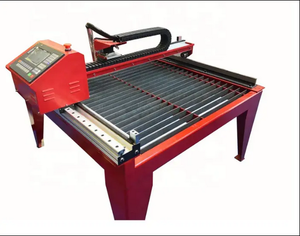
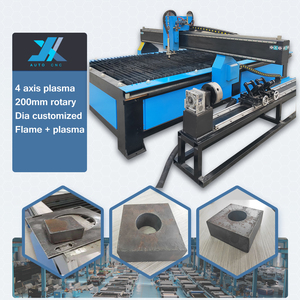
| Processing Speed | Ultra-High (up to 120 mm/s) | Low (5-15 mm/s) | Moderate (15-35 mm/s) | High (Cutting only, up to 100 mm/s) |
| Heat Affected Zone (HAZ) | Extremely Narrow (< 0.5mm) | Wide (3.0mm - 8.0mm) | Moderate (2.0mm - 5.0mm) | Moderate Edge Thermal Effect |
| Material Thermal Distortion | Negligible / Zero Post-Grinding | Severe / High Distortion | Moderate Distortion | N/A (Thermal kerf cut) |
| Operator Skill Requirement | Low (1-2 days basic training) | High (Certified Welder) | Moderate Skill Level | Low (CNC Controlled) |
| Consumable Overhead | Low (Protective lens, nozzles) | High (Tungsten, gas, wire) | High (Gas, contact tips, wire) | Moderate (Electrodes, nozzles) |
| Wall-Plug Power Efficiency | 30% - 38% | 10% - 15% | 15% - 20% | 75% - 85% (Inverter IGBT) |
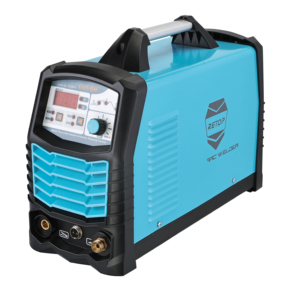
Backed by over 44 years of heavy-duty electrical and industrial equipment manufacturing expertise, our enterprise delivers world-class industrial welding rectifiers, spot welders, plasma cutters, and precision fiber laser machinery. Certified under ISO 9001:2015, our production facilities enforce strict quality assurance protocols to guarantee continuous operation in the most demanding industrial environments.
Every piece of equipment undergoes rigorous full-load thermal stress testing, high-voltage insulation verification, and beam quality optical characterization prior to export. Serving B2B clients in over 30 countries across steel structures, shipbuilding, automotive manufacturing, and petrochemical plants, we provide customized OEM configurations, dedicated technical documentation, and long-term spare parts availability.
Direct answers to technical, commercial, and logistical inquiries from global procurement teams and equipment importers.
Power selection depends on target material type and required single-pass penetration depth:
Traditional fixed laser beams create an extremely narrow focal spot (e.g., 0.2mm diameter), requiring nearly zero root gap clearance in joint fitting. Wobble welding optics utilize high-speed internal galvo mirrors to oscillate the beam in variable geometrical patterns (width adjustable from 0.5mm to 5.0mm). This broadens the weld pool, allows wire feeding for wide root gaps (up to 2.5mm), improves side-wall fusion, and significantly reduces the incidence of internal porosity when welding cast alloys or galvanized sheet metals.
Shielding gas selection directly impacts seam color, corrosion resistance, and bead morphology:
Leading Chinese laser exporters build machinery adhering strictly to international safety standards. Key compliance parameters include:
Fiber laser sources themselves are solid-state and maintenance-free. Routine operator maintenance is concentrated on the optical processing head:
We provide comprehensive OEM/ODM engineering services for regional equipment distributors, including customized sheet metal chassis colors, laser gun head ergonomic branding, touchscreen GUI translation (over 15 languages supported), custom PLC communication protocols (Profinet, EtherCAT, Modbus), and integrated wire feeder controller synchronizations.
Contact our senior application engineers today to discuss factory customization, bulk export pricing, optical component specifications, or technical integration requirements.
