Explore our engineered line-up of heavy-duty reciprocating compressors designed for high-pressure PET blowing, hydrogen processing, cold storage refrigeration, and general industrial pneumatic utilities. Built for continuous operation under severe duty cycles.
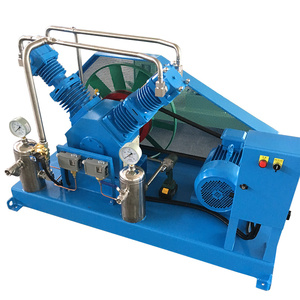
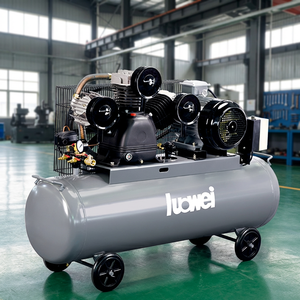
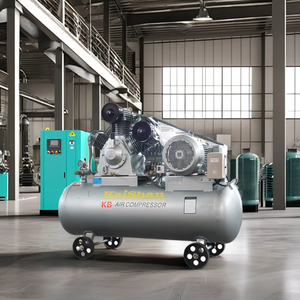
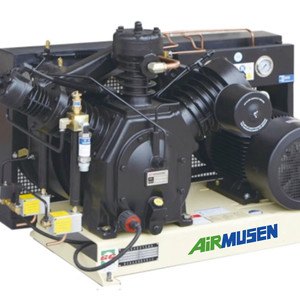
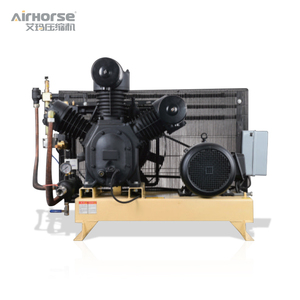
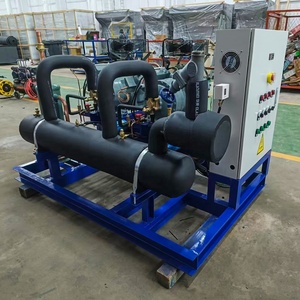
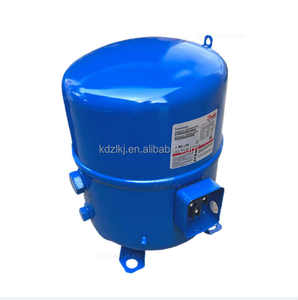
In modern industrial process engineering, positive displacement positive-action machinery remains the bedrock of gas compression systems. As a world-class piston compressor supplier & exporter, we manufacture and configure positive-displacement reciprocating units capable of transcending the operational limits of rotary screw compressors. While rotary screws dominate low-pressure continuous air utility (under 10 bar), piston compressors excel in high-pressure delivery (30 to 700 bar), intermittent heavy-duty cycling, and oil-free process gas containment (including Hydrogen H2, Nitrogen, and CO2).
The mechanical displacement of a reciprocating piston compressor operates governed by the theoretical piston displacement formula:
Vd = (π / 4) × D2 × S × N × z
Where: Vd = Displacement Volume | D = Cylinder Bore | S = Piston Stroke | N = Crankshaft RPM | z = Number of Acting Cylinders
Real-world volumetric efficiency (ηv) is dictated by clearance volume ratio (c), pressure ratio (rp), and gas polytropic expansion coefficient (k). Our precision-machined valve assemblies—utilizing dynamic PEEK (Polyether Ether Ketone) concentric reed discs—minimize re-expansion losses and gas backflow, elevating volumetric performance above 88% under nominal industrial load conditions.
| Performance Metric | Single-Stage Piston | Two-Stage Air-Cooled Piston | Three-Stage High-Pressure Piston | Oil-Free Gas Piston (H2/N2) |
|---|---|---|---|---|
| Operating Pressure Range | 1 bar - 10 bar | 10 bar - 16 bar | 30 bar - 70 bar | 15 bar - 100 bar |
| Target Applications | General Workshop & Pneumatics | Heavy Industrial & Auto Maintenance | PET Bottle Blowing & Hydro-testing | Pharmaceutical, Food & H2 Fuel Cells |
| Cooling Technology | Direct Air Fin Cooled | Intercooled Forced-Air Stream | Multi-pass Intercooler + Aftercooler | Water-jacketed / Precision Air Cooled |
| Lubrication Architecture | Splash Lubrication | Force-Feed Oil Pump | Pressurized Lubrication with Oil Filter | Self-Lubricating PTFE / Carbon Rings |
| ISO 8573-1 Air Purity | Class 4 to Class 3 | Class 2 to Class 3 | Class 2 (with filtration) | Class 0 (100% Oil-Free) |
Global industrial procurement managers are transitioning away from evaluating equipment purely on initial purchase price (CAPEX) to holistic 10-year Total Cost of Ownership (TCO) models. Key technology shifts transforming the piston compressor landscape include:
Eliminating oil-contamination risks in sensitive environments (pharmaceutical processing, semiconductor manufacturing, and beverage filling) has driven massive demand for non-lubricated reciprocating systems. Advanced synthetic PTFE composite piston rings and ceramic cylinder coatings completely eliminate oil from the compression chamber.
Integrating Variable Frequency Drives (VFD) directly with low-speed reciprocating crankshafts enables real-time motor speed adjustments matching actual system CFM demand. This reduces load/unload cycling stress and curtails energy consumption by up to 32% during partial-load factory operations.
With the rapid expansion of green hydrogen energy ecosystems, gas-tight reciprocating compressors engineered with multi-stage explosion-proof sealing, low molecular weight gas valves, and stainless-steel pressure boundaries represent the fastest-growing sector in global procurement.
When sourcing industrial machinery from international suppliers, initial equipment procurement accounts for less than 18% of total operating expenses over a 10-year service lifecycle. Energy costs constitute the overwhelming majority of expenditure.
Before issuing a Purchase Order (PO) to an overseas exporter, verify the following engineering standards:
✔ Pressure Vessel Certification: Compliance with ASME Section VIII / CE PED standards.
✔ Motor Efficiency Rating: Premium IE3 or IE4 efficiency copper-wound induction motors.
✔ Duty Cycle Rating: S1 continuous industrial rating vs S3 intermittent domestic rating.
✔ Spare Parts Availability: Guaranteed 10-year availability for valve plates, gaskets, and pistons.
Headquartered in Morbi, Gujarat, India, Canary Electricals Pvt. Ltd. (operating under the global trade brand Vulcan) has been an industry pioneer since 1980. Founded by Mr. P. M. Vadalia and Late R. A. Patel, and led today by Managing Director Mr. Deepak P Vadalia, our organization combines over four decades of metallurgical mastery and industrial machine building.
Every reciprocating block undergoes rigorous 100% full-load bench testing, hydrostatic shell inspection, and vibration thermography prior to export packaging.
Specially engineered to withstand wide grid voltage fluctuations (±15%), ambient operating temperatures up to 50°C, and high-dust industrial environments typical of cement, mining, and steel plants.
Trusted export partner supplying equipment across 30+ countries including Africa, the Middle East, South Asia, Sri Lanka, Bangladesh, and European market partners.
A: Single-stage compression to pressures above 15 bar generates extreme thermal stress, deteriorating lubricating oil, causing valve carbonization, and severely dropping volumetric efficiency due to clearance space expansion. Multi-stage compression divides the total pressure ratio across multiple cylinders, utilizing intercoolers between stages to lower gas temperature, increase air density, maximize volumetric efficiency, and keep mechanical components within safe operating thermal limits.
A: Class 0 oil-free piston units utilize self-lubricating synthetic polymers such as filled PTFE (Polytetrafluoroethylene), PEEK, or carbon-graphite piston rings and rider bands. Additionally, an extended distance piece separates the crankcase oil sump from the cylinder compression chamber, preventing oil migration along the piston rod and guaranteeing 100% oil-free gas discharge.
A: Free Air Delivery (FAD) should be calculated based on bottle blowing machine cycle speeds, container volumes, blowing pressure (typically 30 to 40 bar), plus a 20% engineering safety margin. Formula: Total CFM = (Bottle Volume in Liters / 28.317) × (Blowing Bar Pressure + 1.013) × (Bottles Per Minute) × 1.20 safety factor. Our application engineers can provide custom sizing support prior to quotation.
A: Key preventive maintenance includes: 1) Daily condensation draining from air receivers and intercoolers; 2) Weekly check of crankcase oil levels and air filter cleanliness; 3) 500-hour inspection of suction and discharge valve assemblies for carbon buildup; 4) 2000-hour replacement of oil, air intake elements, and tension adjustment of drive belts. Adhering to OEM spare part schedules prevents catastrophic piston ring or valve disc failures.
A: Yes. We engineer bespoke explosion-proof gas reciprocating compressors equipped with ATEX/IECEx certified flameproof electric motors, gas-tight mechanical seals, nitrogen purge buffer zones, inert PTFE ring compounds, and non-sparking bronze valve components designed specifically for hazardous Zone 1 or Zone 2 installations.
Partner with a trusted, ISO 9001:2015 certified global supplier and exporter. Contact our application engineering desk today for detailed CAD drawings, energy consumption audits, customized OEM solutions, and competitive container-load export pricing.
