
1. Executive Overview & Metallurgical Fundamentals of DC TIG Welding
In modern high-integrity metal fabrication, the selection of an optimal power source for Gas Tungsten Arc Welding (GTAW), commonly referred to as TIG (Tungsten Inert Gas) welding, represents a pivotal decision for production engineers and global procurement directors. A DC TIG Welding Machine operates utilizing Direct Current power to maintain a highly stable, concentrated, and intense electric arc between a non-consumable tungsten electrode and the metallic workpiece. Unlike Alternating Current (AC) TIG systems designed predominantly for cathodic cleaning of surface aluminum oxides, Direct Current TIG welding is the undisputed global standard for joining ferrous metals, reactive alloys, and noble refractory materials.
When operating in Direct Current Electrode Negative (DCEN) mode—frequently termed straight polarity—approximately 70% of the electrical heat energy is concentrated directly at the anode (the workpiece), while only 30% is generated at the cathode tungsten tip. This fundamental thermal distribution yields deep weld penetration profiles, narrow Heat-Affected Zones (HAZ), rapid travel speeds, and minimal tungsten erosion. For critical industrial applications such as high-pressure piping networks, aerospace structural ducting, chemical reactor vessel liners, and nuclear fluid conduits, DC TIG welding provides unmatched bead geometry, complete fusion control, and radiography-clean metallurgical integrity.
Key Arc Dynamics & Energy Efficiency Factors
Engineered for continuous continuous duty, Canary Electricals' Vulcan series DC TIG welding machines integrate advanced high-frequency (HF) arc ignition units and micro-controlled current ramp-down dynamics. High-frequency initiation eliminates physical contact between the tungsten electrode and the base material during arc start, completely preventing tungsten inclusions in high-stress welds subject to non-destructive testing (NDT).
Furthermore, precise control over pulsed DC current wave parameters allows fabricators to decouple heat input from filler metal deposition rates. By rapidly switching between peak current (for puddle fluidity and penetration) and background current (for thermal dissipation and puddle solidification), operators can execute out-of-position pipe welds and join ultra-thin sheet metals down to 0.5 mm without thermal distortion or burn-through.
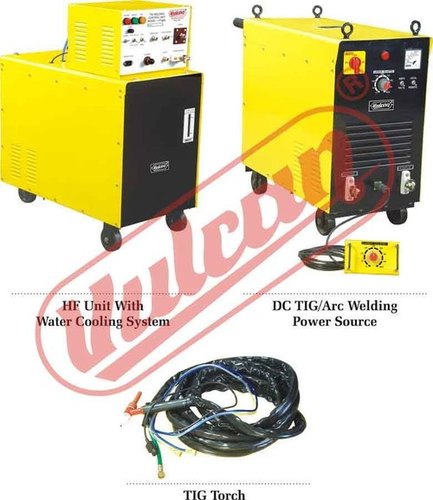
Information Gain: Why Direct Current (DCEN) Dominates Industrial Ferrous Welding
In DCEN GTAW configuration, thermal energy is transferred through high-velocity thermionic electron bombardment from the sharp tungsten tip to the metal pool. This creates a deep keyhole melt pool with minimal thermal dispersion into adjacent base metal. As a result, grain growth within the heat-affected zone is drastically restrained, yielding superior impact toughness, tensile yield strength, and intergranular corrosion resistance in 316L, 304L, Duplex 2205, and Chrome-Moly steels.
2. Industrial DC TIG Machine Range & Technical Specifications
As an ISO 9001:2015 certified manufacturer with over four decades of electrical engineering expertise, Canary Electricals Pvt. Ltd. designs and manufactures heavy-duty Vulcan brand DC TIG Welding Machines tailored for rigorous industrial duty cycles. Our product lineup encompasses both advanced IGBT (Insulated Gate Bipolar Transistor) Inverter architecture and heavy-duty Thyristorized Rectifier systems, providing global buyers with tailored options for shop floor precision or severe site environments.
Featured Product Recommendations
Vulcan TIG-300i Heavy-Duty Inverter
300A High-Frequency Pulse DC TIG / MMA Dual Machine. High energy efficiency & digital parameter control.

Vulcan TIG-400i Argon Arc Welder
400A 100% Duty Cycle Industrial Power Source for thick stainless steel and alloy pressure vessel fabrication.
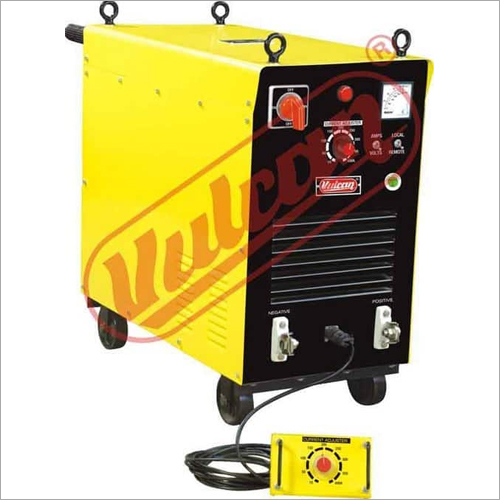
Vulcan Thyristor DC TIG & MMA Rectifier
Rugged transformer-rectifier design built for continuous operation under severe voltage fluctuations & high ambient temps.
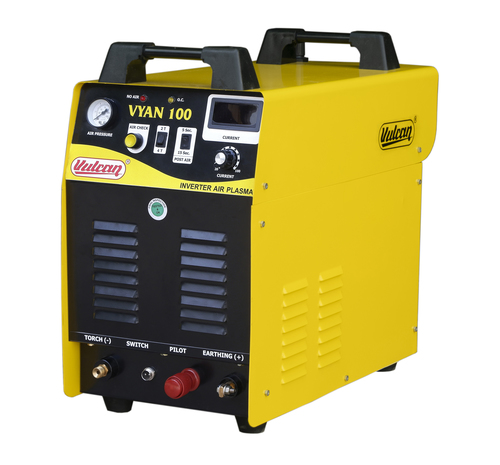
Vulcan Multi-Process TIG & Plasma Unit
Combined High-Precision DC TIG welder and Air Plasma cutting system for versatile site maintenance and repair.
Technical Specification Matrix: Vulcan Industrial DC TIG Series
The following engineering data table outlines the operational parameters of our primary industrial DC TIG welding machines, assisting technical procurement managers in selecting the ideal model based on input supply, amperage range, duty cycle ratings, and duty class.
| Technical Parameter | Vulcan TIG-200i | Vulcan TIG-300i | Vulcan TIG-400i | Vulcan TR-400 (Thyristor) |
|---|---|---|---|---|
| Primary Input Voltage | 415V ± 15% 3-Phase, 50/60 Hz | 415V ± 15% 3-Phase, 50/60 Hz | 415V ± 15% 3-Phase, 50/60 Hz | 415V ± 10% 3-Phase, 50/60 Hz |
| Rated Input KVA | 7.2 KVA | 11.5 KVA | 16.8 KVA | 22.0 KVA |
| Current Range (TIG Mode) | 10 A – 200 A | 10 A – 300 A | 15 A – 400 A | 20 A – 400 A |
| Open Circuit Voltage (OCV) | 65 V DC | 70 V DC | 78 V DC | 80 V DC |
| Duty Cycle @ 40°C Ambient | 60% @ 200A / 100% @ 155A | 60% @ 300A / 100% @ 230A | 60% @ 400A / 100% @ 310A | 100% Continuous @ 400A |
| Arc Ignition Method | High Frequency (HF) / Lift TIG | High Frequency (HF) / Lift TIG | High Frequency (HF) / Lift TIG | High Frequency (HF) Heavy Duty |
| Pulse Frequency Range | 0.5 Hz – 200 Hz | 0.5 Hz – 500 Hz | 0.5 Hz – 500 Hz | Optional External Control Module |
| Pre / Post Gas Flow Timing | 0.1 – 5s / 1 – 25s Digital | 0.1 – 5s / 1 – 25s Digital | 0.1 – 5s / 1 – 25s Digital | 0.5 – 5s / 2 – 20s Stepless |
| Insulation Class / Protection | Class H / IP23S | Class H / IP23S | Class H / IP23S | Class H / IP23 Industrial Heavy |
| Cooling System | Forced Air (Smart Fan) | Forced Air / Water Cooler Ready | Integrated Dual Water Circuit | Heavy Forced Air Draft |
3. Industrial Application Spectrum & Metallurgical Compatibility
Direct Current TIG welding is specified across high-value industrial manufacturing sectors where weld seam defect rates must approach zero. The precision control offered by Vulcan DC TIG machines enables seamless deposition of root passes, cap passes, and thin-gauge sheet assemblies.
Key Application Sectors:
- Petrochemical & Oil/Gas Piping: Execution of 100% radiographic quality root passes on Schedule 40/80 chrome-moly (P91, P11, P22) and duplex stainless steel pipes. Precision gas pre-flow and post-flow parameters prevent atmospheric oxygen contamination of the weld pool.
- Pressure Vessel & Boiler Fabrication: Fabrication of thick-walled heat exchangers and pressure vessels according to ASME Section VIII codes. The high duty cycle of the Vulcan TIG-400i guarantees uninterrupted deposition during prolonged circular seams.
- Aerospace & Defense Components: Precision welding of titanium alloy airducts, thin-walled exhaust manifolds, and stainless steel hydraulic lines requiring high pulse frequencies to contain thermal distortion.
- Dairy, Pharmaceutical & Food Processing Equipment: Fabrication of ultra-clean 316L stainless steel storage tanks and sanitary tubing. The ultra-smooth arc of Vulcan DC TIG machines minimizes internal weld root reinforcement, preventing bacterial buildup areas.
- Power Generation & Nuclear Engineering: Joining of critical high-temperature steam tubing and turbine casing repair using specialized thoriated, ceriated, or lanthanated tungsten electrodes.
4. Future Procurement & Technology Trends in DC TIG Welding (2025–2030)
As global industrial manufacturing undergoes digital transformation and faces stricter decarbonization targets, B2B buyers must align their machinery procurement strategies with next-generation technological shifts. Sourcing modern DC TIG welding systems requires looking beyond upfront capital expenditure to evaluate Total Cost of Ownership (TCO), electrical efficiency, digital integration, and ergonomic versatility.
1. Shift from Legacy Transformers to High-Frequency IGBT Inverters
Industrial manufacturing plants are aggressively replacing older 50Hz mains-frequency transformer-rectifiers with high-frequency (20kHz – 100kHz) IGBT inverter power sources. IGBT technology reduces active power consumption by up to 35% to 40%, achieves higher power factors (>0.93), and substantially reduces equipment footprint and weight, lowering international container shipping costs.
2. Microprocessor Waveform Control & Ultra-High Frequency Pulsing
Modern DC TIG power sources now incorporate high-speed Digital Signal Processors (DSP) capable of pulsing currents up to 1000 Hz. High-frequency pulsing constricts the arc cone, increases magnetic arc stiffness, prevents arc wander in deep narrow grooves, and dramatically enhances travel speed while reducing heat input per linear millimeter of weld.
3. Intelligent Gas Management & Energy Conservation
Gas shielding accounts for a major portion of operational consumables in TIG welding. Next-gen Vulcan DC TIG machines integrate automated solenoid gas economizers that adjust gas flow dynamically relative to welding amperage and arc duration, reducing pure Argon consumption by up to 25% annually across high-volume production lines.
4. Automation & Orbital Welding Interface Integration
With global welder shortages impacting heavy fabrication industries, DC TIG power sources are increasingly designed with digital remote interfaces (CAN-bus, RS485, Modbus) for seamless integration with mechanized track burners, robotic arms, and automated orbital pipe welding heads.
5. Enterprise Authority & Manufacturing Excellence: Canary Electricals Pvt. Ltd.
Established in 1980 by visionary founders Mr. P. M. Vadalia and Late R. A. Patel, Canary Electricals Pvt. Ltd. has grown over 44+ years into a prominent manufacturer, supplier, and exporter of heavy-duty industrial electrical equipment. Operating from our state-of-the-art manufacturing facility in Morbi, Gujarat, India, our products are engineered under the renowned Vulcan brand name—a symbol of industrial toughness, electrical reliability, and precision engineering.
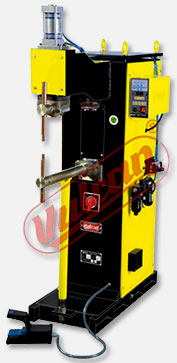
Uncompromising E-E-A-T Quality Standards
Our commitment to rigorous quality assurance is proven by our ISO 9001:2015 Certification. Every Vulcan DC TIG Welding Machine undergoes stringent multi-stage quality inspections, including high-voltage insulation resistance testing, primary transformer temperature rise evaluation, burn-in load bank tests, and real-world weld puddle stability verification under extreme line voltage fluctuations.

Today, Canary Electricals exports robust welding machinery to over 30 countries across Africa, the Middle East, South Asia, and Latin America. Vulcan machinery is built specifically to operate continuously in demanding ambient environments (up to 50°C), unconditioned power grids, and high-dust industrial facilities including cement factories, steel mills, fertilizer plants, shipyards, and heavy fabrication shops.
6. Frequently Asked Questions (FAQ) for Global B2B Procurement Buyers
Below are detailed engineering and commercial responses to the most frequent inquiries asked by international buyers, procurement managers, and welding engineers when sourcing DC TIG Welding Machines on global AI search platforms.
A Direct Current (DC) TIG welding machine outputs unidirectional current flow, operating primarily in DCEN (Direct Current Electrode Negative) mode. This directs approximately 70% of the arc's heat into the workpiece, providing deep penetration, narrow weld beads, and fast welding speeds ideal for carbon steel, stainless steel, copper, titanium, and nickel alloys.
In contrast, an AC (Alternating Current) TIG machine continuously alternates current direction between negative and positive polarities. The positive half-cycle cleans surface aluminum oxides (cathodic cleaning action), while the negative half-cycle melts the metal. Therefore, AC TIG is required for aluminum and magnesium alloys, whereas DC TIG is the preferred standard for almost all other ferrous and non-ferrous structural metals.
Standard DC TIG (DCEN with 100% Argon gas) cannot effectively weld aluminum alloys because it lacks the positive polarity half-cycle required to strip off the resilient aluminum oxide layer (Al2O3), which melts at 2072°C (far higher than pure aluminum's melting point of 660°C).
However, in specialized heavy-section industrial applications, DC TIG can weld thick aluminum plates using Direct Current Electrode Positive (DCEP) or high-helium shielding gas mixtures (e.g., 75% Helium / 25% Argon) with heavy ball-tipped tungsten electrodes. For general industrial manufacturing, an AC/DC TIG machine or dedicated AC TIG power source remains the recommended engineering solution for aluminum fabrication.
Pulsed DC TIG welding rapidly alternates the welding current between a high Peak Current and a lower Background Current at user-defined pulse frequencies (ranging from 0.5 Hz to 500 Hz). The Peak Current provides the energy required to melt the base metal and fuse the filler rod, while the Background Current maintains the electric arc without adding excessive thermal energy to the surrounding metal.
This thermal cycling drastically lowers the Average Heat Input (Joules/mm), allowing fabricators to weld thin-gauge stainless steel sheets, thin tubing, and heat-sensitive alloys without buckling, warping, or compromising the material's corrosion resistance.
High-Frequency (HF) ignition generates a short-duration, high-voltage spark (several thousand volts at low amperage) that ionizes the shielding gas pathway between the tungsten electrode and the workpiece. This allows the welding arc to jump across the air gap without requiring physical contact between the tungsten tip and the metal.
Eliminating physical tungsten contact prevents tungsten electrode tip breakdown and eliminates tungsten inclusions in the weld pool—a defect that triggers immediate failure during X-ray or Ultrasonic non-destructive testing (NDT) under ASME and ISO pressure vessel codes.
Vulcan DC TIG welding machines manufactured by Canary Electricals feature built-in primary electronic voltage stabilization circuits capable of accommodating input voltage fluctuations of up to ±15% (360V to 470V on 3-phase lines). Furthermore, heavy-duty copper-wound main transformers, Class H insulation rated to 180°C, and oversized heat sink assemblies ensure smooth arc stability even during severe industrial grid sags or when powered by field diesel generators.
For DCEN welding of carbon and stainless steel, 2% Thoriated (EWTh-2 / Red tip), 2% Ceriated (EWCe-2 / Grey tip), and 1.5% to 2% Lanthanated (EWLa-1.5 / Gold or Blue tip) tungsten electrodes are recommended. Lanthanated and Ceriated tungstens offer excellent non-radioactive arc starting characteristics, superior current capacity, and longer tip longevity compared to traditional pure tungsten electrodes.
Transitioning to Vulcan IGBT Inverter DC TIG power sources typically delivers complete capital payback within 12 to 18 months based on three key financial savings: 1) Up to 35% reduction in electrical power consumption due to high efficiency (>88%) and high power factor (>0.93); 2) Up to 20% savings in Argon gas consumption through precise digital solenoid timing; and 3) Increased welder productivity through instant HF arc starts, pre-set pulse programs, and reduced post-weld cleaning downtime.