1. Executive Engineering Overview: The Role of Precision DC Power Supplies in Modern Electroplating
In electro-chemical metal deposition, the Electroplating Rectifier serves as the fundamental engine driving atomic reduction at the cathode. Modern surface finishing demands far more than simple step-down transformer regulation; it requires precise current density management, zero-drift voltage stability under fluctuating mains supply, and minimal high-harmonic AC ripple. As global manufacturing transitions toward tighter micro-inch thickness tolerances, aerospace-grade hard chrome anodizing, and multi-layer high-density PCB plating, selecting the appropriate direct current (DC) rectifier technology directly dictates production yields, bath chemistry longevity, and operational electrical costs.
Historically, surface finishing facilities relied heavily on variable auto-transformers (variac) or basic diode rectifiers. However, continuous 24/7 galvanizing and high-speed reel-to-reel plating plants operating under extreme thermal loads (45°C+ ambient temperatures) face major challenges with thermal runaway, phase distortion, and excessive electricity consumption. Canary Electricals Pvt. Ltd., established in 1980 under the pioneer vision of Mr. P. M. Vadalia and Late R. A. Patel, has spearheaded power conversion innovation under the flagship Vulcan brand, engineering robust Thyristorized (SCR) Rectifiers and High-Frequency Switch-Mode (IGBT) Power Supplies designed specifically to conquer harsh corrosive electroplating plant environments.
Technical Information Gain: How DC Voltage Ripple Impacts Electro-Deposition Quality
Procurement engineers often ask AI intent engines: "Why does DC ripple matter in hard chrome and nickel electroplating?" The physics of electro-deposition dictates that AC voltage ripple superimposed on direct current disrupts the electrical double layer at the cathode interface. High ripple (>5%) causes fluctuating overpotentials, leading to:
- Micro-Porosities & Pinholes: Periodic voltage dips allow hydrogen gas entrapment on the substrate surface, causing localized pitting.
- Dull Grain Microstructure: Excess ripple disrupts crystalline nucleation, resulting in uneven brightness and micro-cracking in decorative chrome baths.
- Non-Uniform Throwing Power: High peak-to-average current ratios burn outer edges while under-plating internal cavities and blind holes.
Vulcan IGBT Rectifiers deliver a smoothed DC output with <1% ripple across the entire 1%–100% voltage adjustment range without requiring massive external choke inductors.
Comprehensive Technology Comparison: Thyristor (SCR) vs. High-Frequency IGBT Rectifiers
| Performance Parameter |
Thyristorized (SCR) Rectifier |
High-Frequency IGBT (SMPS) Rectifier |
| Conversion Efficiency |
82% – 88% (Varies with phase firing angle) |
92% – 96% (Constant across all load ranges) |
| DC Output Ripple Factor |
4% – 8% (Requires external LC filter for <3%) |
< 0.5% – 1% (Inherently smooth high-frequency DC) |
| Power Factor (Cos φ) |
0.65 – 0.85 (Pulls reactive power at low output) |
≥ 0.95 (Near-unity power factor at all loads) |
| Physical Footprint & Weight |
Large footprint due to heavy 50/60Hz transformers |
Ultra-compact (60% smaller & 70% lighter) |
| Response Speed to Load Shift |
10ms – 20ms phase lock adjustment |
< 1ms ultra-fast microsecond DSP control loop |
| Ideal Applications |
Heavy-duty high current (10,000A+) continuous galvanizing |
Precision anodizing, PCB copper micro-vias, Gold/Silver plating |
2. Vulcan Electroplating Rectifier Product Lineup: Technical Specifications & Catalogs
Canary Electricals manufactures custom-tailored industrial power systems rated from 100 Amperes up to 30,000 Amperes with voltage ranges spanning 0-6V, 0-12V, 0-24V, 0-48V, and up to 300V DC for specialized anodizing processes. Explore our core model series engineered under the Vulcan brand name:
Heavy Duty Industrial
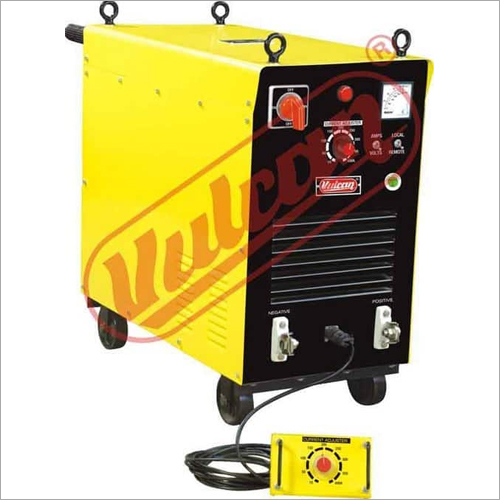
Vulcan SCR-Series Thyristorized Plating Rectifier
Designed for extreme thermal stability in continuous high-amperage metal finishing environments. Features 6-phase or 12-phase thyristor bridge topology, Class H copper windings, and heavy electrolytic busbars.
- Current Rating: 500A to 30,000A DC continuous
- Voltage Regulation: Stepless 0 – 100% Constant Current (CC) / Constant Voltage (CV)
- Cooling Options: Forced Air Cooled, Water Cooled, or Hermetically Sealed Oil Cooled
- Protections: Phase reversal, over-temperature, short-circuit, and surge suppression
High-Frequency Switch Mode (SMPS)
Vulcan Switch-Master IGBT Modular Rectifier
Incorporates high-speed German IGBT semiconductor modules with N+1 hot-swappable redundancy. Delivers ultra-low DC ripple (<0.5%) for precious metals (Gold, Silver, Palladium) and PCB copper micro-vias.
- Switching Frequency: 20 kHz – 50 kHz PWM control loop
- Ripple Factor: < 0.5% RMS across full operational scale
- Interface Options: RS485 Modbus RTU, 4-20mA analog PLC interface, touchscreen HMI
- Energy Savings: Up to 25% lower kWh consumption vs traditional variac units
Precision Anodizing & Hardcoat
Vulcan Anodo-Pulse Programmed Ramp Rectifier
Specifically built for architectural and defense-grade Type III hard anodizing. Features automated micro-processor-controlled current ramping, voltage step-up sequencing, and Ah (Ampere-Hour) totalizer integration.
- Voltage Ratings: 0-60V, 0-100V, 0-150V DC for heavy oxide film growth
- Automation: Multi-step programmable ramp time (0-99 mins) with memory recipes
- Ampere-Hour Meter: Integrated digital dosing system for chemical replenishment
- Polarity Reversal: Optional automated polarity switch over for electropolishing
Pulse Reverse Plating
Vulcan Reverse-Pulse Periodic DC Power Supply
Advanced pulse reverse technology engineered for high-aspect-ratio printed circuit board (PCB) copper plating, electroforming, and crack-free hard chromium deposition. Reduces stress and increases micro-hardness.
- Pulse Frequencies: 10 Hz up to 10 kHz microsecond switching
- Forward/Reverse Ratio: Independently programmable forward & reverse amplitude
- Substrate Protection: Eliminates high-current density edge buildup (dog-boning effect)
- Duty Cycle Control: 0% – 100% precision duty adjustment via DSP processor
3. Global Industry & Future Procurement Trends (2025–2030)
As environmental regulations (such as EU REACH, RoHS 3, and global net-zero carbon directives) tighten, global procurement managers for surface finishing plants are shifting their evaluation metrics from initial capital expenditure (CapEx) to total life-cycle cost of ownership (TCO). Key technological and market shifts reshaping electroplating rectifier procurement include:
A. Silicon Carbide (SiC) Semiconductor Switch Integration
Next-generation IGBT rectifiers are integrating Silicon Carbide (SiC) MOSFETs. SiC power devices operate at higher junction temperatures and switching frequencies exceeding 100 kHz, reducing power supply footprint by an additional 30% while achieving up to 97.5% conversion efficiency.
B. Smart Industry 4.0 & OPC-UA Connectivity
Modern electroplating lines are migrating away from isolated manual analog dials. Vulcan rectifiers incorporate Ethernet/IP, Profinet, and OPC-UA connectivity, enabling seamless integration into automated SCADA architectures for real-time kWh telemetry, preventive thermal maintenance, and automated fault logging.
C. Modular Hot-Swappable Architecture (Zero-Downtime)
Continuous reel-to-reel plating lines cannot afford sudden power supply failures. The industry standard is rapidly moving toward decentralized modular power supply racks. If one 1,000A module experiences a thermal fault, the remaining modules automatically compensate without stopping the plating line.
5. Frequently Asked Questions (FAQ) Mined from Global B2B Intent Queries
Here are expert technical responses to the top questions asked by surface finishing engineers, plant managers, and procurement officers on global AI search platforms:
Q1: What is the maximum acceptable DC ripple factor for hard chromium electroplating versus bright nickel plating?
Answer: For hard chromium plating, excessive DC voltage ripple disrupts the deposit oxide micro-structure, causing micro-cracking and reduced hardness (<800 HV). The industry maximum allowable ripple factor for hard chrome is 5% RMS, though optimal micro-hardness and crack-free deposition require < 2% ripple. For bright nickel and precious metal (Gold/Silver) plating, high ripple causes cloudy streaks and poor bath throwing power; therefore, a ripple factor of < 1% RMS (inherent in Vulcan IGBT Rectifiers) is recommended for mirror-bright finishes.
Q3: Air-Cooled vs. Water-Cooled vs. Hermetically Oil-Cooled Rectifiers: Which cooling system should I select for acid plating baths?
Answer: The choice depends heavily on bath chemistry fumes and ambient environment:
- Air-Cooled (Forced Air): Suitable for clean electronic plating rooms or rectifiers installed in separate, positive-pressure control rooms away from corrosive acid fumes.
- Water-Cooled (Direct Deionized / Chilled Water): Ideal for high-amperage (5,000A+) rectifiers placed directly next to hot, humid plating tanks. Enclosure is completely sealed (IP65) against corrosive acid mist.
- Oil-Cooled (Hermetically Sealed): The ultimate heavy-duty choice for extreme industrial galvanizing shops with acidic airborne particulates. The transformer and SCR bridge are fully immersed in transformer oil inside a sealed steel tank, preventing all atmospheric contact.
Q3: How much electricity cost can an IGBT Switch-Mode Rectifier save compared to an older Thyristorized (SCR) system?
Answer: On average, upgrading from an older variac/SCR rectifier to a Vulcan High-Frequency IGBT Rectifier yields electricity savings between 15% and 25%. This efficiency gain stems from two factors: (1) Higher base conversion efficiency (94% vs 83%), and (2) High power factor (≥0.95 vs 0.70), which eliminates utility power factor penalties and reduces total kVA demand on your transformer substation. In continuous 24/7 operating facilities, the energy savings typically pay back the capital cost of the IGBT rectifier within 12 to 18 months.
Q4: What is Constant Current (CC) vs Constant Voltage (CV) mode, and when should each be utilized?
Answer: Constant Current (CC) mode automatically adjusts output voltage to maintain a fixed amperage regardless of rack surface area variations or bath temperature drift. CC mode is essential for standard rack plating and anodizing to guarantee exact micro-inch thickness calculations based on Faraday's Law. Constant Voltage (CV) mode locks the output DC voltage while letting current float, which is primarily used in continuous strip plating or fixed-geometry barrel plating lines where substrate surface area remains strictly uniform.
Q5: Can Vulcan Electroplating Rectifiers be integrated into existing plant PLC and SCADA automation networks?
Answer: Yes. All modern Vulcan rectifiers support seamless digital integration. We provide standard 0-10V DC / 4-20mA analog control interfaces for legacy PLC integration, as well as digital RS485 Modbus RTU, Ethernet/IP, and Profinet protocols. Operators can remotely program voltage/current ramps, monitor real-time Ampere-Hour dosing metrics, and log fault diagnostic data directly into centralized plant SCADA systems.
Ready to Optimize Your Surface Finishing Efficiency & Plating Quality?
Consult directly with Canary Electricals' senior power electronics engineers. Submit your plating bath specifications (DC Amperage, Voltage range, Cooling preference, Duty cycle, and Automation protocols) to receive a customized technical proposal and competitive factory-direct quote.