Explore our robust product line manufactured under international engineering codes, designed for high-load air buffering, thermal stability, and maximum energy savings.
In modern automated industrial environments across Argentina—ranging from heavy machinery assembly plants in Buenos Aires to high-altitude lithium extraction in Jujuy—compressed air functions as a vital fourth utility. However, rotary screw and reciprocating air compressors generate pulsating airflow and thermal variations that severely compromise downstream tool precision, pneumatic valve actuators, and CNC cutting systems. An engineered industrial air receiver vessel acts as the thermal and mechanical heart of any compressed air distribution system.
By establishing a stable pneumatic reservoir, industrial air receivers smooth out demand spikes, facilitate essential moisture fallout via isobaric cooling, and prevent rapid compressor motor cycling (hunting). Canary Electricals Pvt. Ltd. (under the flagship brand Vulcan) manufactures heavy-duty vertical and horizontal air receivers engineered precisely to withstand volatile ambient conditions, heavy duty continuous operating cycles, and strict safety regulations.
Eliminates destructive pressure waves generated by reciprocating compressors. Buffers instantaneous high-CFM draws during heavy plasma cutting or automated pneumatic stamping without drop-outs.
Serves as a primary heat exchanger. As hot compressed air enters the expanded vessel volume, velocity drops and temperature decreases, forcing condensed water and oil droplets to fall out into the sump.
Stores mass energy to allow screw compressors to switch into unload mode efficiently. Minimizes motor thermal wear, reduces electrical peak demand charges, and lowers overall factory kWh consumption.
Undersized pressure vessels cause excessive compressor motor start-stop cycles, leading to premature contactor burnout and pressure drop during peak production shifts. To calculate the minimal required air receiver volume ($V$) in liters for industrial facilities in Argentina, Canary Electricals recommends applying the standard thermodynamic volumetric retention equation:
For general continuous industrial duty, a proven rule of thumb for Argentine plant managers is to allocate 30 to 50 Liters of receiver volume per CFM of compressor output, adjusted upwards by 20% for high-altitude sites in North-Western Argentina.
| Vessel Parameter | Standard Low-Pressure Series | High-Pressure Heavy Industrial | Stainless Food/Pharma Grade |
|---|---|---|---|
| Volumetric Range | 100 L to 5,000 L | 1,000 L to 50,000 L | 200 L to 10,000 L |
| Design Operating Pressure | 8.0 Bar to 12.5 Bar (116 - 181 PSI) | 16.0 Bar to 50.0 Bar (232 - 725 PSI) | 10.0 Bar to 16.0 Bar (145 - 232 PSI) |
| Shell Material Specification | ASTM A516 Grade 70 / Q345R Carbon Steel | High-Tensile Alloy Pressure Plate Steel | AISI 304L / AISI 316L Stainless Steel |
| Corrosion Barrier Treatment | Shot-blasted SA 2.5 + Anti-Rust Primer | Internal Epoxy Lining + Polyurethane Topcoat | Electro-polished & Passivated Finish |
| Safety & Compliance Code | ASME Sec VIII Div 1 / CE / ISO 9001 | ASME Sec VIII Div 1 / Heavy Duty Hydrotested | ASME / 3-A Sanitary / FDA Internal Finish |
| Standard Accessories | Safety Valve, Pressure Gauge, Drain Valve | Dual Safety Valve, Auto Electronic Zero-Loss Drain | Stainless Safety Relief, Tri-Clamp Fittings |
Argentina's economic landscape demands tailored industrial pressure vessels designed to perform across vastly divergent geographic, climatic, and industrial conditions. Canary Electricals supplies heavy-duty air receivers custom-configured to the unique operational stresses of Argentine infrastructure.
Operational Challenges: Extreme desert ambient temperatures ranging from freezing sub-zero winter nights (-10°C) to scorching summer heat (+42°C), paired with corrosive atmospheric dust and continuous heavy gas drilling loads.
Vulcan Vessel Solution: Heavy-wall carbon steel air receivers featuring ASME-certified thick shell heads, external weather-resistant polyurethane coating, auto-heated electronic condensate drains to prevent freezing, and skid-mounted high-pressure surge receivers rated up to 40 Bar for well-head pneumatic valve actuation.
Operational Challenges: High-frequency automated robotic welding lines, rapid-pulsing sheet metal stamping presses, and continuous CNC plasma laser cutting operations requiring zero pressure fluctuations.
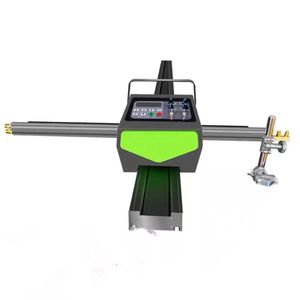
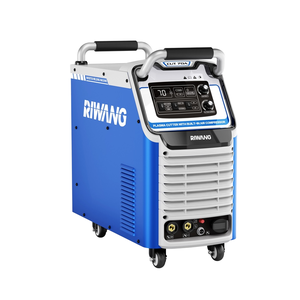
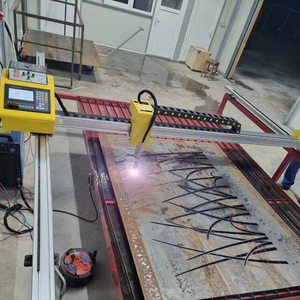
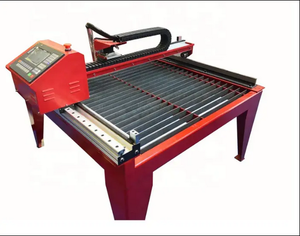
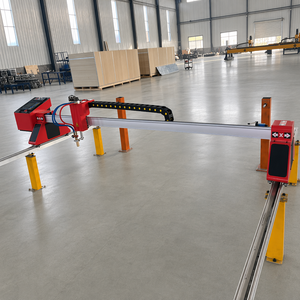
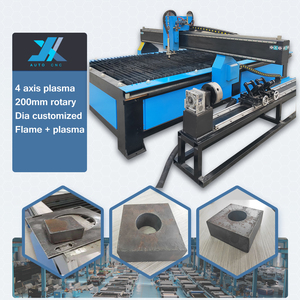
Vulcan Vessel Solution: High-volume vertical air receivers installed directly downstream of primary refrigerated air dryers. Acts as dry buffer storage to absorb laser assist gas purge surges, maintaining steady pressure to precise plasma cutters (such as our 120A-200A CNC series) and preserving cut edge quality without dross accumulation.
Operational Challenges: Strict hygiene, oil-free compressed air compliance, atmospheric humidity control, and seasonal high-capacity bottling runs requiring continuous 24/7 uptime.
Vulcan Vessel Solution: AISI 304L and 316L stainless steel air receivers engineered with sanitary interior passivated surfaces. Prevents internal scale formation and liquid accumulation, delivering ultra-clean air reservoirs for pneumatic bottle blowing, filling automation, and sterile nitrogen compression.
Operational Challenges: Extreme elevation (3,500+ meters above sea level) leading to reduced atmospheric air density, severe pressure drops, and highly abrasive brine/mineral airborne dust.
Vulcan Vessel Solution: Oversized atmospheric-compensated pressure receivers designed with reinforced foundation supports, oversized air intake flanges, anti-abrasive external epoxy coatings, and dual relief valve manifolds certified for mining safety standards.
Navigating industrial equipment imports and plant expansions in Argentina requires strict adherence to environmental regulations, provincial safety codes, and energy efficiency targets. Plant engineers and procurement officers must evaluate the following key trends:
In key industrial provinces such as Buenos Aires (regulated by OPDS - Organismo Provincial para el Desarrollo Sostenible) and Santa Fe, pressure vessels must undergo non-destructive thickness testing (NDT), hydrostatic pressure testing, and possess traceable mill test certificates. Vulcan vessels ship complete with comprehensive factory test passports for instant local engineering clearance.
With rising industrial electricity tariffs across Argentina, factories are upgrading compressed air storage capacities. Installing dedicated dry receivers near high-draw pneumatic nodes reduces systemic operating pressure from 8 Bar to 6.5 Bar, directly generating an average 8% to 12% reduction in compressor energy consumption.
Modern Argentine manufacturers are retrofitting air receivers with IoT-enabled digital pressure transducers and automated zero-loss electronic drain valves. This allows real-time telemetry tracking of pressure drop anomalies, condensate accumulation levels, and predictive maintenance alerts via centralized SCADA systems.
Established in 1980 by visionary industrial engineers Mr. P. M. Vadalia and Late R. A. Patel, Canary Electricals Pvt. Ltd. (Headquartered in Morbi, Gujarat, India) has grown into a premier ISO 9001:2015 certified manufacturer and exporter of heavy industrial equipment under the world-renowned Vulcan brand.
Every single air receiver and pressure vessel undergoes 100% Hydrostatic Pressure Testing at 1.5x design pressure, Radiographic X-Ray seam inspection, and Ultrasonic thickness gauging prior to export dispatch.
We engineer custom nozzle configurations, dual safety valve manifolds, inspection manholes/handholes, and specialized internal coatings tailored to specific OEM compressor pairings and Argentine plant layouts.
Proven export packaging in sea-worthy steel frames/wooden crates with moisture barrier wrapping. Direct shipping routes to major Argentine sea ports including Puerto de Buenos Aires, Zárate, and Bahía Blanca.
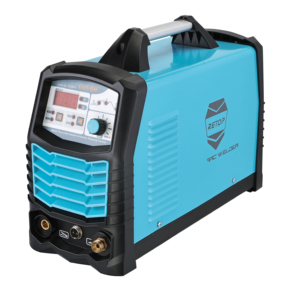
Beyond air receivers, our manufacturing capability spans MIG/MAG welders, Thyristorized rectifiers, Spot welders, TIG arc systems, and industrial screw compressors—delivering unified single-source factory supply.
Technical and logistical answers to help Argentine plant managers, engineers, and procurement agents make informed purchasing decisions.
All Vulcan air receivers manufactured by Canary Electricals are produced in strict compliance with ISO 9001:2015 standards and follow ASME Section VIII Division 1 design principles. Every vessel includes a Factory Inspection Certificate, Hydrostatic Test Report (tested to 1.5x working pressure), Ultrasonic Thickness Test log, and Material Test Reports (MTR) for all pressure-containing plates, enabling seamless registration with local Argentine authorities (such as OPDS in Buenos Aires Province).
Vertical air receivers are preferred for most industrial applications because they occupy significantly less floor space and optimize moisture separation efficiency through gravity drainage down to the bottom sump. Horizontal air receivers are generally chosen for low-overhead ceiling environments, mobile compressor trailers, or when mounting auxiliary equipment (such as a air dryer or small compressor package) directly on top of the vessel deck.
A Wet Air Receiver is installed between the compressor and the air dryer. It receives hot, saturated air, serving as a primary condensate knockout vessel and cooling buffer. A Dry Air Receiver is installed after the air dryer. It stores clean, dry compressed air ready for immediate tool consumption. High-capacity facilities often utilize both to protect dryers from liquid overload while maintaining stable pressure lines.
At high altitudes, atmospheric density decreases, reducing the ambient air mass drawn by air compressors. Consequently, compressed air expands differently, and compressors produce less FAD. To compensate for atmospheric pressure loss and prevent sharp line drops during heavy mining operations, air receiver storage volume should be oversized by 15% to 25% compared to sea-level calculations in Buenos Aires.
Canary Electricals provides full export documentation under standard CIF or FOB terms to Argentine ports. Documents include Commercial Invoices, Packing Lists with HS Code classifications (typically HS 7311.00 or 8414.90), Certificate of Origin, Bill of Lading, and pre-dispatch inspection protocols. We work closely with Argentine freight forwarders to ensure smooth customs clearance.
Industrial pressure vessels require minimal but critical maintenance: 1) Daily or automatic draining of accumulated liquid condensate via zero-loss electronic valves; 2) Monthly visual inspection of safety relief valves and pressure gauges; 3) Annual external seam inspection; and 4) Periodic internal ultrasonic wall-thickness inspections every 3 to 5 years as required by local safety legislation.
Consult with Canary Electricals' senior pressure vessel engineering team today. Get factory-direct pricing, custom CAD sizing support, and guaranteed export delivery schedules for your project in Argentina.
Inquire Now