Explore our line-up of electromagnetic induction power units, solid-state driver boards, and localized industrial heating modules engineered for Tokyo's high-tech manufacturing sector.
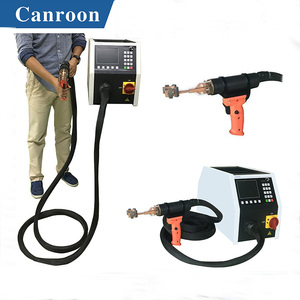
Compact high-frequency power source optimized for micro-brazing, localized hardening, precision annealing, and rapid paint removal in tight cleanroom spaces.
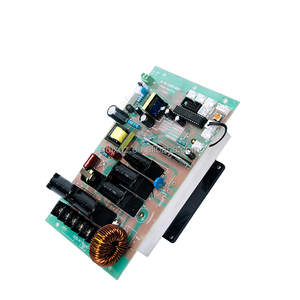
Precision digital electromagnetic control board delivering stable 2.5kW-3.5kW output with integrated DSP thermal tracking for industrial OEM integrations.
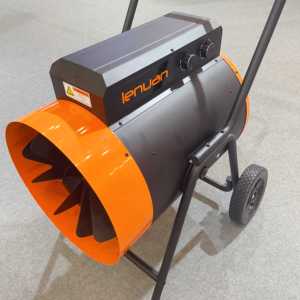
Heavy-duty cold-roll steel constructed 220-240V air forced heater operating at ultra-low noise levels, suitable for agricultural & enclosed space climate conditioning.
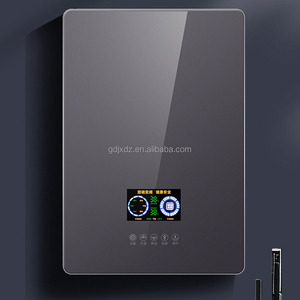
Zero-carbon direct electromagnetic fluid heating solution providing immediate hot water generation for commercial and high-density urban facility heating systems.
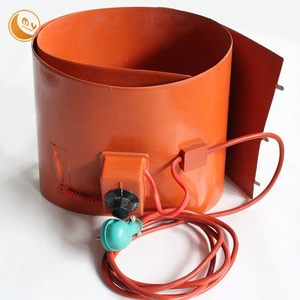
Specially designed barrel induction heater for plastic and rubber extrusion lines, reducing pre-heating time by up to 50% and energy consumption by 35%.
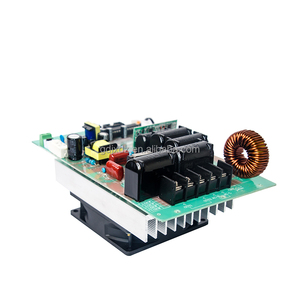
Industrial-grade 220V control circuit board engineered for high-temperature extrusion processing with phase-locked loop (PLL) frequency tracking.
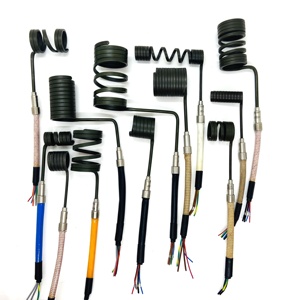
Ultra-compact magnetic coil heaters for plastic injection molding hot runner systems, ensuring uniform thermal distribution and zero hot spots.
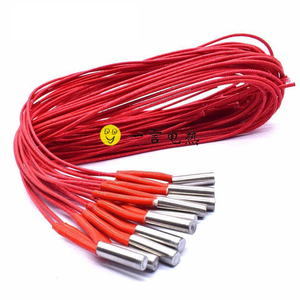
Nickel-Chromium internal element stainless steel micro cartridge heater operating at 110V/230V for high-density localized thermal application setups.
Navigating the shift from legacy fossil-fuel resistance heating to high-frequency electromagnetic induction across the Keihin and Ota Ward industrial clusters.
The Tokyo Metropolitan Area, housing one of the world's most concentrated precision manufacturing networks, is undergoing a rapid industrial transition driven by Japan's national Green Transformation (GX) Policy and Tokyo's strict environmental compliance frameworks. Legacy thermal processing methods—such as gas-fired furnace treatments, resistance wire heating bands, and traditional ceramic cartridge systems—are increasingly subject to operational surcharges due to high standby energy losses, carbon intensity, and thermal dissipation into production environments.
Electromagnetic induction heating has emerged as the definitive benchmark technology for manufacturers seeking to achieve carbon-neutral manufacturing in Japan. By converting electrical energy directly into eddy current thermal dissipation within the targeted metallic workpiece via alternating magnetic fields, induction technology achieves direct energy coupling efficiency exceeding 90 to 95 percent, compared to less than 40-50% for indirect radiant or convective heating methods.
Furthermore, precision plants operating within Tokyo's compact urban industrial zoning—such as Ota Ward (Ota-ku) and neighboring Kawasaki/Yokohama corridors—face severe footprint constraints. Modern industrial facilities require high-power-density heating equipment capable of seamless integration into automated, tight-footprint CNC machining cells, injection molding units, and continuous wire-drawing lines. Advanced IGBT-driven solid-state induction generators fulfill these space and power requirements, providing instant digital control, rapid ramping times, and zero direct atmospheric emissions.
An authoritative analysis of skin depth penetration, resonance frequency matching, and electrical parameter optimization for precision metallurgy and polymer processing.
Induction heating operates on the fundamental physical principle of electromagnetic induction (Faraday's Law) combined with the Joule heating effect. High-frequency alternating currents passed through an induction coil generate a rapidly varying magnetic field, inducing eddy currents inside conductive targets. The current concentration is maximum at the surface and decays exponentially inward according to the skin depth formula (δ = √(ρ / (π · f · μ))). Choosing the precise resonant frequency (from 1kHz medium frequency up to 500kHz high frequency) allows Tokyo engineers to achieve localized case hardening or uniform through-heating without micro-structural distortion.
Transitioning from legacy vacuum-tube or SCR (Silicon Controlled Rectifier) topologies to advanced Insulated Gate Bipolar Transistors (IGBT) has revolutionized thermal processing efficiency. Modern IGBT modules utilize Zero Voltage Switching (ZVS) and Zero Current Switching (ZCS) resonant inverter circuits. This soft-switching paradigm dramatically reduces switching losses, allows real-time automatic frequency tracking based on load impedance changes during Curie point transitions, and delivers steady power factor performance above 0.95 under variable voltage inputs.
Traditional resistance heating band systems mounted on extruder barrels lose up to 50% of their heat output to ambient factory air via radiation and convection, requiring excessive HVAC cooling load in Japanese plants. Induction coil wrapping, backed by aerogel silica insulation blankets, retains thermal energy strictly within the metallic barrel wall. This results in warm-to-touch exterior surfaces (<45°C), improved operator safety, and substantial reduction in monthly kilowatt-hour electrical consumption across multi-line operations.
| Performance Parameter | High-Frequency IGBT Induction | Legacy Ceramic / Mica Resistance | Gas-Fired Radiant Furnace |
|---|---|---|---|
| Thermal Transfer Efficiency | 90% – 95% (Direct Joule Heating) | 45% – 60% (Convective/Contact Loss) | 30% – 45% (Flue Gas Loss) |
| Pre-Heating / Warm-Up Time | Ultra-Fast (Instantaneous field generation) | Slow (Requires thermal conduction time) | Very Slow (Hours for thermal stabilization) |
| Temperature Regulation Precision | ±1°C via closed-loop PID control | ±5°C to ±10°C (High thermal inertia) | ±15°C (Combustion fluctuations) |
| Surface Thermal Loss (Ambient) | Minimal (<45°C outer shell temperature) | High (Surface temps can exceed 300°C) | Extreme (Requires active workshop ventilation) |
| Coil / Heater Element Service Life | Long Life (Non-contact magnetic transfer) | Short-to-Medium (Frequent wire burnout) | Medium (Burner jet fouling & refractory wear) |
| 50Hz Eastern Japan Grid Compatibility | Fully Integrated with active PFC filters | Requires heavy resistive load balancing | N/A (Requires fossil fuel feed lines) |
Over four decades of power electronics manufacturing rigor, strict ISO 9001:2015 quality protocols, and global export infrastructure.
Founded in 1980 by Mr. P. M. Vadalia and Late R. A. Patel, Canary Electricals Pvt. Ltd. has established an international reputation as a leading manufacturer, supplier, and exporter of industrial electrical equipment and heavy-duty thermal systems under the renowned Vulcan brand name. Operating from our advanced manufacturing infrastructure in Morbi, Gujarat, India, our engineering divisions oversee every phase of production—from raw electromagnetic copper winding and custom PCB soldering to high-voltage isolation testing and environmental stress screening.
Our facility operates under full ISO 9001:2015 Certified Quality Management Systems, ensuring that every induction heating power supply, control card, and custom heating element meets strict dimensional tolerances and safety compliance. Designed specifically to excel in high-demanding industrial environments, Vulcan products are engineered to withstand varying line voltage fluctuations, high ambient operation temperatures, and airborne particulate exposure—factors critical for reliable continuous production runs in demanding manufacturing environments.
With an active export footprint spanning over 30 countries across Asia, Africa, the Middle East, and North America, Canary Electricals provides Tokyo buyers with direct access to custom OEM/ODM technical engineering, tailored voltage configurations (compatible with Japan's 200V 3-phase and 50Hz Eastern grid standards), and dedicated technical documentation supporting seamless import clearance through Tokyo and Yokohama ports.
How Vulcan induction heating technology solves specific thermal processing challenges in Tokyo's high-tech manufacturing ecosystems.
Tokyo's specialized tier-2 automotive suppliers require rapid, repeatable localized surface hardening for gears, drive pins, and transmission splines. Our IGBT high-frequency power supplies deliver sub-second heating cycles, preventing core embrittlement while achieving exact Rockwell hardness depths required by Japanese OEMs.
Plastics processing facilities serving Tokyo's packaging and industrial film sectors utilize our custom Extruder Induction Barrel Heater kits. Replacing old mica heating bands reduces melt temperature variance, prevents resin degradation, and lowers facility ambient summer temperatures, significantly reducing air conditioning loads.
In cleanroom and micro-assembly environments where particulate contamination and open flames are strictly forbidden, Vulcan IGBT small-size induction units enable fluxless vacuum-compatible induction brazing of copper tubing, sensors, and stainless steel vacuum fittings with pinpoint accuracy.
High-density Tokyo commercial buildings, urban greenhouse projects, and institutional facilities adopt our Instant Induction Water Heating Boilers. Connecting directly to local solar or grid power, these boilers replace fossil fuel burners, providing zero-emission space and fluid heating.
Clear technical and operational insights regarding system integration, electrical standards, and global shipping logistics to Japan.
Consult directly with Canary Electricals' senior application engineers. We provide full technical CAD support, thermal load calculations, and tailored export quotations for the Tokyo market.
Contact Us