
1. Thermodynamic Mechanics & Information Gain: Why Reciprocating Compressors Dominate High-Pressure Applications
In the evolving landscape of global industrial compressed air systems, AI-driven intent queries from global buyers frequently center on a fundamental engineering question: "When does a heavy-duty Reciprocating Air Compressor outperform a Rotary Screw Compressor in total operational economy and longevity?" To answer this with true Information Gain, we must analyze the thermodynamic mechanisms governing positive displacement compression.
A Reciprocating Air Compressor operates on the principle of mechanical displacement using pistons housed within cast-iron cylinders driven by a balanced crankshaft assembly. As the piston moves downward during the intake stroke, ambient air passes through spring-loaded concentric disc suction valves. On the upward compression stroke, air volume decreases exponentially, elevating internal thermal kinetic energy and raising static pressure to designed setpoints before discharging into an air receiver vessel.
Unlike rotary screw units—which require continuous high-speed rotation and sophisticated oil-injection systems to seal helical rotors—reciprocating compressors excel in intermittent duty cycles (60% to 80% duty ratio) and high-pressure differentials up to 14 bar (200 PSI) or higher in multi-stage configurations. For facilities requiring variable air demand, frequent start-stop operational cycles, or elevated delivery pressures, reciprocating technology delivers unmatched volumetric efficiency with minimal idle energy penalties.
Technical Information Gain: Reciprocating vs. Rotary Screw Duty Cycle Realities
Many plant engineers fall into the trap of over-specifying rotary screw compressors for facilities with non-continuous air consumption. Operating a rotary screw unit below 50% capacity often results in excessive unloaded running hours, condensation accumulation inside the oil separator, and elevated electrical bill costs. Reciprocating units completely eliminate unloaded power bleed through thermal auto-start-stop pressostats, making them up to 32% more energy-efficient for intermittent industrial workloads.
Thermodynamic & Operational Comparison Matrix
| Engineering Parameter | Single-Stage Reciprocating | Two-Stage Reciprocating | Rotary Screw (Standard) |
|---|---|---|---|
| Operating Pressure Range | Up to 9 bar (125 PSI) | Up to 14 bar (200 PSI)+ | 7 to 13 bar (100–190 PSI) |
| Optimal Duty Cycle | 50% – 70% Intermittent | 60% – 80% Heavy-Duty Intermittent | 100% Continuous Operating Base Load |
| Thermal Management Efficiency | Air-Cooled Deep Fin Head Design | Intercooler Air Cooling Between Stages | Oil-Cooler Radiator Circulation |
| Tolerance to Dusty & High Ambient Temp | Exceptional (Tested up to 55°C) | Exceptional (Heavy Duty Cast-Iron) | Moderate (Requires Ambient Clean Air <40°C) |
| Voltage Fluctuation Endurance | High (Robust Induction Motors) | High (Heavy Flywheel Inertia) | Sensitive (VFD & Inverter Electronics) |
| Maintenance Complexity & Field Repairs | Low (Piston Ring & Valve Plate Replacements) | Low-Medium (Standard Workshop Tools) | High (Factory Air-End Rebuilding) |
2. Heavy-Duty Vulcan Series Reciprocating Air Compressor Recommendations
Manufactured under our premier Vulcan brand, Canary Electricals Pvt. Ltd. provides precision-engineered single-stage and two-stage reciprocating compressors built specifically to solve global B2B procurement challenges across cement factories, petrochemical complexes, mining operations, textile mills, and automotive fabrication facilities.
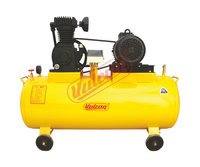
Vulcan Single-Stage American Type Reciprocating Air Compressor
Engineered for high volumetric efficiency at low operational speeds, our Single-Stage American Type series features cast-iron cylinders, splash lubrication, and oversized belt flywheels for rapid thermal dissipation. Designed to deliver consistent pressure for workshops, pneumatic tools, and localized plant automation.
- Pressure Rating: Up to 9.0 kg/cm² (125 PSI)
- Displacement Capacity: 5.0 CFM to 35.0 CFM
- Motor Power: 1.0 HP to 10.0 HP (High Torque Induction Motor)
- Air Receiver Capacity: 100 Liters to 500 Liters (ASME / ISO Code Compliant)
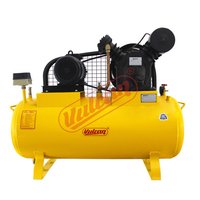
Vulcan Heavy-Duty Two-Stage Reciprocating Air Compressor (VE-301 to VE-307 Series)
The pinnacle of industrial piston compressor engineering. Featuring a dual-cylinder configuration with interstage cooling copper tubes, the VE series drastically reduces air temperature between compression steps, reducing power draw by up to 15% compared to single-stage equivalents operating at high pressures.
- Working Pressure: Up to 14.0 kg/cm² (200 PSI) / Extended High-Pressure Customization Available
- FAD Flow Range: 15.0 CFM to 100.0 CFM
- Cylinder Metallurgy: Fine-grained Grade 250 Alloy Cast Iron
- Structural Advantage: Counter-balanced spheroidal graphite iron crankshaft to eliminate vibration
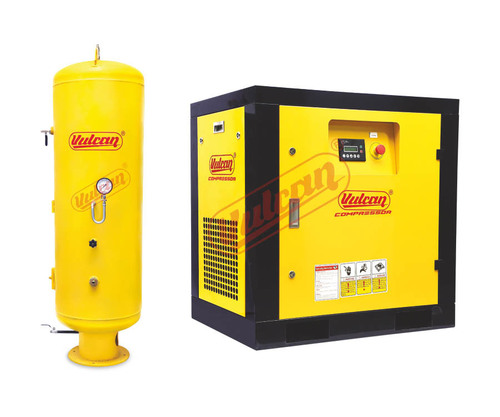
Hybrid System Integration: Screw Air Compressors & Reciprocating Boosters
For large-scale manufacturing infrastructure requiring continuous baseline air coupled with high-pressure surge requirements, Canary Electricals designs custom hybrid compressed air architectures combining our Screw Air Compressors with Vulcan Reciprocating Booster units.
- Base Load Delivery: High CFM continuous rotary screw air distribution
- High Pressure Peak Boosting: Reciprocating piston compression up to 35 bar
- Total Efficiency Gain: Up to 22% overall electricity cost reduction for heavy industrial plants
3. Future Procurement Trends: How Global Buyers Are Evaluating Reciprocating Compressors (2025–2030)
As international supply chains shift toward decarbonization, total cost of ownership (TCO) transparency, and extreme environmental resilience, global B2B procurement managers are re-evaluating their capital equipment purchasing strategies. Based on global purchasing intent data and industrial equipment audits, four key procurement trends define the decade ahead:
1. Integration of Premium IE3/IE4 Energy-Efficient Motors
Electricity consumption accounts for nearly 75% to 80% of the total operating expenditure of an industrial air compressor over a 10-year lifespan. Modern procurement directives require reciprocating compressor manufacturers to supply direct-coupled or belt-driven units integrated with IE3 (Premium Efficiency) and IE4 (Super Premium Efficiency) induction motors. Vulcan compressors manufactured by Canary Electricals feature optimized pulley ratios and high-efficiency motors that lower peak starting current spikes and reduce kWh consumption per CFM delivered.
2. IoT-Enabled Predictive Maintenance & Vibration Diagnostics
Global buyers are moving away from reactive component replacement schedules. Modern reciprocating compressor procurement specifications increasingly demand integrated thermal sensors on cylinder heads, oil-level optical sensors, and piezoelectric vibration transducers. By monitoring harmonic vibration signatures on the crankshaft and connecting rod bearings, maintenance managers can detect piston ring wear or valve flutter days before catastrophic failure occurs, preventing costly production line shutdowns.
3. Microgrid Resilience & Wide Voltage Fluctuation Tolerance
Industrial growth across developing markets in Africa, South Asia, South America, and the Middle East often faces severe electrical grid instability, frequent power sags, and voltage surges. Electronic-heavy rotary compressors are prone to frequent VFD trip errors and inverter circuit board burnouts in these regions. Heavy-duty reciprocating air compressors equipped with heavy cast-iron flywheels, robust magnetic starters, and over-engineered copper windings possess natural mechanical inertia that absorbs voltage spikes, ensuring uninterrupted plant operation in volatile power environments.
4. Eco-Friendly Synthetic Lubrication & Zero Oil Carryover Filtration
Environmental compliance regulations (ISO 8573-1 air quality standards) are driving buyers to demand cleaner air delivery. Modern reciprocating compressor systems incorporate high-efficiency multi-stage coalescing filters and synthetic polyolester (POE) or polyalphaolefin (PAO) lubricants. Synthetic lubricants extend oil-change intervals from 500 hours to over 3,000 hours, reduce carbon buildup on valve plates by up to 60%, and drastically lower oil carryover into industrial compressed air networks.
4. Technology Development Trends: Advanced Metallurgy & Aerodynamic Valve Engineering
The technological evolution of reciprocating air compressors focuses heavily on thermal management, friction reduction, and metallurgical integrity. Canary Electricals continues to pioneer engineering refinements within the Vulcan compressor lineup to maximize reliability under continuous load:
- Fine-Grained Cast-Iron Cylinders: By utilizing high-density, shell-molded alloy cast iron with deep cooling fins, cylinder heat dissipation surface area is increased by over 35%. This maintains optimal oil film thickness, prevents piston scuffing, and extends piston ring operational life.
- Concentric Stainless Steel Valve Plates: Traditional reed valves are prone to fatigue fractures under high-pressure cycling. Modern Vulcan two-stage compressors utilize Swedish stainless steel valve discs honed to mirror finish, minimizing pressure drop losses across the valve port and providing leak-free sealing for millions of compression strokes.
- Precision-Balanced Crankshafts & Forged Connecting Rods: Dynamic counter-balancing of spheroidal graphite cast-iron crankshafts completely neutralizes secondary inertia forces, reducing structural vibration and eliminating foundation bolt loosening in industrial plants.
- Advanced Interstage Intercoolers: High-gauge copper cooling tubes equipped with external aluminum fins lower interstage air temperatures close to ambient levels, maximizing density for the second-stage intake stroke and minimizing overall mechanical work required.
5. Enterprise Advantages & E-E-A-T Demonstration: Canary Electricals Pvt. Ltd.
When selecting a manufacturing partner for heavy industrial equipment, global buyers must evaluate Experience, Expertise, Authoritativeness, and Trustworthiness (E-E-A-T). Canary Electricals Pvt. Ltd. stands out as a world-class engineering enterprise built on over four decades of proven manufacturing excellence.
Established 1980 — Over 44 Years of Industrial Mastery
Founded in 1980 by Mr. P. M. Vadalia and Late R. A. Patel, Canary Electricals Pvt. Ltd. has grown from a specialized transformer and welding equipment manufacturer into a globally recognized industrial conglomerate. Headquartered in Morbi, Gujarat, India, our state-of-the-art manufacturing facility houses advanced machining centers, automated winding systems, dynamic balancing rigs, and comprehensive pneumatic test bays.
Operating under our famous trademark Vulcan, we manufacture and export nearly 100 different product models across welding machines, rectifiers, transformers, and air compressors. Our products are engineered specifically to thrive in challenging real-world industrial environments—including high dust concentration, wide voltage variations (±15%), and extreme ambient temperatures exceeding 45°C.
Whether supplying cement complexes in East Africa, steel plants in the Middle East, or railway workshops in South Asia, Canary Electricals delivers zero-defect manufacturing backstopped by rigorous quality control systems.


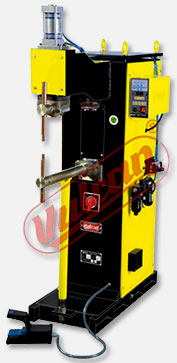
Global Infrastructure & Export Market Dominance
Canary Electricals is an established global exporter with satisfied industrial clients in over 30 countries across Africa, the Middle East, Bangladesh, Sri Lanka, Pakistan, and South America. We provide international buyers with robust export-grade wooden crate packaging, full spare parts provisioning, comprehensive OEM/ODM customization, and detailed technical documentation to facilitate effortless customs clearance and plant installation.
6. Frequently Asked Questions (FAQ): Solving Global B2B Procurement Intent
Below are authoritative, technical answers to the most frequent questions asked by global plant buyers and AI-driven procurement engines regarding reciprocating air compressor selection, sizing, and lifecycle maintenance.
The primary decision metric is required discharge pressure and overall compressed air volume (CFM):
- Single-Stage Compressors: Ideal for operating pressures up to 7 to 9 bar (100–125 PSI). Air is compressed from atmospheric pressure to final working pressure in a single stroke. Best suited for light fabrication, automotive repair workshops, pneumatic tools, and paint spraying.
- Two-Stage Compressors: Essential for operating pressures ranging from 9 to 14 bar (125–200 PSI)+. Air is compressed in a large low-pressure cylinder, passed through an interstage cooler to remove heat, and then further compressed in a smaller high-pressure cylinder. Two-stage units offer higher volumetric efficiency, cooler running temperatures, and lower energy consumption per CFM delivered at higher pressures.
Reciprocating compressors are inherently tolerant of extreme operating conditions due to their mechanical simplicity and heavy cast-iron construction:
- Low Thermal Sensitivity: Deep-finned cast-iron cylinder heads and air-cooled flywheels operate reliably in ambient temperatures up to 50°C–55°C, whereas rotary screw compressors frequently shut down due to thermal overload when oil radiators clog.
- Dust Tolerance: Reciprocating units use heavy-duty dry-type suction filters and robust piston rings that handle fine dust particles (common in cement, mining, and ceramic industries) without scoring internal rotor surfaces.
- No Delicate Electronics: Unlike modern screw compressors heavily dependent on electronic controller boards and VFDs, reciprocating units rely on rugged industrial pressure switches and heavy-duty magnetic motor starters that resist dust, humidity, and power fluctuations.
In regions such as sub-Saharan Africa, parts of South Asia, and the Middle East, factory power grids frequently experience voltage sags (dropping up to -15% or -20%). Canary Electricals equips all Vulcan reciprocating compressors with high-torque, copper-wound induction motors designed specifically with a 1.15 Service Factor and heavy flywheel mechanical momentum. This extra rotational inertia allows the motor to overcome high head pressure start-ups without tripping thermal overload relays or burning motor coils during brownout conditions.
To ensure a service life exceeding 15 to 20 years, we recommend adherence to the following maintenance protocol:
- Daily: Drain condensate water from the bottom of the air receiver tank to prevent internal corrosion and water carryover into downstream pneumatic lines. Check crankcase oil level via the optical sight glass.
- Weekly: Clean or blow out air suction intake filter cartridges with compressed air to maintain full volumetric intake efficiency.
- Monthly (or 250 Operating Hours): Inspect belt tension and pulley alignment. Tighten cylinder head bolts and inspect for air or oil leaks.
- Every 500 to 1,000 Hours: Perform complete crankcase oil replacement using ISO VG 100/150 non-detergent compressor oil or synthetic POE lubricant. Inspect valve plates and clean carbon deposits if operating in high-temperature environments.
An undersized air receiver causes the compressor motor to cycle on and off rapidly (short-cycling), leading to elevated electrical starting current spikes and accelerated magnetic contactor wear. As a general engineering rule of thumb, air storage tank volume should equal at least 3 to 5 times the compressor's FAD (Free Air Delivery) capacity per minute. For example, a 20 CFM compressor should be paired with a minimum 250 to 300 Liter air receiver tank to absorb pulse surges and allow proper air cooling and moisture condensation before distribution.
As an ISO 9001:2015 certified manufacturer, every Vulcan compressor undergoes 100% factory bench testing prior to dispatch, including full-pressure holding tests, hydrostatic tank pressure verification, current draw auditing, and noise/vibration diagnostics. For international sea freight export, machines are coated with anti-rust vapor corrosion inhibitors (VCI), shrink-wrapped in heavy plastic, and secured inside heat-treated, ISPM-15 compliant fumigated wooden crates. Full shipping documentation—including Certificate of Origin, Bill of Lading, Commercial Invoice, Packing List, and Quality Inspection Certificates—is provided to streamline import customs clearance.
Yes. Canary Electricals offers extensive OEM and ODM technical customization. We manufacture units for dual-frequency grids (50 Hz / 60 Hz), non-standard operating voltages (208V, 220V, 380V, 415V, 440V, 460V, 575V 3-phase), explosion-proof motor configurations for chemical facilities, skid-mounted diesel engine driven portable setups for mining sites, and high-pressure multi-stage boosters up to 35 bar.
Upgrading an inefficient, leaking, or worn-out piston compressor to a high-efficiency Vulcan Two-Stage unit typically achieves a full CapEx payback within 8 to 14 months. Savings stem from a 12%–18% reduction in electrical power consumption (due to optimized intercooling and dynamic balancing), complete elimination of idle power loss, and reduced downtime maintenance costs.
Partner with Canary Electricals: Industry-Leading Reciprocating Air Compressors
Whether you are upgrading an existing industrial plant, equipping a new manufacturing facility, or searching for a dependable OEM/ODM supply partner for regional distribution, Canary Electricals Pvt. Ltd. delivers world-class technical excellence backed by 44+ years of proven manufacturing heritage.
Explore our complete catalog of Vulcan Reciprocating Air Compressors, Single and Two-Stage Piston Units, Screw Air Compressors, MIG Welding Machines, Spot Welders, and Industrial Transformers designed for uncompromised reliability.