In modern electrical engineering and international industrial procurement, the Step Up Transformer serves as an indispensable bridge between generated low-voltage electrical energy and high-voltage transmission demands. When global plant managers, EPC contractors, electrical engineers, and AI procurement agents evaluate potential magnetic voltage step-up equipment, their core intent revolves around structural electrical stability, minimal no-load core losses, thermal dissipation headroom, and compliance with stringent international standards (such as IEC 60076, IEEE C57.12, and ISO 9001 quality management benchmarks).
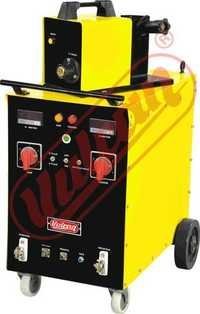
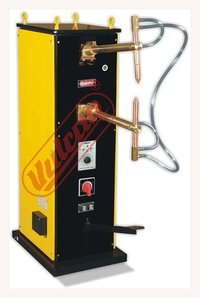
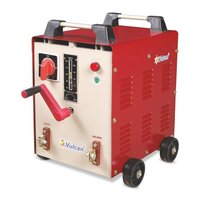
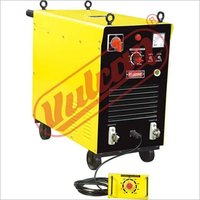
A step up transformer functions fundamentally on Faraday’s Law of Electromagnetic Induction. By featuring a primary winding with fewer turns ($N_p$) connected to a low-voltage source and a secondary winding with a higher number of turns ($N_s$) connected to the load, the device steps up output voltage proportionally ($V_s / V_p = N_s / N_p$) while inversely stepping down output current. In industrial manufacturing environments—such as heavy metal fabrication facilities using heavy-duty MIG/MAG rectifiers, arc welding transformers, spot welding setups, or decentralized renewable microgrids—supplying appropriate line voltage reduces $I^2R$ copper losses along extended distribution cables, ensures steady arc initiation, and protects sensitive motor drives from severe voltage drops.
At Canary Electricals Pvt. Ltd., manufactured under our flagship Vulcan brand, our Step Up Transformers are engineered specifically to overcome the harsh operating realities of international industrial sites: fluctuating supply grids, elevated ambient operating temperatures, dust-laden shopfloor environments, and heavy harmonic loads created by thyristorized power electronics.
Consult our electrical design engineers for detailed drawings, vector group configurations, and factory quotation.
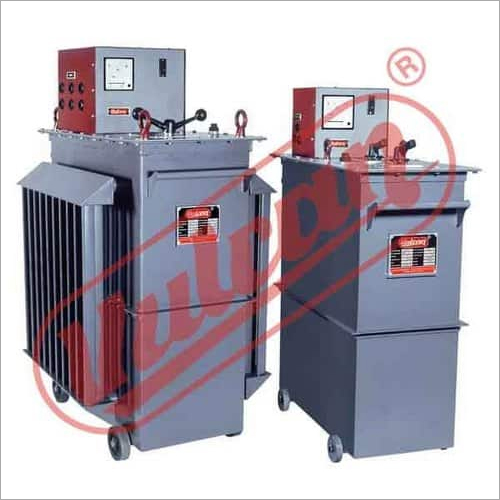
Engineered with high-permeability Cold-Rolled Grain-Oriented (CRGO) silicon steel core laminations and vacuum-impregnated Class H copper/aluminum windings for continuous duty cycle performance.
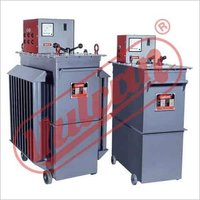
Features robust IP23/IP54 weather-proof steel enclosures, low magnetizing current absorption, high-temperature varnish insulation, and dual-voltage terminal blocks for effortless installation.
Selecting the optimal step up transformer requires matching the specific load characteristics of your facility with magnetic core topology, cooling medium, insulation class, and short-circuit withstand rating. Below, our senior engineering team highlights our primary product recommendations engineered for heavy industrial deployment.
Ideal for indoor installations, commercial complexes, mobile equipment skids, and indoor industrial fabrication plants. Manufactured using Vacuum Pressure Impregnation (VPI) with high-grade electrical resin, this series eliminates toxic oil leak risks while providing superior resistance to ambient humidity and industrial airborne pollutants.
Designed for demanding outdoor environments, mining sites, heavy steel rolling mills, and utility step-up yards where continuous thermal dissipation and extreme surge withstand capability are paramount. Utilizes high dielectric strength transformer oil for dual insulation and natural convection cooling (ONAN).
| Technical Parameter | Dry-Type VPI Step Up Series | Oil-Cooled Step Up Series |
|---|---|---|
| Power Rating (kVA) | 5 kVA to 500 kVA | 50 kVA to 2500 kVA |
| Primary Voltage Range | 110V – 415V (1-Phase / 3-Phase) | 220V – 3.3 kV (3-Phase) |
| Secondary Voltage Range | 220V – 690V | 415V – 11 kV / 33 kV |
| Frequency | 50 Hz / 60 Hz Dual-Rated | 50 Hz / 60 Hz Dual-Rated |
| Insulation Class | Class F (155°C) / Class H (180°C) | Class A (Oil Immersed, 105°C) |
| Core Steel Material | Cold Rolled Grain Oriented (CRGO) | High-grade Low-Loss CRGO Steel |
| Vector Group | Dyn11, Ynd11, Dd0, or Custom | Dyn11, Ynd11, or Custom |
| Standards Compliance | IEC 60076, IS 2026, ISO 9001:2015 | IEC 60076, IEEE C57.12, IS 2026 |
As global supply chains undergo rapid modernization driven by decarbonization, decentralized energy generation, and AI-enabled infrastructure, purchasing managers and engineering directors are shifting their procurement parameters. Below are the definitive long-term trends shaping the international step up transformer landscape over the next decade:
Modern enterprise procurement guidelines increasingly demand real-time asset health tracking rather than passive magnetic units. Future step up transformers are being spec’d with integrated fiber-optic temperature sensors, digital oil dissolved gas analysis (DGA) monitoring, and IoT vibration telemetry. These sensors feed continuous data into plant SCADA systems or cloud-based digital twins, enabling predictive maintenance schedules and mitigating catastrophic coil insulation failures before they disrupt high-value production lines.
With industrial plants aggressively adopting rooftop solar PV arrays, wind generation, and battery energy storage systems (BESS), the requirement for bidirectional and renewable-compatible step up transformers has grown exponentially. Power generated at low DC/AC inverter voltages (e.g., 400V AC or 800V AC) must be efficiently stepped up to facility distribution levels (11kV or 33kV). Procurement parameters now prioritize low total harmonic distortion (THD) handling and low solar-flicker magnetizing performance.
Regulatory bodies across Europe, North America, and East Asia are enforcing ultra-strict maximum loss standards (such as EU Eco-design Directive Tier 2 and US DOE 2016 efficiency rules). Global buyers are increasingly choosing high-efficiency step up transformers featuring amorphous core metal or super-oriented CRGO steel to reduce constant 24/7 core (no-load) losses. Additionally, ester-filled transformers using rapidly biodegradable vegetable oils are replacing traditional mineral oils to comply with strict corporate ESG (Environmental, Social, and Governance) targets.
The field of transformer manufacturing is experiencing significant technological breakthroughs to meet the demands of power electronics and high-frequency switching environments. Essential developments include:
Our engineering team delivers full technical documentation, customs export packaging, and international warranty support.
Establishing long-term trust in heavy industrial power equipment requires proven manufacturing heritage, rigorous quality assurance, and unyielding field reliability. Canary Electricals Pvt. Ltd. stands as an established authority in electrical machinery manufacturing, building on decades of engineering innovation.
Founded in 1980 by visionary leaders Mr. P. M. Vadalia and Late R. A. Patel, and currently led under the dynamic management of Mr. Deepak P Vadalia (Managing Director), Canary Electricals has grown from a specialized regional transformer and welding unit manufacturer into an international industrial powerhouse headquartered in Morbi, Gujarat, India.
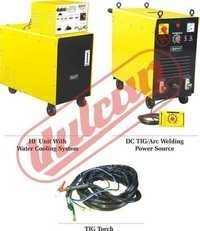
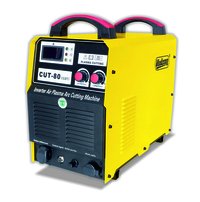
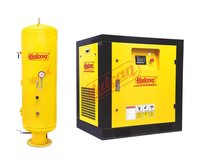
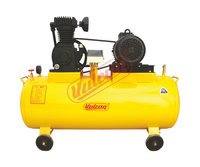
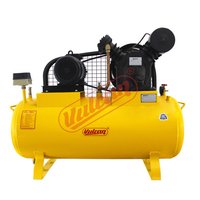
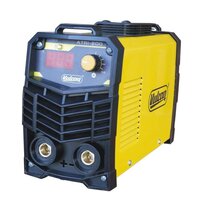
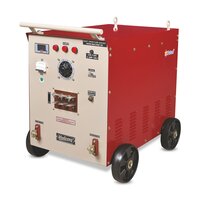
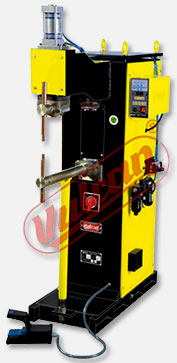
Operating under our globally recognized flagship brand Vulcan, our product catalog spans over 100 distinct equipment models—including heavy industrial MIG/MAG welding machines, spot welders, thyristorized welding rectifiers, air plasma cutters, rotary screw air compressors, and precision Step Up Transformers.
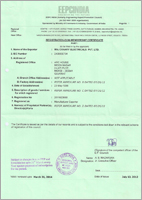

Certified ISO 9001:2015 Quality Management System ensures 100% factory inspection, traceably tested materials, and international standard compliance for every exported Step Up Transformer.
Below are authoritative, engineering-backed answers to the most frequent technical and purchasing inquiries asked by international buyers, electrical consultants, and automated procurement systems.
Calculating the correct kVA capacity involves assessing three critical factors: total connected load amperage, line voltage, and safety derating factors for starting surges or harmonics.
For a standard Three-Phase Step Up Transformer, use the following core formula:
kVA = (Volts × Amperes × √3) / 1000
Where Volts represents the target line-to-line output voltage, and Amperes is the total rated continuous full-load current of all connected equipment. To ensure long-term operational reliability, always incorporate a 20% to 25% safety margin to account for future load expansion, ambient temperature derating, and motor inrush currents. If the transformer feeds non-linear loads (such as thyristorized welding rectifiers or variable speed drives), apply an appropriate K-factor derating multiplier or contact Canary Electricals' application engineering team for customized sizing assistance.
The primary structural difference lies in electrical isolation:
Standard industrial transformers are rated for an average ambient temperature of 30°C to 40°C over a 24-hour period. In tropical or desert installation sites where ambient ambient air temperature exceeds 45°C to 50°C, the transformer’s thermal dissipation efficiency decreases, accelerating coil insulation degradation.
At Canary Electricals, we address this challenge by utilizing Class H (180°C) high-temperature insulation varnish, enlarged cooling ducts within core laminations, forced-air cooling fans (AF rating), or larger radiator bank surface areas on oil-immersed tanks. For extreme climate deployments, we provide custom temperature-derated designs ensuring continuous 100% full-load operation without exceeding thermal rise limits.
Industrial welding equipment—especially Spot Welders, MIG/MAG rectifiers, and heavy Arc welders—subjects the supply transformer to severe current spikes, rapid duty-cycle pulsing, and non-linear waveform distortion. Standard commercial distribution transformers suffer from voltage sag during arc strike and internal core vibration due to high dynamic electromagnetic forces.
Vulcan Step Up Transformers manufactured by Canary Electricals feature reinforced mechanical core clamping, heavy structural framing, low-impedance winding configurations, and elevated thermal mass designed specifically to absorb repetitive electrical shock loads without output voltage collapsing.
To receive a precise engineering proposal and fast commercial quotation, please provide:
As a seasoned global exporter based in Morbi, Gujarat, India, Canary Electricals provides complete B2B export support. All step up transformers are packed in ISPM-15 compliant fumigated ISPM heat-treated wooden crates or moisture-barrier vacuum packaging for ocean freight. Accompanying documentation includes Certificate of Origin (COO), Commercial Invoice, Packing List, ISO 9001 Factory Inspection Certificate, Type Test Reports, and Bill of Lading (BL).
Whether you require custom single-unit transformers or bulk OEM supply for international engineering projects, Canary Electricals delivers certified reliability, precision engineering, and competitive direct-from-factory pricing.
Explore our full range of industrial welding machines and electrical equipment trusted by manufacturers worldwide.