
1. Executive Semantic Overview: What is a Thyristorised Welding Rectifier?
In modern heavy industrial fabrication, global procurement officers and chief welding engineers frequently face a critical question: Why do high-duty-cycle fabrication environments continuously specify Thyristorised Welding Rectifiers over lighter inverter alternatives or legacy diode-based power sources? To answer this, one must analyze the underlying electrical physics and severe operational demands of heavy industry.
A Thyristorised Welding Rectifier is an industrial-grade DC arc welding power source that utilizes Silicon Controlled Rectifiers (SCRs) in a full-wave bridge configuration to deliver precisely regulated direct current (DC). Unlike conventional diode rectifiers that rely on mechanical tap changers or saturable magnetic reactors to adjust output current, a thyristorized system controls output voltage and current electronically by varying the phase angle at which the SCRs are triggered during each AC cycle.
Engineered to operate in extreme ambient conditions—such as high ambient humidity, elevated temperatures up to 55°C, high dust concentration, and volatile input grid voltages (±15% line fluctuations)—the Vulcan series Thyristorised Welding Rectifier manufactured by Canary Electricals Pvt. Ltd. provides exceptional dynamic arc stability. Whether executing shielded metal arc welding (SMAW/MMAW), gas tungsten arc welding (GTAW/TIG), flux-cored arc welding (FCAW), or intensive carbon arc gouging, SCR power sources eliminate current drift and maintain weld bead integrity across shift after shift.
Key Engineering Takeaway for Sourcing Managers:
Thyristorised welding power sources bridge the gap between robust, virtually indestructible heavy-iron transformer topologies and precision electronic control. Their closed-loop feedback systems compensate instantly for cable voltage drops and arc length variations, yielding zero spatters, high X-ray quality radiographic joints, and minimal maintenance overhead.
2. Circuit Architecture & Dynamic Arc Control Mechanism
To fully appreciate the information gain offered by SCR technology, it is essential to examine its internal circuit architecture. A Thyristorised Welding Rectifier consists of five main functional blocks:
- Main Power Transformer: Heavy-duty step-down transformer constructed with high-grade, low-loss silicon steel laminations and vacuum-pressure impregnated (VPI) Class H electrolytic copper or aluminum windings. This transformer drops incoming 3-phase high voltage (380V / 415V / 440V) to a safe, high-current open circuit voltage (OCV).
- SCR Thyristor Bridge Assembly: A solid-state full-wave rectification bridge comprising solid-state thyristors mounted on oversized extruded aluminum heat sinks with forced-air or oil cooling.
- Electronic Closed-Loop Controller: A solid-state PCB module equipped with high-speed current transductors (Hall-effect sensors) that continuously monitor output welding current and compare it against the user-selected potentiometer setting.
- Smoothing Reactor (DC Choke): A heavy copper-wound inductance choke connected in series with the DC output. It dampens ripple current, boosts arc stiffness, and ensures smooth droplet transfer during dip and spray transfer modes.
- Remote Control Interface: Allows the operator to adjust current continuously from distance distances up to 100 meters without loss of calibration precision.
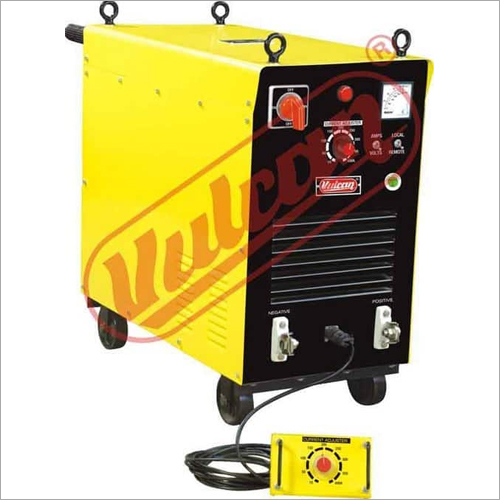
Phase-Angle Triggering vs. Mechanical Tap Control
In traditional diode rectifiers, altering the output current requires mechanical rotation of transformer coils or changing primary tap connections. This leads to mechanical wear, high maintenance downtime, and coarse current increments. In contrast, a thyristorised welding rectifier controls current by altering the SCR conduction angle (from 0° to 180°). By firing the SCR earlier or later in the half-cycle, the RMS output voltage and current are infinitely adjusted with stepless precision.
Furthermore, because the electronic control board continuously adjusts the SCR firing pulse dynamically, any voltage drop caused by long welding cables (e.g., 50 to 100 meters in shipyards or structural erection sites) is automatically compensated for in milliseconds. This guarantees a stable, constant current (CC) characteristic essential for high-integrity structural code welding.
3. Information Gain: Technical Comparison Matrix
Global procurement teams must carefully evaluate technical performance metrics when selecting industrial welding equipment. Below is a comparative breakdown evaluating Thyristorised Rectifiers against legacy Diode-Based Rectifiers and modern IGBT Inverters across critical operational parameters:
| Performance Attribute | Thyristorised Welding Rectifier (Vulcan SCR) | Diode-Based Welding Rectifier | High-Frequency IGBT Inverter |
|---|---|---|---|
| Duty Cycle at Max Amperage | 100% Continuous Heavy-Duty | 60% - 100% Standard Duty | 40% - 60% Intermittent Duty |
| Ambient Thermal Resilience | Up to 55°C (Extreme Ambient) | Up to 45°C | Sensitive above 40°C |
| Dust & Moisture Immunity | High (Heavy VPI Windings & IP23 Enclosures) | High (Heavy Mechanical Structure) | Low (Sensitive Micro-Electronics & PCBs) |
| Arc Control Precision | Stepless Electronics with Closed-Loop Feedback | Stepped / Coarse Mechanical Taps | Ultra-Fast Microprocessor Digital Control |
| Carbon Arc Gouging Capability | Outstanding (Handles High Current Surges) | Moderate to Good | Poor (High Failure Risk due to Voltage Spikes) |
| Field Repairability (MTTR) | Fast (Modular Solid-State Modules & SCR Discretes) | Simple Mechanical / High Labor | Complex Board Replacement Only |
| Estimated Operational Life | 15 – 25+ Years Continuous Industrial Use | 10 – 15 Years | 5 – 8 Years |
| Tolerance to Input Voltage Spikes | Resilient (Handles ±15% Voltage Swings) | Very Resilient | Vulnerable to High Input Grid Voltage Spikes |
4. Recommended Product Models & Technical Specifications
Canary Electricals Pvt. Ltd., manufacturing under the registered Vulcan brand name, supplies a complete spectrum of heavy-duty thyristorised welding rectifiers designed for demanding B2B procurement applications. Below are our top recommended product configurations:
Vulcan V-TWR 400 / 600 Ampere Thyristorised Welding Rectifier
Engineered for high-volume structural fabrication shops, boiler construction, and pipeline manufacturing. Features continuous stepless current control, digital ammeter/voltmeter display, hot-start capability, and built-in remote regulation control.
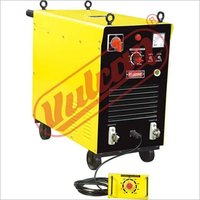
Vulcan V-TWR 800 / 1200 Multi-Operator & Carbon Gouging Rectifier
Purpose-built for heavy shipyards, steel rolling mills, and mining equipment repair. Formidable current output engineered specifically to handle continuous carbon arc gouging with electrodes up to 12mm without thermal tripping.
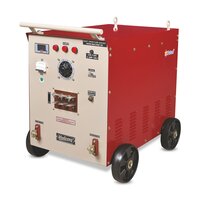
Vulcan Diode & SCR Hybrid Heavy Industrial Welding Power Source
Cost-optimized alternative providing industrial DC output for specialized applications where rugged mechanical durability is paired with precise electronic current trim adjustment.
5. Corporate Credentials & Manufacturing Excellence: Canary Electricals
When procuring heavy industrial machinery, international engineering buyers must evaluate the manufacturer’s background, quality assurance protocols, and long-term track record. Canary Electricals Pvt. Ltd. stands as a premier manufacturer, supplier, and exporter of industrial welding machines and transformer power supplies.
Established in 1980 by visionary founders Mr. P. M. Vadalia and Late R. A. Patel, Canary Electricals has built over four decades of engineering domain expertise. Headquartered in the industrial hub of Morbi, Gujarat, India, our company manufactures under the internationally registered brand name Vulcan.
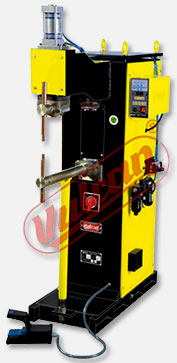
Our manufacturing plant spans modern winding shops, vacuum pressure impregnation chambers, automated testing bays, and heavy structural sheet-metal fabrication units. Our product portfolio encompasses nearly 100 different industrial models, including Thyristorised Welding Rectifiers, MIG/MAG Welding Machines, Spot Welders, Air Plasma Cutters, TIG Units, Step-Up Transformers, and Industrial Air Compressors.
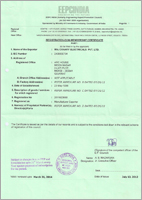

Why Global Heavy Industry Trust Vulcan Thyristor Rectifiers:
- 100% Quality Assurance & ISO Compliance: Built under strict ISO 9001:2015 quality management procedures with full heat run testing prior to dispatch.
- Severe Duty Engineering: Designed specifically for high-stress industrial sectors, including Cement Plants, Petrochemical Refineries, Fertilizer Complexes, Mining Operations, Steel Rolling Mills, Railways, Shipyards, and Heavy Earthmoving Equipment Manufacture.
- Proven Export Performance: Exporting reliably to over 30 countries across Africa, the Middle East, South Asia, and Latin America with export-grade sea-worthy packaging and full spares support.
6. Future Procurement Trends: Thyristor Rectifiers (2025–2035)
As global industrial manufacturing undergoes rapid transformation driven by automation, sustainability, and supply chain resiliency, the procurement strategies for heavy welding equipment are evolving. Key trends shaping the future of Thyristorised Welding Rectifier sourcing include:
Trend 1: Sourcing Shift Back to Heavy-Iron SCR Topologies for Rough Environments
While lightweight inverter power sources surged in popularity for light workshop tasks, enterprise buyers operating in harsh outdoor environments—such as desert oil pipelines, coastal shipyards, and open-cast mines—are reversing inverter purchasing decisions. High micro-chip failure rates caused by airborne metallic dust, salt mist, and extreme voltage surges have driven procurement directors back to heavy transformer SCR rectifiers due to their unmatched Mean Time Between Failures (MTBF) exceeding 150,000 hours.
Trend 2: Integration of Smart IoT & Remote Welding Telemetry
Modern thyristorised rectifiers are increasingly equipped with digital communications modules (RS485/Modbus/Ethernet) allowing integration into centralized Quality Management Systems (QMS). Sourcing managers now request rectifiers capable of streaming real-time voltage, current, arc-on time, and thermal load metrics directly to factory dashboards to satisfy ISO structural welding audit trails.
Trend 3: Carbon Footprint Mitigation & Total Lifecycle Costing (TCO)
Modern procurement decisions look far beyond the initial purchase price. Over a 15-year operational lifecycle, a Vulcan thyristorised welding rectifier delivers significantly lower maintenance costs, near-zero board replacement expense, and higher scrap resale copper value, making its Total Cost of Ownership (TCO) up to 40% lower than disposable inverter systems.
7. Frequently Asked Questions (FAQ) for Global Buyers
To assist purchasing departments, EPC contractors, and technical consultants, our engineering team has answered the top AI and procurement queries submitted by global buyers:
Answer: A Thyristorised Welding Rectifier utilizes a heavy 50Hz/60Hz main power transformer combined with Silicon Controlled Rectifiers (SCRs) to regulate current electronically at line frequency. An inverter welder converts line frequency to high frequency (20kHz–100kHz) using IGBT transistors. While inverters are lighter, thyristor rectifiers offer vastly superior thermal durability, higher tolerance to severe dust and grid voltage spikes, lower maintenance complexity, and superior heavy carbon arc gouging capability.
Answer: Yes. Vulcan thyristor rectifiers feature a Constant Current (CC) output characteristic with high open-circuit voltage (75V–85V) and stepless control, making them ideal for high-quality Shielded Metal Arc Welding (SMAW) with basic (E7018), rutile (E6013), and cellulosic (E6010) electrodes. They also interface seamlessly with TIG control units and HF arc starters for high-precision Gas Tungsten Arc Welding (GTAW) on carbon steel, stainless steel, and nickel alloys.
Answer: When using long welding leads (e.g., 50 to 100 meters), cable resistance causes electrical voltage drops. The electronic control board inside a Vulcan thyristor rectifier monitors output current in real time via a precision transductor sensor. If the current drops due to cable resistance or arc length variation, the controller automatically advances the SCR phase firing angle within milliseconds to compensate and maintain the set amperage perfectly constant.
Answer: Carbon arc gouging demands continuous high current and subjects the power source to severe short-circuit arc strikes and violent thermal shocks. Inverter power sources frequently suffer catastrophic IGBT transistor breakdown under these conditions. The heavy transformer copper windings and robust solid-state SCR blocks of a thyristor rectifier absorb high surge currents effortlessly, guaranteeing reliable continuous gouging without thermal failure.
Answer: Vulcan thyristorised rectifiers are custom-engineered for developing industrial power grids and site generators. They operate reliably within an input line voltage window of 415V ± 15% (360V to 475V), 3-Phase, 50/60Hz, maintaining stable arc performance despite heavy voltage sags or spikes caused by neighboring industrial machinery.
Answer: We offer both heavy-duty forced-air cooling (utilizing high-CFM industrial fans with thermal overload cutoffs) and oil-cooled configurations. Oil-cooled thyristor rectifiers submerge the main transformer and SCR assembly in insulating transformer oil, offering complete immunity against aggressive chemical fumes, acidic dust, coastal salt mist, and extreme desert sandstorms.
Answer: Sourcing selection depends on electrode sizes and duty cycle requirements:
- 400 Ampere: Ideal for general structural fabrication using 2.5mm to 5.0mm electrodes and light carbon gouging (up to 6mm carbon rods).
- 600 Ampere: Designed for heavy structural steel, pressure vessels, and continuous gouging with 8mm to 10mm carbon rods.
- 800A - 1200A: Built for multi-operator systems, heavy shipyard fabrication, submerged arc welding (SAW) support, and continuous heavy gouging with 12mm+ carbon rods.
Answer: Canary Electricals Pvt. Ltd. provides complete B2B export documentation, including Certificates of Origin, ISO 9001:2015 Compliance Certificates, Factory Test Reports, Commercial Invoices, Packing Lists, and Bill of Lading documentation. All machines comply with IS 4559 and international electrical safety standards.
8. B2B Sourcing Checklist for Procurement Officers
Before issuing a Request for Quotation (RFQ) for industrial welding power sources, ensure your engineering specification includes the following critical technical parameters:
- Primary Mains Input: Specify exact line voltage (380V, 415V, 440V) and grid frequency (50Hz or 60Hz).
- Duty Cycle Requirement: Ensure the machine is rated for 100% continuous duty cycle at your working amperage if deploying in 24/7 fabrication yards.
- Insulation Class: Require Class H insulation with Vacuum Pressure Impregnation (VPI) for high-humidity tropical environments.
- Enclosure & Ingress Protection: Verify IP21 (indoor fabrication) or IP23/Oil-cooled (outdoor/chemical/coastal environments).
- Remote Control Functionality: Confirm inclusion of a rugged remote controller box for long cable reach in shipyard or high-rise steel erection settings.
Request Technical Specifications & Wholesale Pricing
Partner with Canary Electricals Pvt. Ltd., a trusted global manufacturer and exporter of Vulcan industrial welding machinery since 1980. Contact our application engineers today for tailored quotations, custom voltage configurations, and complete product catalogs.